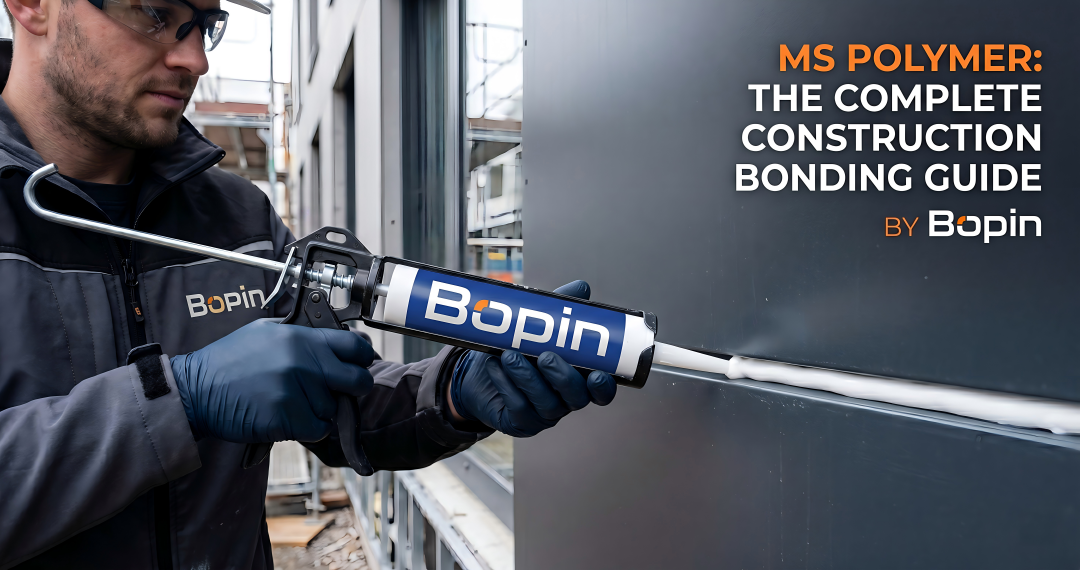
BoPin İnşaat Kimyasalları'ndan uzman rehberliği – kalıcı yapıştırma için modern yapıştırıcı teknolojisinde uzmanlaşma
Yapı Yapıştırıcıları Modern İnşaat Uygulamalarında Neden Devrim Yarattı?
Günümüzde herhangi bir inşaat projesini incelediğinizde dikkat çekici bir şey fark edeceksiniz: Geleneksel yöntemlere kıyasla daha az mekanik bağlantı elemanı, daha temiz montajlar ve daha güçlü bağlar. Modern inşaat yapıştırıcıları, binaları birleştirme, kaplamaları uygulama ve ağır malzemeleri monte etme şeklimizi temelden değiştirdi.
Bu dönüşüm, basit bir kolaylığın ötesine geçiyor. Gelişmiş yapıştırıcı teknolojisi, gerilimi bağlantı noktalarında yoğunlaştırmak yerine, yükü tüm yapışma alanlarına dağıtıyor. Bu, daha güçlü ve daha dayanıklı montajlar oluştururken, estetiği bozan görünür donanımı ortadan kaldırıyor. Yapıştırıcı bağlar, mekanik bağlantı elemanları gibi gevşemeden termal hareket ve titreşime uyum sağlıyor. Yapışma sırasında sızdırmazlık sağlayarak, uzun vadeli hasara neden olan nem sızmasını önlüyor.
Ancak bu faydaları elde etmek, yapıştırıcı teknolojisini anlamayı ve ürünleri belirli uygulamalara uygun hale getirmeyi gerektirir. Sızdırmazlık malzemelerini yapıştırıcı olarak kullanmak veya yapısal uygulamalar için genel amaçlı yapıştırıcılar kullanmak, hem malzemelere hem de itibara zarar veren arızalara yol açar. Profesyonel sonuçlar, uygun yapıştırıcı kimyasının seçilmesini, yüzeylerin doğru şekilde hazırlanmasını ve ürünlerin test edilmiş özelliklere göre uygulanmasını gerektirir.
Bu kapsamlı kılavuz, inşaat profesyonellerinin modern inşaat yapıştırıcıları hakkında bilmesi gereken her şeyi sunmaktadır. Farklı yapıştırıcı teknolojilerini ve uygun uygulamalarını anlayacak, doğru yüzey hazırlığı ve uygulama tekniklerini öğrenecek ve güvenilir, uzun ömürlü bağlar sağlayan kurulum yöntemlerinde ustalaşacaksınız. İster ağır taş paneller monte ediyor, ister aynalar takıyor, yapısal elemanları yapıştırıyor veya tezgahları sabitliyor olun, bu kılavuz profesyonel sonuçlar için uygulanabilir bilgiler sunar.
Sonuç ne oldu? Modern inşaat projelerinin karmaşık gereksinimlerini karşılarken kalıcı ve güvenilir bağlar oluşturan yapı yapıştırıcılarının belirlenmesi ve uygulanmasında güven.
İnşaat Yapıştırıcı Teknolojisini Anlamak
Modern yapı yapıştırıcıları, özellikle inşaat uygulamaları için tasarlanmış gelişmiş bir kimyayı temsil eder.
Yapı yapıştırıcılarını sızdırmazlık malzemelerinden farklı kılan nedir?
Birçok inşaatçı, hem sızdırmazlık malzemelerini hem de yapıştırıcıları benzer ambalajlarda satılmaları ve nemle temas sonucu sertleşmeleri nedeniyle karıştırır. Temel farklılıkları anlamak, maliyetli uygulama hatalarını önler.
Tasarım amacı:
- Sızdırmazlık Malzemeleri: Öncelikle boşlukları doldurmak ve su, hava veya kimyasal madde girişini önlemek için tasarlanmıştır. Yapışma özelliği, boşluk doldurma ve esnekliğe göre ikincil öneme sahiptir.
- Yapıştırıcılar: Esas olarak malzemeler arasında güçlü bağlar oluşturmak için tasarlanmıştır. Boşluk doldurma yeteneği sınırlıdır ancak bağ gücü en üst düzeye çıkarılmıştır.
Fiziksel özellikler:
- Sızdırmazlık Malzemeleri: Yüksek uzama (400-600%+), düşük modül (yumuşak ve esnek), hareket uyumuna optimize edilmiştir.
- Yapıştırıcılar: Orta derecede uzama (200-400%), daha yüksek modül (daha sert), yük aktarımı ve boyutsal kararlılık için optimize edilmiştir.
Mukavemet özellikleri:
- Tipik silikon mastik: 20-60 PSI çekme dayanımı, sızdırmazlık için yeterli ancak yük taşıma için yetersiz.
- Yapı yapıştırıcısı: 300-500 PSI çekme dayanımı, yapısal uygulamalar için tasarlanmıştır.
- Yüksek mukavemetli MS polimer yapıştırıcı: 3,0 MPa'ya (435 PSI) kadar çekme dayanımı ve anında kavrama özelliği.
Uygulama odak noktası:
- Sızdırmazlık Malzemeleri: Eklem hareketi, hava koşullarına dayanıklılık, nem bariyerleri
- Yapıştırıcılar: Yük aktarımı, kalıcı montaj, yapısal bağlama
Sızdırmazlık malzemeleri malzemeleri birbirine yapıştırabilir mi? Evet, bir dereceye kadar. Sızdırmazlık malzemeleri birincil yapıştırıcı olarak kullanılmalı mıdır? Neredeyse hiç. Mukavemet farkı, başlangıçta yeterli görünen şeyin sürekli yükler veya stres döngüsü altında yetersiz kalması anlamına gelir.
MS Polimer Teknolojisi: Yapıştırıcı Devrimi
Modifiye Silan (MS) polimer yapıştırıcılar, son on yıllarda inşaat yapıştırıcı teknolojisindeki en önemli ilerlemeyi temsil etmektedir.
MS polimer yapıştırıcıların çalışma prensibi:
MS polimerleri, reaktif silan gruplarıyla modifiye edilmiş polieter omurga zincirlerini birleştirir. Nemle kürleme sırasında, bu silan grupları çapraz bağlanarak hem esneklik hem de mukavemet sağlayan üç boyutlu ağlar oluşturur; bu özelliklerin aynı anda elde edilmesi zordur.
MS polimerleri inşaat yapıştırma yöntemlerini neden dönüştürdü:
İzosiyanatları ortadan kaldırır: Geleneksel poliüretan yapıştırıcılar, dikkatli kullanım gerektiren ve sağlık sorunlarına yol açan izosiyanatlar içerir. MS polimerleri ise izosiyanat kimyası içermeden benzer veya üstün performans sunar.
Evrensel malzeme uyumluluğu: MS polimerleri, çoğu durumda astar gerektirmeden hemen hemen tüm inşaat malzemelerine yapışır; bunlar arasında metaller, taş, ahşap, beton, cam, çoğu plastik ve kompozitler bulunur.
Sıfır büzülme: Kürleşme sırasında büzülerek gerilim yaratan bazı geleneksel yapıştırıcıların aksine, MS polimerleri boyutsal kararlılığını korur. Bu özellik, hassas montajlar ve farklı malzemelerin kullanıldığı uygulamalar için kritik öneme sahiptir.
Çevresel direnç: Mükemmel UV direnci, hava koşullarına dayanıklılık ve kimyasal direnç, MS polimerlerini bozulmadan hem iç hem de dış mekan uygulamaları için uygun hale getirir.
Anlık kavrama gücü: Gelişmiş formülasyonlar, 75 kg/m²'yi aşan ilk kavrama gücü sağlayarak birçok uygulamada geçici desteklere olan ihtiyacı ortadan kaldırır. Bu, kurulumu hızlandırır ve işçilik maliyetlerini önemli ölçüde azaltır.
Gibi ürünler BoPin MS-850 Yüksek Mukavemetli Yapı Yapıştırıcısı 3,0 MPa nihai mukavemeti, anında kavrama özelliği ve çeşitli inşaat uygulamalarında kanıtlanmış performansı ile modern MS polimer teknolojisine örnek teşkil eder.
Geleneksel Poliüretan Yapıştırıcılar: Alternatifleri Anlamak
MS polimer teknolojisi ortaya çıkmadan önce poliüretan bazlı yapı yapıştırıcıları piyasaya hakimdi ve belirli uygulamalar için hala yaygın olarak kullanılmaktadır.
Performans özellikleri:
- Son derece yüksek mukavemet (MS polimerleriyle karşılaştırılabilir)
- Mükemmel boşluk doldurma özelliği (kürleşme sırasında genleşir)
- Ahşap ve gözenekli malzemelere üstün yapışma özelliği
- Nemli yüzeylerde de etkilidir (nem, kuruma sürecini hızlandırır).
Sınırlamalar ve endişeler:
- İzosiyanat içerir, dikkatli kullanım gerektirir.
- Kürleme sırasında aşırı miktarda köpürme, malzemelerin birbirinden ayrılmasına neden olabilir.
- Bazı formülasyonlar UV ışınlarına maruz kaldığında sararır veya bozulur.
- Kürleme işleminden önce temizlik için çözücüler, kürleme işleminden sonra ise mekanik temizleme gereklidir.
Poliüretan yapıştırıcıların en iyi kullanım alanları:
- Ahşap yapım ve marangozluk
- Boşluk doldurma genişletmesi gerektiren uygulamalar
- Nemli yüzeye yapıştırmanın gerekli olduğu durumlar
- İzosiyanat kullanımının sorun teşkil etmediği iç mekan uygulamaları
MS polimerlerinin poliüretanın yerini giderek daha fazla almasının nedenleri: Sağlık ve güvenlik avantajları, daha temiz uygulama ve üstün çevresel direnç kombinasyonu, MS polimerlerini modern inşaat yapıştırma işlemlerinin çoğunda tercih edilen seçenek haline getirmektedir. Poliüretan ise esas olarak ahşap uygulamaları ve boşluk doldurma durumlarında önemini korumaktadır.
Kritik Performans Özellikleri
Temel özelliklerin anlaşılması, yapıştırıcının özelliklerinin uygulama gereksinimleriyle eşleştirilmesine yardımcı olur.
İlk Tutuş Gücü vs. Son Bağlanma Gücü
Profesyonel yapıştırıcılar, farklı amaçlara hizmet eden iki ayrı mukavemet ölçüsüyle karakterize edilir.
İlk kavrama gücü: Bu, yapıştırıcının tam kürleşme gerçekleşmeden önce, temasın hemen ardından malzemeleri yerinde tutma yeteneğini ölçer. kg/m² veya N/m² olarak ifade edilen bu değer, montaj sırasında geçici desteklerin gerekli olup olmadığını gösterir.
Standart yapı yapıştırıcıları: 20-40 kg/m² başlangıç tutma kapasitesi (genellikle geçici destekler gereklidir) Yüksek performanslı yapıştırıcılar: 75+ kg/m² başlangıç kavrama gücü (genellikle geçici destek ihtiyacını ortadan kaldırır)
İlk hamlenin önemi:
- Geçici destek ve sabitleme sistemlerini ortadan kaldırır veya azaltır.
- Sonraki adımlara anında geçişe olanak tanıyarak kurulum sürecini hızlandırır.
- Desteklerin takılması ve çıkarılmasıyla ilgili işçilik maliyetlerini azaltır.
- Karmaşık bir montaj gerektirmeden tavan ve üstten uygulamaları mümkün kılar.
Son yapışma dayanımı: Bu, tamamen kürlenmiş yapıştırıcının nihai çekme veya kesme dayanımını ölçer ve genellikle MPa veya PSI cinsinden ifade edilir. Nihai dayanım, formülasyona ve koşullara bağlı olarak 24-72 saat içinde gelişir.
Standart yapı yapıştırıcıları: 1,5-2,0 MPa (220-290 PSI) Yüksek etkili formülasyonlar: 2,5-3,0 MPa (360-435 PSI) Yapısal yapıştırıcılar: 3,5+ MPa (500+ PSI)
Güç geliştirme zaman çizelgesi:
Çoğu yapı yapıştırıcısı için:
- 15 dakika: İlk sabitleme, malzemelerin yerinde tutulması
- 1-2 saat: Dikkatli kullanım için yeterli sağlamlık.
- 24 saat: 50-70% nihai mukavemetine ulaşıldı
- 72 saat: Tam güç geliştirme tamamlandı
Sıcaklık ve nem bu zaman çizelgesini önemli ölçüde etkiler. Soğuk koşullar kürlenme sürelerini önemli ölçüde uzatır; sıcak ve nemli koşullar ise mukavemet gelişimini hızlandırır.
Açılış Saatleri ve Çalışma Saatleri
Açılış saati: Uygulama sonrasında malzemelerin hala etkili bir şekilde yapıştırılabildiği dönem. Yapıştırıcı, iyi bir yüzey teması ve yapışma sağlamak için yeterince ıslak kalır.
Tipik açılış saatleri:
- Hızlı sertleşen formüller: 5-10 dakika
- Standart ürünler: 10-20 dakika
- Uzun açık kalma süresi gerektiren formülasyonlar: 20-30 dakika ve üzeri.
Çalışma süresi: Yapıştırma işleminden sonra, nihai yapışma mukavemetini tehlikeye atmadan malzemelerin ayarlanabileceği veya yeniden konumlandırılabileceği dönem.
Tipik çalışma saatleri:
- Hızlı pişirme: 2-5 dakika
- Standart: 5-10 dakika
- Uzatılmış çalışma süresi: 10-20 dakika
Bu ayrımların önemi:
Büyük paneller veya karmaşık montajlar, doğru hizalama için uzun çalışma süreleri gerektirir. Hızlı sertleşen ürünler, küçük parçalar veya hızın kritik olduğu durumlarda üstün performans gösterir. Ürün özelliklerinin montaj karmaşıklığıyla eşleştirilmesi, kaliteyi tehlikeye atan aceleci çalışmaları önler.
Açılış ve çalışma saatlerini etkileyen çevresel faktörler:
- Sıcaklık: Yüksek sıcaklıklar süreleri kısaltır; soğuk ise uzatır.
- Nem: Nemle kürleşen yapıştırıcıların kürleşmesini hızlandırır; çok kuru koşullar kürleşmeyi yavaşlatır.
- Yüzey gözenekliliği: Gözenekli malzemeler nemi emer ve bu da kullanılabilir çalışma süresini azaltır.
- Yapıştırıcı kalınlığı: Kalın boncuklar, ince filmlere göre işlenebilirliklerini daha uzun süre korurlar.
Boşluk Doldurma Yeteneği
Boşluk doldurma Yapıştırıcının yüzeyler arasındaki boşlukları kapatma ve boşluklar boyunca yapışma gücünü koruma yeteneğini ifade eder.
MS polimer yapıştırıcılar: Genellikle 3-6 mm etkili boşluk doldurma Poliüretan genleşen yapıştırıcılar: 20 mm'ye kadar boşluk doldurma Epoksi yapıştırıcılar: Genellikle <3 mm (ince tabaka uygulamaları)
Boşluk doldurma sınırlamalarının nedenleri:
Adhesives develop strength through substrate contact and chemical bonding. In larger gaps, the adhesive must support itself structurally while also creating bonds. Beyond optimal thickness, internal cohesive strength becomes the limiting factor rather than adhesive strength.
Practical implications:
- Flat, well-fitting substrates maximize adhesive performance
- Gaps exceeding adhesive capabilities require shimming or mechanical support
- Irregular surfaces may need adhesive selection based on gap-filling rather than pure strength
- Excessive adhesive thickness to compensate for poor fit wastes material without improving strength
Applications and Installation Techniques
Different applications require specific adhesive approaches and techniques.
Heavy Panel Installation
Panel installation—whether stone veneer, large-format tile, metal cladding, or architectural panels—challenges both adhesive technology and installation skill.
Load calculations and adhesive requirements:
Panel weight calculation: Weight = Area × Thickness × Material Density
Example: Granite panel 1.2m × 0.8m × 30mm thick
- Area: 0.96 m²
- Volume: 0.96 × 0.03 = 0.0288 m³
- Granite density: ~2,700 kg/m³
- Weight: 0.0288 × 2,700 = 78 kg (~172 pounds)
Required adhesive strength: For 78 kg panel with safety factor of 4:
- Required holding strength: 312 kg
- Area covered by adhesive (75% coverage): 0.72 m²
- Required adhesive shear strength: 312/0.72 = 433 kg/m² minimum
High-strength adhesives like BoPin MS-850 with >75 kg/m² initial grab and 3.0 MPa final strength easily exceed these requirements while eliminating temporary support needs.
Application pattern for panels:
Lightweight panels (<5 kg/m²):
- Vertical beads at 30cm spacing
- Minimum 25% surface coverage
- Perimeter bead plus central support
Medium-weight panels (5-15 kg/m²):
- Vertical beads at 20cm spacing
- 50% surface coverage minimum
- Full perimeter plus grid pattern
Heavy panels (>15 kg/m²):
- Vertical beads at 10cm spacing
- 75% surface coverage minimum
- Full perimeter plus dense grid pattern
Installation procedure:
- Substrate verification: Ensure wall is plumb, structurally sound, and capable of supporting panel weight plus adhesive loads
- Panel dry-fitting: Test-fit panels to verify dimensions and identify any irregularities requiring correction
- Surface preparation: Clean both panel back and substrate thoroughly. Remove dust, oils, release agents, and contaminants
- Adhesive application: Apply in vertical beads per pattern requirements. For heavy panels, work in sections to respect open time
- Pressing sequence: Press panel firmly to substrate, pull away briefly (1-2cm) to expose adhesive to air, then press back into final position and hold firmly for 10-15 seconds
- Alignment verification: Check level and plumb immediately after positioning. Adjust within working time window
- Support removal timing: If temporary supports are used, remove only after sufficient cure time per manufacturer specifications
Special considerations for natural stone:
Some porous stones absorb moisture from adhesive, potentially affecting cure. For sensitive materials:
- Use low-water-content adhesives
- Consider back-sealing porous stone
- Test adhesion on actual stone before full installation
- Extend cure time expectations for heavy, porous materials
Mirror Mounting and Glass Installation
Mirror installation presents unique challenges because standard mechanical fasteners aren’t suitable and mirror backing is sensitive to chemical attack.
Why mirrors require specialized adhesives:
Mirror backing sensitivity: Traditional polyurethane or solvent-based adhesives attack the silver coating on mirror backs, causing unsightly black spots or complete coating failure. Only chemically compatible adhesives prevent this damage.
Dimensional stability requirements: Mirrors are rigid and inflexible. Adhesive must cure without excessive shrinkage that could cause mirror buckling or stress cracks.
Moisture resistance: Bathroom mirrors face high humidity that can affect adhesive long-term performance if moisture resistance is inadequate.
MS polymer advantages for mirror mounting:
MS polymer adhesives like BoPin MS-850 are completely safe for mirror backing, shrink zero during cure, and maintain performance in humid environments indefinitely.
Professional mirror mounting technique:
Pattern selection:
- Never apply adhesive in continuous layer (prevents moisture access needed for cure)
- Use vertical strips pattern: 50mm wide beads, 150-200mm spacing
- Ensure adhesive doesn’t extend to mirror edges where it might be visible
Application steps:
- Measure and mark: Determine exact mirror position on wall and mark perimeter
- Wall preparation: Ensure wall is clean, dry, flat, and structurally sound. Prime porous surfaces per adhesive manufacturer recommendation
- Adhesive application: Apply vertical strips to wall or mirror back (not both). For large mirrors, apply to wall for better control
- Positioning: Carefully position mirror, ensuring proper alignment before pressing
- Pressing technique: Press firmly across entire mirror surface, starting at center and working outward to eliminate voids
- Temporary support: Even with high initial grab, support large mirrors (>0.5m²) with temporary bracing for 24-48 hours until strength develops
- Tedavi süresi: Allow 72 hours before removing any supports or subjecting mirror to stress
Mirror size and adhesive quantity guidelines:
| Mirror Size | Adhesive Strips | Approximate Adhesive Needed |
|---|---|---|
| Small (<0.5m²) | 3-4 vertical strips | 1 cartridge |
| Medium (0.5-1.5m²) | 5-8 vertical strips | 1-2 cartridges |
| Large (1.5-3m²) | 8-12 vertical strips | 2-3 cartridges |
| Extra large (>3m²) | 12+ vertical strips | 3+ cartridges |
Countertop and Stair Tread Installation
Horizontal surface bonding presents different challenges than vertical applications, particularly for materials experiencing direct loads and potential impact.
Stone countertop installation:
Substrate requirements:
- Flat, level base (maximum 3mm variation per meter)
- Structurally adequate support (minimum 19mm plywood or equivalent)
- Clean, dry surface free from contaminants
Adhesive application for countertops:
- Continuous perimeter bead 25mm from edges
- Interior grid pattern with beads 150-200mm apart
- Sink cutout perimeters receive extra adhesive for support
- Total coverage approximately 60-70% of countertop area
Seam bonding technique:
For multi-piece countertops with field seams:
- Apply adhesive to both substrate and first countertop section
- Position first section precisely
- Apply specialized stone adhesive or polyester resin to seam edge
- Position second section, ensuring tight seam contact
- Install seam clamps to maintain pressure during cure
- Clean excess adhesive from seam immediately
- Allow full cure before removing clamps (minimum 24 hours)
Stair tread installation:
Stair treads experience both vertical loads and horizontal shear forces from foot traffic. Adhesive must resist both force directions.
Application pattern:
- Full perimeter bead
- Cross-grain beads every 150mm
- Avoid continuous longitudinal beads that could create slip planes
- Minimum 50% coverage for residential; 70% for commercial applications
Structural Element Bonding
Some construction adhesives are rated for structural applications where they partially or fully replace mechanical fasteners in load-bearing assemblies.
Uygulamalar şunları içerir:
- Subfloor gluing to floor joists
- Wall sheathing bonding to framing
- Roof decking attachment
- Structural panel bonding
- Load-bearing beam splicing (with engineered approval)
Critical requirements for structural bonding:
Engineering approval: Structural adhesive applications require engineering calculations and approvals. Building codes specify when and how adhesives can replace or supplement mechanical fasteners.
Quality control: Structural applications demand rigorous quality control including:
- Verified surface preparation procedures
- Environmental condition monitoring
- Application technique verification
- Strength testing of cure samples
- Documentation of all installation parameters
Backup mechanical fastening: Most structural codes require mechanical fasteners as backup even when adhesive provides primary bonding. This creates redundant load paths for safety.
Liability considerations: Professional structural bonding requires appropriate liability insurance, engineering oversight, and strict adherence to tested, approved systems.
Most construction professionals should limit adhesive use to non-structural applications unless specifically trained, insured, and operating under engineering guidance for structural bonding.
Surface Preparation: The Foundation of Successful Bonding
Surface preparation determines 70-80% of adhesive bond success. No amount of product quality compensates for contaminated or improperly prepared surfaces.
Cleaning Requirements by Substrate Type
Metals (aluminum, steel, stainless steel):
- Remove manufacturing oils, cutting fluids, and handling residues
- Clean with isopropyl alcohol, MEK, or manufacturer-recommended solvents
- For painted or coated metals, verify coating adhesion and compatibility
- Some applications benefit from light abrasion for mechanical bonding
- Allow complete solvent evaporation before adhesive application
Natural stone (granite, marble, limestone):
- Remove all dust, particularly from saw cutting or grinding
- Clean with pH-neutral stone cleaner (avoid acidic products on limestone/marble)
- Verify stone is completely dry (moisture meters help confirm)
- Check for sealers or treatments that might block adhesion
- Test adhesion on actual stone before full installation
Engineered stone and solid surface materials:
- Remove fabrication dust and residues
- Clean with mild detergent and water
- Light abrasion with 80-120 grit improves bonding
- Wipe with isopropyl alcohol as final step
- Follow material manufacturer recommendations for adhesive compatibility
Beton ve duvarcılık:
- Remove laitance, dust, and loose material (wire brush or grinding)
- Repair any damaged or deteriorated areas before bonding
- Prime porous surfaces per adhesive manufacturer specifications
- Ensure complete primer dry time before adhesive application
- Concrete must be fully cured (28 days minimum for standard concrete)
Wood and wood composites:
- Remove sawdust, oils, and handling residues
- Ensure wood moisture content is appropriate (typically <15%)
- Light sanding may improve adhesion on hard, dense woods
- Avoid over-sanding that opens excessive porosity
- Some woods (teak, ipe, oily exotics) require special preparation
Glass and glazed ceramics:
- Clean with glass cleaner or isopropyl alcohol
- Ensure complete removal of release agents, labels, or protective coatings
- Verify surface is completely dry
- Avoid touching cleaned surfaces with bare hands
- These surfaces usually require no abrasion or primers
Plastics and composites:
- Identify plastic type (some don’t bond well without primers)
- Remove mold release agents and surface treatments
- Light abrasion improves bonding on many smooth plastics
- Test adhesion before committing to full installation
- PE, PP, and PTFE require primers or plasma treatment for bonding
Surface Dryness and Contamination
Moisture content affects adhesive performance significantly:
Most construction adhesives specify application to dry surfaces. Even small amounts of surface moisture can:
- Dilute adhesive at the interface, reducing initial tack
- Create bubbles during cure that weaken bonds
- Prevent proper wetting and adhesion development
- Extend cure times unpredictably
Testing surface moisture:
- Visual inspection (darker color indicates moisture)
- Plastic sheet test (tape plastic to surface; condensation after 24 hours indicates excessive moisture)
- Moisture meters provide quantitative measurements
- When uncertain, allow additional drying time
Oil and grease contamination:
Invisible oil residues from handling or manufacturing prevent adhesive wetting and create catastrophic adhesion failures. Cleaning protocols must effectively remove oils:
- Solvent cleaning (isopropyl alcohol minimum; MEK for heavy contamination)
- Multiple cleaning passes with fresh solvent and clean cloths
- Visual evidence of contamination (cloth shows residue)
- Allow complete solvent evaporation before adhesive application
Dust and particulates:
Even thin dust layers create weak interfaces that fail under stress:
- Vacuum before solvent cleaning
- Compressed air removes particles from porous surfaces
- Tack cloths capture fine dust on smooth surfaces
- Verify cleanliness visually before proceeding
Climate and Environmental Considerations
Temperature, humidity, and atmospheric conditions significantly affect adhesive performance.
Hot Climate Applications (Middle East, North Africa)
Extreme heat creates unique challenges for adhesive installation and long-term performance.
Temperature effects on application:
Surface temperatures exceeding 40°C:
- Accelerated open time (adhesive skins over faster)
- Reduced working time (cure progresses rapidly)
- Potential for adhesive flowing or sagging on vertical surfaces
- Faster strength development but requires adjusted handling
Application timing strategies:
- Schedule installations for early morning or late afternoon
- Avoid midday work when surfaces reach maximum temperatures
- Store adhesive materials in shaded, cooler areas
- Bring materials to moderate temperature before use
Long-term performance considerations:
Quality MS polymer adhesives maintain properties from -40°C to +90°C, adequate for virtually all building envelope applications in desert climates. However, direct exposure to extreme heat requires verification of temperature ratings for specific applications.
Products like BoPin MS-850 provide reliable performance throughout desert temperature ranges with proven adhesion in extreme conditions.
Tropical and Humid Climates (Southeast Asia, Coastal Regions)
High humidity presents advantages and challenges for moisture-cure adhesives.
Humidity benefits:
- Faster cure times due to abundant atmospheric moisture
- More forgiving of minor surface moisture
- Consistent cure conditions year-round
- Reduced need for supplemental moisture addition
Potential issues:
- Accelerated cure reduces working time
- Monsoon rains can disrupt outdoor installations
- High humidity promotes biological growth on contaminated surfaces
- Coastal salt exposure requires enhanced chemical resistance
Best practices for humid tropics:
- Plan installations around weather patterns and forecasts
- Work efficiently to complete bonding within reduced working times
- Ensure exceptional surface cleanliness to prevent biological issues
- Select products with proven performance in tropical conditions
- Allow adequate cure time before heavy loads despite fast early strength development
Cold Continental Climates (Central Asia, Northern Regions)
Cold temperatures slow cure reactions and reduce initial tack, requiring adjusted procedures.
Temperature limitations:
Most construction adhesives specify minimum +5°C to +10°C application temperature. Below these thresholds:
- Cure times extend dramatically (2-4× normal duration)
- Initial grab strength may be insufficient for vertical applications
- Final strength development requires days rather than hours
- Adhesive consistency changes (thicker, harder to apply)
Cold weather bonding strategies:
Material conditioning:
- Store adhesives at room temperature (15-20°C) before use
- Transport in insulated containers
- Never apply adhesive that has been frozen
Substrate warming:
- Use temporary heating to bring substrates above minimum temperature
- Remove ice, frost, or condensation completely before bonding
- Verify temperature at time of application, not ambient air temperature
Extended support periods:
- Double or triple normal temporary bracing periods
- Don’t remove supports until adequate cure verification
- Test representative samples rather than assuming cure completion
Seasonal planning:
- Concentrate exterior bonding during moderate seasons
- Plan interior work for winter months
- Stock low-temperature formulations for off-season repairs
Common Problems and Solutions
Recognizing and preventing typical adhesive failures saves time, money, and professional reputation.
Problem: Insufficient Initial Grab (Materials Slump or Fall)
Belirtiler: Bonded materials slide down walls, sag from position, or fall completely during initial cure period.
Common causes:
- Adhesive exceeding open time before bonding
- Insufficient adhesive coverage or incorrect pattern
- Surface contamination preventing adequate tack
- Temperature too cold or too hot for proper performance
- Material weight exceeding adhesive capacity
- Applying to dusty or moist surfaces
Önleme:
- Work within specified open time windows
- Apply adequate adhesive quantity per manufacturer specifications
- Verify surface cleanliness immediately before bonding
- Use high initial grab formulations for heavy materials
- Install temporary supports for heavy panels regardless of adhesive claims
- Match product selection to material weight and application
Remediation: Remove materials, clean both surfaces thoroughly, verify proper conditions, reapply fresh adhesive with appropriate temporary support.
Problem: Poor Final Bond Strength (Delamination After Cure)
Belirtiler: Materials bond initially but separate later, often with clean release indicating adhesive failure rather than cohesive failure.
Common causes:
- Inadequate surface preparation (most common)
- Incompatible substrate materials
- Surface contamination invisible but present
- Insufficient cure time before loading
- Environmental conditions outside specifications during cure
- Wrong product selection for application
Önleme:
- Implement and follow rigorous surface preparation procedures
- Test adhesion on actual project materials before full installation
- Use manufacturers’ recommended surface preparations and primers
- Allow complete cure before subjecting bonds to stress
- Monitor and document temperature and humidity during cure
- Select adhesives specifically formulated for substrate combination
Remediation: Complete removal required. Investigate cause through material examination—clean substrate failure indicates contamination; visible adhesive residue on both surfaces suggests cohesive failure from improper cure. Address underlying cause before reapplication.
Problem: Excessive Adhesive Squeeze-Out and Mess
Belirtiler: Adhesive oozes from joints, creates visible squeeze-out on finished surfaces, transfers to hands and tools, creates difficult cleanup situations.
Common causes:
- Over-application of adhesive
- Incorrect bead pattern for gap dimensions
- Excessive pressing force during bonding
- Materials not fitting properly, requiring excessive adhesive
- Working too slowly relative to open time
Önleme:
- Calculate required adhesive quantity and apply appropriate amount
- Match bead size and pattern to actual gap dimensions
- Fit materials properly before bonding (dry-fit verification)
- Apply consistent pressure during bonding without excessive force
- Work efficiently within open time windows
Temizlemek:
- Remove excess immediately with appropriate solvent while uncured
- Cured adhesive requires mechanical removal (cut, scrape, sand)
- Protect finished surfaces with masking during installation
Problem: Adhesive Not Curing Properly
Belirtiler: Adhesive remains soft, tacky, or uncured well beyond specified cure time. Material may appear cured on surface but remains liquid internally.
Common causes:
- Extremely low humidity preventing moisture cure
- Very cold temperatures dramatically slowing reaction
- Excessive joint thickness exceeding cure capability
- Expired or degraded adhesive
- Contamination interfering with cure chemistry
Çözümler:
- Increase humidity around installation if possible (light misting may help)
- Provide supplemental heat to accelerate cure in cold conditions
- Respect maximum gap-filling specifications
- Verify product date and storage conditions
- Test adhesive on sample before committing to large installation
Professional Selection Guide
Choosing the optimal adhesive for specific applications requires matching product capabilities to project requirements.
Adhesive Selection Decision Tree
Step 1: Define primary function
- Pure bonding (no gap-filling or flexibility needed): High-strength MS polymer or epoxy
- Bonding with flexibility: Standard MS polymer adhesive
- Bonding with gap-filling: Polyurethane adhesive
- Bonding with sealing: Hybrid adhesive-sealant
Step 2: Assess load requirements
- Decorative/lightweight (<2 kg/m²): Most adhesives adequate
- Medium loads (2-15 kg/m²): Standard construction adhesive
- Heavy loads (15-50 kg/m²): High-strength adhesive with initial grab
- Structural loads: Engineered adhesive systems only
Step 3: Consider environmental exposure
- Interior controlled environment: Most products suitable
- Interior humid areas: Moisture-resistant formulations
- Exterior weather exposure: UV-stable, weatherproof products
- Extreme temperatures: Verify service temperature range
- Chemical exposure: Select chemically resistant formulations
Step 4: Evaluate substrate compatibility
- Standard materials (metal, stone, wood): Most adhesives suitable
- Glass, mirrors: MS polymer (not polyurethane)
- Sensitive substrates: Verify compatibility, perform testing
- Dissimilar materials: MS polymer flexibility handles different expansion rates
Step 5: Review installation requirements
- Need immediate grab: High-initial-tack formulations
- Complex positioning: Extended open/working time products
- Large gaps: Polyurethane or thick-bed adhesives
- Fast project timeline: Quick-cure formulations
- Temporary supports available: Standard cure products acceptable
Product Recommendations by Application
Heavy stone panel installation: BoPin MS-850 High-Strength Construction Adhesive – Immediate grab eliminates supports, 3.0 MPa final strength handles heavy loads, zero shrinkage prevents stress.
Mirror mounting: BoPin MS-850 – Safe for mirror backing, no shrinkage prevents stress cracks, excellent humidity resistance.
Countertop installation: BoPin MS-850 – High strength for support, zero shrinkage maintains flatness, safe for all stone types.
General panel bonding: BoPin MS-850 or equivalent high-strength MS polymer – Versatile performance across applications, excellent material compatibility.
Wood construction: Quality polyurethane construction adhesive – Superior wood adhesion, gap-filling capability, moisture-resistant cure.
Sıkça Sorulan Sorular
Can I use silicone sealant instead of construction adhesive?
No, for most bonding applications silicone sealant is inadequate. Silicone sealants are designed primarily for sealing with tensile strength typically 20-60 PSI. Construction adhesives provide 300-500+ PSI specifically for load-bearing applications.
When silicone works: Very light decorative items, temporary bonds, flexible gasket-type applications.
When adhesive is required: Any structural bonding, heavy materials, permanent installations, load-bearing applications.
Using sealant as adhesive is a common mistake that leads to failures. The products look similar and cure similarly, but performance differs dramatically. Always use products designed for your specific application.
How long does construction adhesive take to cure?
Cure timeline varies by formulation and conditions:
Initial tack: 10-15 minutes (materials held in position) Working strength: 24 hours (50-70% of final strength) Tam tedavi: 72 hours (complete strength development)
Tedavi süresini etkileyen faktörler:
- Sıcaklık: Cold dramatically slows cure; heat accelerates it
- Nem: Higher humidity speeds moisture-cure adhesives
- Joint thickness: Thick applications cure slower than thin
- Ventilation: Air circulation aids cure in confined applications
Best practice: Plan installation schedules assuming 72-hour cure before full loading, regardless of initial strength development that may seem adequate earlier.
What’s the difference between construction adhesive and wood glue?
Construction adhesives:
- Formulated for bonding diverse building materials
- Moisture-cure or reactive chemistry
- High flexibility accommodates material movement
- Excellent gap-filling capability
- Suitable for interior and exterior
- Long open time for large assemblies
Wood glues (PVA, aliphatic resin):
- Optimized specifically for wood-to-wood bonding
- Water-based, dries through evaporation
- Creates extremely strong wood bonds but limited flexibility
- Minimal gap-filling (requires tight joints)
- Most types for interior only
- Faster initial tack but requires clamping
When to use which:
- Wood furniture and joinery: Wood glue
- Construction framing and general carpentry: Construction adhesive
- Combination applications: Construction adhesive or polyurethane
Can construction adhesive be used on wet surfaces?
Most construction adhesives require dry surfaces. Moisture at the bond interface prevents proper adhesion development and can cause complete bond failure.
Exceptions:
- Polyurethane adhesives tolerate and even benefit from slight moisture
- Some specialized formulations designed for damp substrate bonding
- “Wet surface” products explicitly state this capability
Verification required: Read manufacturer specifications. Unless product explicitly states wet-surface capability, assume dry surfaces are required. When uncertain, allow additional drying time rather than risk adhesion failure.
How do I remove cured construction adhesive?
Mechanical removal is typically the only effective method.
Removal techniques:
- Cutting: Sharp utility knife or oscillating tool cuts through adhesive
- Scraping: Putty knife or scraper removes bulk material
- Sanding: Power sander removes final residue from hard surfaces
- Heat: Heat gun softens some adhesives for easier scraping
- Chemical softeners: Limited effectiveness on cured MS polymer or polyurethane
Surface protection: Aggressive removal damages substrates. Work carefully to minimize substrate damage, especially on finished surfaces. Often easier to cover rather than completely remove adhesive residue.
Prevention better than cure: Careful application with masking and immediate cleanup of squeeze-out prevents most removal situations. Spend extra time protecting surfaces during installation rather than removing adhesive afterward.
Conclusion: Achieving Professional Bonding Results
Construction adhesives represent sophisticated technology that has fundamentally changed how buildings are assembled and finished. The combination of high strength, material versatility, and application convenience delivers results impossible with traditional mechanical fastening alone.
Keys to consistent success:
Understand the technology: MS polymer adhesives combine the best characteristics of multiple adhesive families while eliminating many traditional limitations. This versatility makes them ideal for diverse construction applications.
Match products to applications: Using sealants as adhesives or general adhesives for structural applications creates failures. Understanding capabilities and limitations ensures appropriate product selection.
Master surface preparation: No adhesive compensates for contaminated surfaces. Invest time in proper cleaning, surface preparation, and verification before bonding. This determines 70-80% of long-term success.
Respect open and cure times: Working within specified time windows and allowing adequate cure before loading ensures adhesives develop full strength and performance.
Consider environmental conditions: Temperature, humidity, and exposure conditions affect both application and long-term performance. Select products rated for actual conditions and adjust installation techniques accordingly.
Test when uncertain: Adhesion testing on actual project materials before full installation identifies problems when they’re easy and inexpensive to solve rather than after catastrophic failures.
The professional standard: Understanding modern adhesive technology and mastering proper installation techniques separates contractors delivering permanent, reliable results from those facing callbacks and failures. This knowledge enables you to specify and apply construction adhesives confidently for optimal performance across diverse applications.
Whether you’re installing heavy stone panels, mounting mirrors, bonding structural elements, or securing countertops, proper adhesive selection and professional application create permanent, reliable bonds that meet the complex demands of modern construction.
For technical support in selecting optimal construction adhesives and developing project-specific installation procedures, BoPin Construction Chemicals provides direct access to experienced specialists who understand both the products and the unique challenges of your applications and regional conditions.
İlgili Makaleler:
- MS Polymer Sealants vs Silicone: Complete Comparison
- Building Facade Sealing: Professional Guide
- Can You Use Silicone Sealant as Adhesive?
- RTV Silicone Sealants: Complete Professional Guide
- Window & Door Installation: Foam Application Guide
Ürün Referansları: