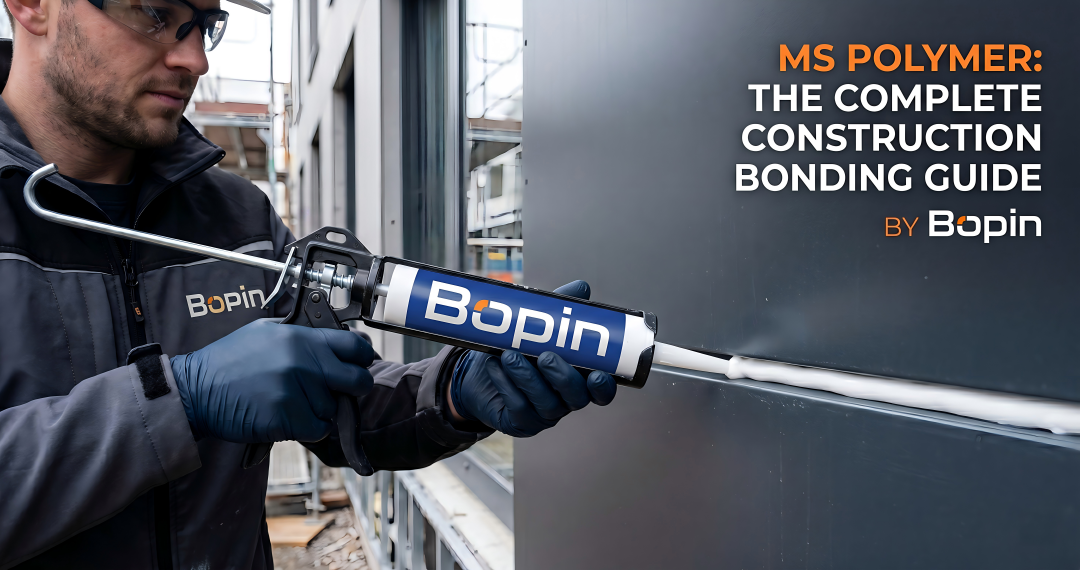
Expert guidance from BoPin Construction Chemicals – achieving professional painting finishes
The Detail That Separates a DIY Job from a Professional Finish
You’ve spent hours prepping and painting. Everything looks perfect. Then you notice that ugly, unpainted caulk line around your trim or windows screaming “amateur.”
This single detail ruins an otherwise flawless paint job. Professional painters know that seamless finishes require sealants that don’t just fill gaps – they become one with the wall.
The secret to a truly seamless, high-end paint job lies in choosing a sealant that accepts paint as well as the surrounding surfaces do. Not all caulks can do this.
This guide will clear up all the confusion. We’ll explain the different types of paintable sealants. You’ll learn the truth about “paintable silicone.” And we’ll show you how to choose and apply the perfect product for a flawless, crack-proof finish that lasts for years.
The result? Paint finishes so seamless that gaps simply disappear.
The #1 Question: Can You Really Paint Silicone?
Let’s address the elephant in the room immediately: Can you paint over 100% silicone?
The Direct Answer: No
Traditional 100% silicone is a painter’s worst enemy. Paint will not adhere to its ultra-smooth, non-porous surface. The paint beads up like water on wax paper.
What actually happens when you try:
- Paint refuses to spread evenly across the silicone surface
- Beading and fish-eyes appear immediately during application
- The paint film peels away within days or even hours
- You’re left with exposed silicone that ruins your entire finish
Professional painters avoid using 100% silicone anywhere that will be painted. They’ve learned this lesson the hard way.
So What is “Paintable Silicone”?
Products labeled “paintable silicone” are not true 100% silicones. This is marketing terminology that causes significant confusion.
These products are actually:
- Hybrid/MS Polymer sealants with silicone-like performance but paintable surfaces
- Siliconized acrylic formulations that blend acrylic paintability with enhanced flexibility
- Advanced polymer blends designed to offer the best of both worlds
True 100% silicone and paintability are mutually exclusive properties. You can’t have both in the same product due to fundamental chemistry.
Understanding this distinction helps you choose the right product and avoid disappointing results.
The Technology: Choosing the Right Type of Paintable Sealant
Different paintable sealants excel in different applications. Understanding the technology helps you match the product to your project.
Professional Comparison
| Sealant Type | Best For… | Flexibility | Waterproof Level |
|---|---|---|---|
| Siliconized Acrylic Latex | Interior trim, baseboards, crown molding, wall cracks | Good (±12.5%) | Good (Water-Resistant) |
| Hybrid MS Polymer | Exterior windows, siding, high-movement areas, weather sealing | Excellent (±25%) | Excellent (Waterproof) |
Siliconized Acrylic Latex: The Interior Champion
Siliconized acrylic latex combines traditional acrylic paintability with enhanced flexibility from silicone additives.
Key advantages:
- Excellent paint adhesion with virtually all paint types
- Water-based formula for easy cleanup and low odor
- Fast paint-ready time – often as little as 30 minutes to 2 hours
- Economical for large interior projects
- Easy application with smooth tooling properties
Best applications:
- Baseboards and crown molding
- Interior door and window trim
- Wall and ceiling cracks
- Between dissimilar materials indoors
- Any interior joint that will be painted
Limitations:
- Not waterproof – only water-resistant
- Lower movement capability than hybrids (typically ±7.5% to ±12.5%)
- Not ideal for exterior use except in well-sheltered locations
Hybrid MS Polymer: The Exterior Powerhouse
MS Polymer technology delivers silicone-like performance while maintaining excellent paintability.
Key advantages:
- Exceptional flexibility (±25% movement capability)
- True waterproof performance for weather-exposed areas
- Superior UV resistance prevents degradation and paint failure
- All-season application – can be applied in temperatures as low as -5°C
- Excellent adhesion to difficult materials like PVC and aluminum
Best applications:
- Exterior window and door perimeters
- Siding joints and transitions
- Weatherproofing applications
- High-movement expansion joints
- Any exterior joint requiring paint
Considerations:
- Higher cost than acrylic alternatives
- Slightly longer cure time before painting
- More critical surface preparation for optimal performance
Buyer’s Guide: What to Look For in High-Performance Paintable Sealant
Professional painters and contractors use these criteria to separate quality products from cheap alternatives that crack and fail.
✓ Crack-Proof Flexibility
The sealant must move with the joint without cracking the paint film on top. Buildings move. Temperature changes cause expansion and contraction. Your sealant must accommodate this movement.
Look for movement capability ratings:
- ±7.5% minimum for interior low-movement joints
- ±12.5% for interior trim and moderate-movement areas
- ±25% for exterior applications and high-movement joints
Insufficient flexibility causes:
- Paint film cracking along joints
- Sealant pulling away from surfaces
- Gaps opening up during temperature changes
- Complete seal failure
✓ Paint-Ready Time
How quickly you can paint affects project schedules significantly, especially for professionals.
Typical paint-ready times:
- Basic acrylics: 4-24 hours
- Premium acrylics: 30 minutes to 2 hours
- MS Polymer hybrids: 2-24 hours depending on conditions
Faster isn’t always better – ensure the sealant has formed a proper skin that won’t be damaged by paint application.
✓ Exterior Rating & UV Resistance
Not all paintable sealants can handle exterior conditions. Sun, rain, temperature extremes, and UV radiation destroy products not specifically designed for outdoor use.
For exterior applications, verify:
- Explicit exterior rating on the product label
- UV resistance to prevent degradation
- Weatherproofing capabilities for rain and moisture
- Temperature range appropriate for your climate
Using interior-only products outside leads to rapid failure regardless of paint coverage.
✓ Easy Application & Cleanup
Professional results require products that apply smoothly and tool easily.
Key usability features:
- Smooth extrusion without lumps or hard spots
- Good tooling window (5-15 minutes typically)
- Clean edges when tooled properly
- Easy cleanup (water for acrylics, solvents for hybrids)
Our Top Recommendations for a Flawless, Paintable Finish
Professional-grade products eliminate guesswork and ensure reliable results.
Best for Interior Trim & Paint Projects: BoPin A-630 Premium Paintable Acrylic
BoPin A-630 Premium Paintable Acrylic Sealant is the painter’s best friend for interior finishing work.
Why It’s the Professional’s Choice:
Superior Paintability: Minimal cracking even with low-elasticity paints. The advanced siliconized acrylic formula accepts paint as well as drywall or wood surfaces.
Enhanced Flexibility (±12.5%): Outperforms standard acrylics significantly, accommodating normal building movement without cracking.
Fast Paint-Ready: Skin forms in 10-15 minutes, allowing painting in as little as 2-4 hours under normal conditions. This speeds up project completion significantly.
Excellent Adhesion: Strong bonding to wood, drywall, plaster, concrete, and other common interior materials without primer.
Low VOC Formula (< 30 g/L): Environmentally friendly with minimal odor, safe for occupied spaces.
Minimal Shrinkage: Less than 15% shrinkage during curing prevents gaps and cracks from forming.
Best for All-Around Exterior Use: BoPin MS-240 All-Weather Window & Door Sealant
BoPin MS-240 All-Weather Window & Door Sealant delivers hybrid MS polymer technology for demanding exterior applications.
Why It Wins:
Extreme Flexibility (±25%): Handles the significant movement that occurs in exterior joints from temperature changes and building settlement.
All-Season Application: Can be applied from -5°C to +40°C, allowing year-round installation regardless of weather.
Superior Paintability: Compatible with most paint systems while maintaining waterproof performance that acrylics cannot match.
Excellent Multi-Surface Adhesion: Bonds to PVC, aluminum, wood, and concrete without primer – critical for window and door installations.
Enhanced UV Resistance: Maintains properties despite sun exposure that would degrade interior-only products.
Damp Surface Application: Unique capability to apply to slightly moist surfaces, eliminating weather-related delays.
How to Apply Paintable Caulk for Invisible Seams: 5-Step Professional Guide
Proper application technique is as important as product selection. Follow these professional steps for seamless results.
Step 1: Prepare Perfectly
Surface preparation determines success or failure. Professional painters never skip this step.
Complete preparation includes:
- Remove 100% of old caulk using a sharp knife and scraper
- Clean surfaces with appropriate cleaner to remove dirt, oils, and residues
- Allow surfaces to dry completely before application
- Verify joint dimensions are appropriate for the sealant
Any shortcuts here guarantee visible seams and premature failure.
Step 2: Apply a Thin, Consistent Bead
Less is more with paintable caulk. Excessive material creates thick, slow-curing beads that shrink and crack.
Professional application:
- Cut nozzle tip to create appropriate bead size for your joint
- Apply steady, even pressure while moving at consistent speed
- Create continuous beads without stops or gaps
- Keep bead slightly concave rather than bulging outward
The goal is to fill the joint, not build up excess material on surfaces.
Step 3: Tool for a Smooth, Professional Finish
Tooling presses caulk into the joint and creates the smooth profile that paint needs.
Professional tooling technique:
- Work within the tooling window (typically 5-15 minutes after application)
- Use a wet finger or tool dipped in water (for acrylics) or soapy water
- Single, smooth passes create better results than multiple corrections
- Press firmly to ensure complete contact with both joint surfaces
Perfect tooling creates the invisible seam that defines professional work.
Step 4: Clean Up & Respect Dry Time
Remove excess immediately while still wet – dried caulk is difficult to remove without damaging finishes.
Crucial timing:
- Clean tools immediately with water (acrylics) or appropriate solvent
- Wipe excess from surrounding surfaces before skinning occurs
- Respect paint-ready time specified by manufacturer
- Test for dry skin before painting – shouldn’t feel tacky
Rushing this step ruins otherwise perfect work.
Step 5: Paint Like a Pro
The painting technique matters for truly invisible seams.
Professional painting tip: Brush paint from the trim or wall ONTO the caulk bead in a single direction. This creates the cleanest possible line.
Don’t:
- Paint back and forth across the caulk
- Use excessive paint that pools on the caulk
- Paint before the caulk has properly dried
Do:
- Use smooth, directional strokes
- Apply thin, even coats
- Allow each coat to dry before adding additional coats
Paintable Sealant FAQ
How long after caulking can I paint?
This depends on the specific product and environmental conditions.
BoPin A-630 Premium Paintable Acrylic can typically be painted in 2-4 hours under normal conditions (23°C, 50% humidity). In cooler or more humid conditions, wait 6-24 hours.
BoPin MS-240 Hybrid Sealant typically requires 2-24 hours before painting depending on conditions.
Always test for a dry skin before painting – it shouldn’t feel tacky or sticky.
What happens if you paint over 100% silicone?
The paint will fail catastrophically. Paint cannot chemically bond to silicone’s ultra-smooth surface.
What you’ll see:
- Immediate beading and fish-eyes during application
- Paint peeling away in sheets within days
- Exposed silicone that’s impossible to cover
- Complete project failure requiring stripping and redoing
If you’ve accidentally used silicone where you needed paintability, you must remove it completely and start over with a proper paintable product.
Is paintable caulk waterproof?
This depends on the type of paintable caulk:
Acrylic-based paintable caulks are water-resistant, not waterproof. They handle occasional moisture and humidity but shouldn’t be used for continuous water exposure.
MS Polymer hybrid paintable sealants are truly waterproof and suitable for exterior weather exposure and areas with significant moisture.
For interior trim in dry areas, water-resistant is sufficient. For exterior applications or wet areas, choose waterproof hybrid formulations.
Can I use paintable caulk in a shower?
No, standard paintable caulks are not designed for continuous water immersion. For showers and other wet areas, use specialized bathroom sealants with anti-mold protection.
Paintable caulks lack the mold resistance and continuous water exposure capabilities required for shower applications.
Why does my paint crack along the caulk lines?
This indicates insufficient flexibility in either the caulk or the paint film. As the joint moves, the caulk stretches but the paint cannot, causing cracking.
Solutions:
- Use higher-flexibility paintable caulk (±12.5% minimum, ±25% for exterior)
- Choose flexible paint formulations for trim work
- Ensure proper curing before painting
- Avoid applying excessively thick paint coats
The Finishing Touch That Defines Your Work
A seamless, professional paint job is impossible without the right paintable sealant. The difference between amateur and professional results often comes down to this single detail.
The key is matching the technology to your application:
- Acrylic for interiors where ease of use and fast painting are priorities
- Hybrid MS Polymer for exteriors where flexibility, waterproofing, and durability are essential
Proper application technique transforms quality products into invisible seams that make your paint work shine.
Professional painters invest in quality paintable sealants because their reputation depends on flawless finishes that last for years.
Your projects deserve the same professional approach. The small investment in proper products pays massive dividends in appearance, durability, and pride in your work.
Don’t let the wrong caulk compromise your finish. Get professional-grade paintable sealants designed to work perfectly with paint. Explore our complete line of paintable solutions for every application.
Need expert guidance on selecting the perfect paintable sealant for your project? BoPin Construction Chemicals provides professional-grade products and technical support for flawless finishing results.