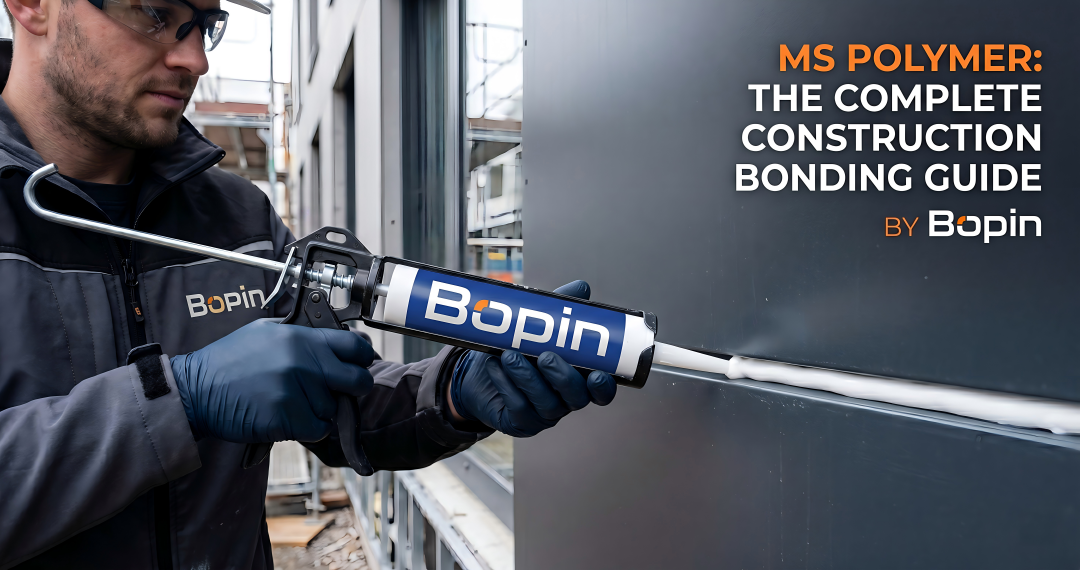
Expert automotive guidance from BoPin Construction Chemicals – sealing engines with professional precision
The Go-To Sealant for a Leak-Proof Drivetrain
When you’re sealing an oil pan or a transmission cover, there’s zero room for error. A failed gasket means a critical fluid leak. That puddle under the car isn’t just embarrassing – it’s expensive and potentially dangerous.
Here’s what professional mechanics understand: Not all sealants are created equal, especially when oil is involved. The wrong product will break down in days or weeks, creating a comeback that damages your reputation and costs you money.
That’s why, for decades, professional mechanics have reached for one specific tool for the job: Black RTV Silicone.
This guide is your complete technical resource. We’ll break down why Black RTV is the king of oil resistance. You’ll learn how it differs from other colors like Red or Blue. And we’ll provide a step-by-step guide to creating a perfect, permanent formed-in-place gasket.
The result? Seals that hold for the life of the engine, protecting your work and your reputation.
Why Black? The Science of Oil Resistance
Understanding the chemistry helps you appreciate why Black RTV is non-negotiable for oil-contact applications.
The Special Formulation
Black RTV silicones are specifically formulated with additives that maintain a strong, flexible bond even when in constant contact with hot engine oils and other drivetrain fluids.
The secret is in the base polymer and reinforcing additives. These components resist oil degradation that would cause standard sealants to soften, swell, or lose adhesion over time.
Think of it like waterproof boots versus regular shoes – both might keep your feet dry initially, but only one is designed for continuous water exposure.
How Oil Destroys Other Sealants
Motor oil is an excellent solvent that attacks many materials at the molecular level. Standard sealants may:
- Swell and lose dimensional stability
- Soften and extrude under pressure
- Lose adhesion and peel away from surfaces
- Break down chemically and turn to sludge
Black RTV’s specialized formulation resists these failure modes through chemical compatibility with petroleum-based fluids.
The Difference: Black vs. Red vs. Blue RTV
Each color indicates a different formulation optimized for specific applications:
Black RTV (Oil-Resistant):
- Primary use: Oil pans, transmission cases, differential covers
- Key feature: Maximum oil resistance
- Temperature range: Typically -65°F to 500°F (-54°C to 260°C)
- Best for: Anywhere oil or gear lube is present
Red High-Temp RTV:
- Primary use: Exhaust manifolds, turbo housings
- Key feature: Maximum heat resistance (up to 650°F/343°C)
- Trade-off: Less oil resistance than Black
- Best for: High-temperature, low-oil applications
Blue RTV (General Purpose):
- Primary use: Water pumps, thermostat housings
- Key feature: Balanced properties for coolant contact
- Limitation: Not optimized for continuous oil exposure
- Best for: Coolant system applications
The bottom line: Use Black RTV wherever oil or transmission fluid is present – it’s not optional.
When to Use Black RTV: The Professional’s Application List
Black RTV is the professional standard for these critical drivetrain sealing applications:
✓ Oil Pans
The number one application for Black RTV. The constant presence of hot, pressurized oil demands specialized resistance. Never use general-purpose sealants here – they’ll fail within months.
✓ Transmission Pans
Automatic transmission fluid (ATF) is particularly aggressive toward standard sealants. Black RTV’s chemical resistance prevents degradation and fluid leaks.
✓ Valve Covers
Creates a flexible seal that withstands engine vibration without cracking or losing adhesion. The slight oil mist inside valve covers requires oil-resistant formulations.
✓ Differential Covers
Protects against gear oil leakage which is even more viscous and penetrating than motor oil. The high torque loads on differential bolts demand a seal that won’t extrude.
✓ Timing Covers
Front engine seals where oil is present require Black RTV’s specialized protection. Standard sealants fail quickly in this application.
✓ Rear Main Seal Areas
Any application where the crankshaft seal interfaces with engine block or transmission housing demands oil-resistant sealing.
✓ Turbocharger Flanges
Where oil-cooled turbos connect to blocks, Black RTV provides both oil resistance and adequate temperature handling.
Buyer’s Guide: What to Look For in High-Performance Black RTV
Professional mechanics use these criteria to separate quality products from cheap alternatives that cause comebacks.
✓ Maximum Oil Resistance (Non-Negotiable)
The label should explicitly state “oil resistant” or “oil-proof.” Vague claims about “automotive applications” aren’t enough.
Look for specific testing against motor oils, gear lubes, and ATF. Quality manufacturers provide this data.
✓ Appropriate Temperature Range
Ensure the product meets the demands of an engine environment:
- Minimum low temp: Should handle at least -40°F/-40°C for cold starts
- Maximum high temp: At least 400°F/200°C continuous, preferably 500°F/260°C
- Intermittent high temp: Should tolerate brief excursions even higher
Insufficient temperature rating leads to hardening, cracking, and seal failure.
✓ Sensor-Safe Formulation
A non-negotiable feature for modern engines with oxygen sensors, MAF sensors, and other electronics.
Acetic acid-cure RTV (the “vinegar smell” type) can damage sensors during curing. Modern Black RTVs use neutral cure systems that won’t harm sensitive components.
Always verify sensor-safe certification before use on any modern vehicle.
✓ Flexibility & Vibration Resistance
Must withstand constant engine vibration without cracking, hardening, or losing its seal.
Look for elongation ratings over 400% – this indicates the cured sealant can stretch significantly without failure.
Adhesion must be permanent even under thermal cycling and mechanical stress.
✓ Non-Corrosive to Metals
Quality Black RTV won’t attack aluminum, cast iron, or steel even in the presence of moisture and oil.
Check for compatibility statements covering all common engine materials.
Our Recommendation: BoPin 770 Black High-Temperature Silicone
BoPin 770 High Temperature Silicone Sealant in Black delivers professional-grade performance for demanding automotive applications.
Why It’s the Professional’s Choice
Extreme Temperature Resistance: Maintains properties from -40°C to +300°C, handling both cold-start conditions and high-temperature engine operation without degradation.
Thermal Cycling Stability: Remains flexible after repeated heating and cooling cycles that occur during normal engine operation. Won’t crack, harden, or lose adhesion.
Superior Oil Resistance: Engineered specifically for continuous contact with motor oils, gear lubes, and transmission fluids without softening or breaking down.
Strong Metal Adhesion: Bonds permanently to steel, aluminum, cast iron, and other engine materials without primer in most applications.
Vibration Resistant: Maintains seal integrity despite constant engine vibration and mechanical stress.
Fast Skin Formation: Forms initial skin within 8-15 minutes, allowing faster assembly compared to slower-curing alternatives.
Non-Sagging Formula: Perfect for vertical and overhead gasket applications without dripping or running during assembly.
How to Create a Perfect Formed-in-Place Gasket: 5-Step Professional Guide
Proper technique is critical for reliable seals. Follow these professional steps to ensure your gaskets hold for the life of the engine.
Step 1: The Perfect Prep (Most Important!)
This is the most important step – don’t rush it. Surface preparation determines seal success or failure.
Remove all old gasket material:
- Use a gasket scraper for bulk removal
- Follow with Scotch-Brite or similar abrasive pad
- Verify complete removal by running your finger across surfaces
- Any remaining material creates leak paths
Complete oil removal is critical:
- Wipe surfaces with brake cleaner or carburetor cleaner
- Use clean, lint-free rags for each wipe
- Final wipe must show no oil residue on the rag
- Any oil contamination prevents adhesion
Inspect mating surfaces:
- Check for warping, deep scratches, or damage
- Resurface badly damaged surfaces if necessary
- Minor imperfections are acceptable – RTV fills small gaps
Ensure surfaces are completely dry before application.
Step 2: Apply a Continuous Bead
Application technique affects seal quality:
Cut the nozzle appropriately:
- 1/8″ to 3/16″ bead diameter for most applications
- Smaller beads for thin flanges
- Larger beads for rough surfaces or worn gasket grooves
Apply to one surface only:
- Place bead approximately 1/8″ inward from bolt holes
- Create continuous bead without stops or gaps
- Circle around all bolt holes – don’t cut corners
- Speed and pressure should be consistent
Pay attention to corners and difficult areas:
- Slow down at corners to ensure continuous coverage
- Don’t create excess buildup that squishes out excessively
Step 3: Assemble Finger Tight
Timing is critical after application:
Assemble immediately – don’t wait for skinning over. The RTV needs to wet both surfaces for proper adhesion.
Install all bolts finger tight:
- Start with center bolts and work outward
- Tighten just enough to seat components together
- Don’t torque yet – this allows RTV to spread evenly
Check for proper squeeze-out:
- Small, consistent bead around perimeter indicates proper thickness
- Excessive squeeze-out means too much RTV was applied
- No squeeze-out might indicate insufficient coverage
Step 4: Wait, Then Torque to Spec
Proper cure timing prevents leaks:
Wait at least 1 hour before final torquing:
- This allows initial cure to prevent over-compression
- In cold conditions, wait longer
- In hot conditions, slightly shorter wait is acceptable
Torque bolts to manufacturer’s specification:
- Use proper torque sequence (typically spiral pattern from center)
- Follow OEM torque specifications exactly
- Use calibrated torque wrench for accuracy
Verify final squeeze-out:
- Should see thin, consistent bead all around
- Clean excess with rag before full cure
Step 5: Full Cure Before Service
Allow proper cure time for maximum performance:
Wait 24 hours before filling with fluids or returning to service. This ensures:
- Complete cross-linking of silicone polymer
- Maximum adhesion development
- Full oil resistance properties activated
- Optimal mechanical properties achieved
For critical applications:
- Consider 48-hour cure time
- Especially important in cold weather
- Prevents premature seal failure from incomplete cure
Black RTV FAQ
How long does Black RTV take to cure?
Skin formation occurs in 8-15 minutes for BoPin 770 Black, allowing assembly shortly after application.
Working time is approximately 5 minutes – apply and assemble within this window for best results.
Initial cure (for torquing) takes 1 hour under normal conditions (23°C/70°F, 50% humidity).
Full cure requires 24 hours before exposing to fluids or operating conditions. Low temperatures or high humidity extend cure time – allow extra time in these conditions.
Is Black RTV gasoline resistant?
Black RTV provides reasonable resistance to gasoline splash and vapor but is NOT designed for continuous gasoline immersion.
For fuel system applications:
- Use specialized fuel-resistant sealants
- Black RTV is acceptable for external gasket sealing
- Don’t use where continuous fuel contact occurs
- Check manufacturer’s chemical resistance data
What’s the difference between “Black” and “Ultra Black” RTV?
“Ultra Black” typically indicates premium formulations with enhanced performance characteristics:
- Higher oil resistance for extreme service conditions
- Greater flexibility for high-vibration applications
- Extended temperature range for demanding environments
- Superior adhesion to difficult materials
- Sensor-safe formulation guaranteed for all modern vehicles
Standard Black RTV performs well in most applications but may not meet the demands of racing, heavy-duty commercial, or extreme operating conditions.
The Right Seal for a Leak-Free Engine
For a reliable, long-lasting seal on any engine component that contacts oil, a high-quality, oil-resistant Black RTV Gasket Maker is the only professional choice.
The difference between success and comebacks lies in using the correct product and following proper application procedures.
Surface preparation accounts for 80% of seal success – never compromise on cleaning and prep work to save a few minutes.
Proper cure time is non-negotiable – rushing this process guarantees premature failure.
Remember: Your reputation depends on the quality of your work. Don’t risk a comeback over a few dollars saved on inferior sealant or time saved by rushing the job.
Don’t risk a comeback. Do the job right the first time with a sealant you can trust. Explore the professional-grade performance of BoPin 770 Black High-Temperature Silicone for your next engine repair.
Browse Automotive Application →
Need expert guidance on automotive sealing applications? BoPin Construction Chemicals provides professional-grade sealants and technical support for mechanics who demand reliability and performance.