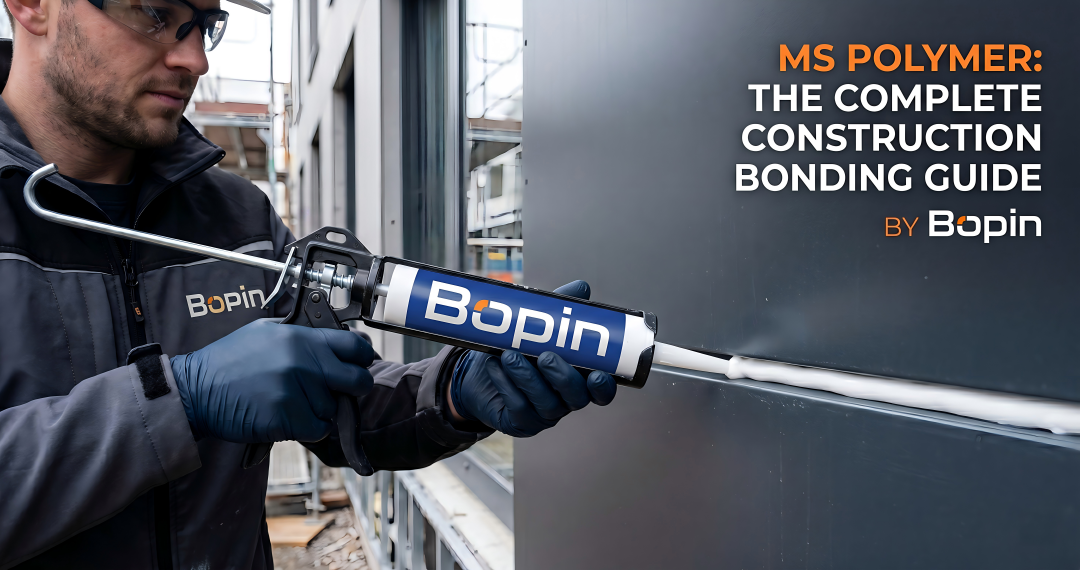
Expert guidance from BoPin Construction Chemicals – mastering modern adhesive technology for permanent bonding
Why Construction Adhesives Have Revolutionized Modern Building Practices
Walk through any construction project today and you’ll notice something remarkable: fewer mechanical fasteners, cleaner installations, and stronger bonds than traditional methods could achieve. Modern construction adhesives have fundamentally changed how we assemble buildings, install finishes, and mount heavy materials.
The transformation goes beyond simple convenience. Advanced adhesive technology distributes loads across entire bond areas rather than concentrating stress at fastener points. This creates stronger, more durable assemblies while eliminating visible hardware that compromises aesthetics. Adhesive bonds accommodate thermal movement and vibration without loosening like mechanical fasteners. They seal as they bond, preventing moisture infiltration that causes long-term damage.
But achieving these benefits requires understanding adhesive technology and matching products to specific applications. Using sealants as adhesives—or general-purpose adhesives for structural applications—leads to failures that damage both materials and reputations. Professional results demand selecting appropriate adhesive chemistry, preparing surfaces properly, and applying products according to tested specifications.
This comprehensive guide provides everything construction professionals need to know about modern construction adhesives. You’ll understand different adhesive technologies and their appropriate applications, learn proper surface preparation and application techniques, and master installation methods ensuring reliable, long-lasting bonds. Whether you’re mounting heavy stone panels, installing mirrors, bonding structural elements, or securing countertops, this guide delivers actionable knowledge for professional results.
Каков результат? Confidence in specifying and applying construction adhesives that create permanent, reliable bonds while meeting the complex demands of modern construction projects.
Understanding Construction Adhesive Technology
Modern construction adhesives represent sophisticated chemistry specifically engineered for building applications.
What Makes Construction Adhesives Different from Sealants
Many builders confuse sealants and adhesives because both come in similar packaging and cure through moisture exposure. Understanding the fundamental differences prevents costly application errors.
Design intent:
- Sealants: Designed primarily to fill gaps and prevent water, air, or chemical penetration. Adhesion is secondary to gap-filling and flexibility.
- Adhesives: Engineered primarily to create strong bonds between materials. Gap-filling ability is limited but bonding strength is maximized.
Physical properties:
- Sealants: High elongation (400-600%+), low modulus (soft and flexible), optimized for movement accommodation
- Adhesives: Moderate elongation (200-400%), higher modulus (firmer), optimized for load transfer and dimensional stability
Strength characteristics:
- Typical silicone sealant: 20-60 PSI tensile strength, adequate for sealing but insufficient for load-bearing
- Construction adhesive: 300-500 PSI tensile strength, designed for structural applications
- High-strength MS polymer adhesive: Up to 3.0 MPa (435 PSI) tensile strength with immediate grab
Application focus:
- Sealants: Joint movement, weatherproofing, moisture barriers
- Adhesives: Load transfer, permanent assembly, structural bonding
Can sealants bond materials? Yes, to some degree. Should sealants be used as primary adhesives? Almost never. The strength difference means what seems adequate initially fails under sustained loads or stress cycling.
MS Polymer Technology: The Adhesive Revolution
Modified Silane (MS) polymer adhesives represent the most significant advancement in construction adhesive technology in decades.
How MS polymer adhesives work:
MS polymers combine polyether backbone chains modified with reactive silane groups. During moisture cure, these silane groups crosslink to create three-dimensional networks that provide both flexibility and strength—characteristics difficult to achieve simultaneously.
Why MS polymers transformed construction bonding:
Eliminates isocyanates: Traditional polyurethane adhesives contain isocyanates that require careful handling and create health concerns. MS polymers deliver comparable or superior performance without isocyanate chemistry.
Universal material compatibility: MS polymers bond to virtually all construction materials without primers in most cases—metals, stone, wood, concrete, glass, most plastics, and composites.
Нулевая усадка: Unlike some traditional adhesives that shrink during cure and create stress, MS polymers maintain dimensional stability. Critical for precision installations and applications involving dissimilar materials.
Environmental resistance: Excellent UV resistance, weathering durability, and chemical resistance make MS polymers suitable for both interior and exterior applications without degradation.
Мгновенная сила захвата: Advanced formulations provide initial grab exceeding 75 kg/m², eliminating temporary supports for many applications. This speeds installation and reduces labor costs significantly.
Такие продукты, как Высокопрочный строительный клей BoPin MS-850 exemplify modern MS polymer technology with 3.0 MPa final strength, immediate grab, and proven performance across diverse construction applications.
Traditional Polyurethane Adhesives: Understanding the Alternatives
Polyurethane-based construction adhesives dominated the market before MS polymer technology emerged and remain common for specific applications.
Эксплуатационные характеристики:
- Very high final strength (comparable to MS polymers)
- Excellent gap-filling capability (expands during cure)
- Superior adhesion to wood and porous materials
- Works on damp surfaces (moisture actually accelerates cure)
Limitations and concerns:
- Contains isocyanates requiring careful handling
- Foaming during cure can push materials apart if over-applied
- Some formulations yellow or degrade with UV exposure
- Cleanup requires solvents before cure; mechanical removal after
Best applications for polyurethane adhesives:
- Wood construction and carpentry
- Applications requiring gap-filling expansion
- Situations where damp substrate bonding is necessary
- Interior applications where isocyanate handling isn’t problematic
Why MS polymers increasingly replace polyurethane: The combination of health and safety advantages, cleaner application, and superior environmental resistance makes MS polymers the preferred choice for most modern construction bonding. Polyurethane remains relevant primarily for wood applications and gap-filling situations.
Critical Performance Characteristics
Understanding key specifications helps match adhesive capabilities to application requirements.
Initial Grab vs. Final Bond Strength
Professional adhesives are characterized by two distinct strength measurements that serve different purposes.
Initial grab strength: This measures the adhesive’s ability to hold materials in position immediately after contact, before full cure develops. Expressed as kg/m² or N/m², it indicates whether temporary supports are necessary during installation.
Standard construction adhesives: 20-40 kg/m² initial grab (temporary supports typically required) High-performance adhesives: 75+ kg/m² initial grab (often eliminates temporary support needs)
Why initial grab matters:
- Eliminates or reduces temporary bracing and support systems
- Speeds installation by allowing immediate progression to next steps
- Reduces labor costs associated with installing and removing supports
- Enables ceiling and overhead applications without elaborate staging
Окончательная прочность сцепления: This measures the fully cured adhesive’s ultimate tensile or shear strength, typically expressed in MPa or PSI. Final strength develops over 24-72 hours depending on formulation and conditions.
Standard construction adhesives: 1.5-2.0 MPa (220-290 PSI) High-strength formulations: 2.5-3.0 MPa (360-435 PSI) Structural adhesives: 3.5+ MPa (500+ PSI)
Strength development timeline:
For most construction adhesives:
- 15 minutes: Initial tack, materials held in position
- 1-2 hours: Sufficient strength for careful handling
- 24 hours: 50-70% of final strength achieved
- 72 hours: Full strength development complete
Temperature and humidity significantly affect this timeline. Cold conditions extend cure times substantially; warm, humid conditions accelerate strength development.
Open Time and Working Time
Open time: Period after application when materials can still be bonded effectively. Adhesive remains wet enough to create good substrate contact and adhesion.
Typical open times:
- Fast-setting formulations: 5-10 minutes
- Standard products: 10-20 minutes
- Extended open time formulations: 20-30+ minutes
Время работы: Period after bonding when materials can be adjusted or repositioned without compromising final bond strength.
Typical working times:
- Fast-setting: 2-5 minutes
- Standard: 5-10 minutes
- Extended working time: 10-20 minutes
Why these distinctions matter:
Large panels or complex assemblies require extended working times for proper alignment. Fast-setting products excel for small parts or when speed is critical. Matching product characteristics to installation complexity prevents rushed work that compromises quality.
Environmental factors affecting open and working times:
- Температура: Higher temperatures reduce times; cold extends them
- Влажность: Accelerates moisture-cure adhesives; very dry conditions slow cure
- Substrate porosity: Porous materials absorb moisture, reducing available working time
- Adhesive thickness: Thick beads retain workability longer than thin films
Gap-Filling Capability
Gap-filling refers to the adhesive’s ability to bridge spaces between substrates and maintain bond strength across gaps.
MS polymer adhesives: Typically 3-6mm effective gap filling Polyurethane expanding adhesives: Up to 20mm gap filling Epoxy adhesives: Usually <3mm (thin-bed applications)
Why gap-filling limitations exist:
Adhesives develop strength through substrate contact and chemical bonding. In larger gaps, the adhesive must support itself structurally while also creating bonds. Beyond optimal thickness, internal cohesive strength becomes the limiting factor rather than adhesive strength.
Practical implications:
- Flat, well-fitting substrates maximize adhesive performance
- Gaps exceeding adhesive capabilities require shimming or mechanical support
- Irregular surfaces may need adhesive selection based on gap-filling rather than pure strength
- Excessive adhesive thickness to compensate for poor fit wastes material without improving strength
Applications and Installation Techniques
Different applications require specific adhesive approaches and techniques.
Heavy Panel Installation
Panel installation—whether stone veneer, large-format tile, metal cladding, or architectural panels—challenges both adhesive technology and installation skill.
Load calculations and adhesive requirements:
Panel weight calculation: Weight = Area × Thickness × Material Density
Example: Granite panel 1.2m × 0.8m × 30mm thick
- Area: 0.96 m²
- Volume: 0.96 × 0.03 = 0.0288 m³
- Granite density: ~2,700 kg/m³
- Weight: 0.0288 × 2,700 = 78 kg (~172 pounds)
Required adhesive strength: For 78 kg panel with safety factor of 4:
- Required holding strength: 312 kg
- Area covered by adhesive (75% coverage): 0.72 m²
- Required adhesive shear strength: 312/0.72 = 433 kg/m² minimum
High-strength adhesives like БоПин МС-850 with >75 kg/m² initial grab and 3.0 MPa final strength easily exceed these requirements while eliminating temporary support needs.
Application pattern for panels:
Lightweight panels (<5 kg/m²):
- Vertical beads at 30cm spacing
- Minimum 25% surface coverage
- Perimeter bead plus central support
Medium-weight panels (5-15 kg/m²):
- Vertical beads at 20cm spacing
- 50% surface coverage minimum
- Full perimeter plus grid pattern
Heavy panels (>15 kg/m²):
- Vertical beads at 10cm spacing
- 75% surface coverage minimum
- Full perimeter plus dense grid pattern
Installation procedure:
- Substrate verification: Ensure wall is plumb, structurally sound, and capable of supporting panel weight plus adhesive loads
- Panel dry-fitting: Test-fit panels to verify dimensions and identify any irregularities requiring correction
- Surface preparation: Clean both panel back and substrate thoroughly. Remove dust, oils, release agents, and contaminants
- Adhesive application: Apply in vertical beads per pattern requirements. For heavy panels, work in sections to respect open time
- Pressing sequence: Press panel firmly to substrate, pull away briefly (1-2cm) to expose adhesive to air, then press back into final position and hold firmly for 10-15 seconds
- Alignment verification: Check level and plumb immediately after positioning. Adjust within working time window
- Support removal timing: If temporary supports are used, remove only after sufficient cure time per manufacturer specifications
Special considerations for natural stone:
Some porous stones absorb moisture from adhesive, potentially affecting cure. For sensitive materials:
- Use low-water-content adhesives
- Consider back-sealing porous stone
- Test adhesion on actual stone before full installation
- Extend cure time expectations for heavy, porous materials
Mirror Mounting and Glass Installation
Mirror installation presents unique challenges because standard mechanical fasteners aren’t suitable and mirror backing is sensitive to chemical attack.
Why mirrors require specialized adhesives:
Mirror backing sensitivity: Traditional polyurethane or solvent-based adhesives attack the silver coating on mirror backs, causing unsightly black spots or complete coating failure. Only chemically compatible adhesives prevent this damage.
Dimensional stability requirements: Mirrors are rigid and inflexible. Adhesive must cure without excessive shrinkage that could cause mirror buckling or stress cracks.
Moisture resistance: Bathroom mirrors face high humidity that can affect adhesive long-term performance if moisture resistance is inadequate.
MS polymer advantages for mirror mounting:
MS polymer adhesives like БоПин МС-850 are completely safe for mirror backing, shrink zero during cure, and maintain performance in humid environments indefinitely.
Professional mirror mounting technique:
Pattern selection:
- Never apply adhesive in continuous layer (prevents moisture access needed for cure)
- Use vertical strips pattern: 50mm wide beads, 150-200mm spacing
- Ensure adhesive doesn’t extend to mirror edges where it might be visible
Application steps:
- Measure and mark: Determine exact mirror position on wall and mark perimeter
- Wall preparation: Ensure wall is clean, dry, flat, and structurally sound. Prime porous surfaces per adhesive manufacturer recommendation
- Adhesive application: Apply vertical strips to wall or mirror back (not both). For large mirrors, apply to wall for better control
- Positioning: Carefully position mirror, ensuring proper alignment before pressing
- Pressing technique: Press firmly across entire mirror surface, starting at center and working outward to eliminate voids
- Temporary support: Even with high initial grab, support large mirrors (>0.5m²) with temporary bracing for 24-48 hours until strength develops
- Время отверждения: Allow 72 hours before removing any supports or subjecting mirror to stress
Mirror size and adhesive quantity guidelines:
| Mirror Size | Adhesive Strips | Approximate Adhesive Needed |
|---|---|---|
| Small (<0.5m²) | 3-4 vertical strips | 1 cartridge |
| Medium (0.5-1.5m²) | 5-8 vertical strips | 1-2 cartridges |
| Large (1.5-3m²) | 8-12 vertical strips | 2-3 cartridges |
| Extra large (>3m²) | 12+ vertical strips | 3+ cartridges |
Countertop and Stair Tread Installation
Horizontal surface bonding presents different challenges than vertical applications, particularly for materials experiencing direct loads and potential impact.
Stone countertop installation:
Substrate requirements:
- Flat, level base (maximum 3mm variation per meter)
- Structurally adequate support (minimum 19mm plywood or equivalent)
- Clean, dry surface free from contaminants
Adhesive application for countertops:
- Continuous perimeter bead 25mm from edges
- Interior grid pattern with beads 150-200mm apart
- Sink cutout perimeters receive extra adhesive for support
- Total coverage approximately 60-70% of countertop area
Seam bonding technique:
For multi-piece countertops with field seams:
- Apply adhesive to both substrate and first countertop section
- Position first section precisely
- Apply specialized stone adhesive or polyester resin to seam edge
- Position second section, ensuring tight seam contact
- Install seam clamps to maintain pressure during cure
- Clean excess adhesive from seam immediately
- Allow full cure before removing clamps (minimum 24 hours)
Stair tread installation:
Stair treads experience both vertical loads and horizontal shear forces from foot traffic. Adhesive must resist both force directions.
Application pattern:
- Full perimeter bead
- Cross-grain beads every 150mm
- Avoid continuous longitudinal beads that could create slip planes
- Minimum 50% coverage for residential; 70% for commercial applications
Structural Element Bonding
Some construction adhesives are rated for structural applications where they partially or fully replace mechanical fasteners in load-bearing assemblies.
В число приложений входят:
- Subfloor gluing to floor joists
- Wall sheathing bonding to framing
- Roof decking attachment
- Structural panel bonding
- Load-bearing beam splicing (with engineered approval)
Critical requirements for structural bonding:
Engineering approval: Structural adhesive applications require engineering calculations and approvals. Building codes specify when and how adhesives can replace or supplement mechanical fasteners.
Quality control: Structural applications demand rigorous quality control including:
- Verified surface preparation procedures
- Environmental condition monitoring
- Application technique verification
- Strength testing of cure samples
- Documentation of all installation parameters
Backup mechanical fastening: Most structural codes require mechanical fasteners as backup even when adhesive provides primary bonding. This creates redundant load paths for safety.
Liability considerations: Professional structural bonding requires appropriate liability insurance, engineering oversight, and strict adherence to tested, approved systems.
Most construction professionals should limit adhesive use to non-structural applications unless specifically trained, insured, and operating under engineering guidance for structural bonding.
Surface Preparation: The Foundation of Successful Bonding
Surface preparation determines 70-80% of adhesive bond success. No amount of product quality compensates for contaminated or improperly prepared surfaces.
Cleaning Requirements by Substrate Type
Metals (aluminum, steel, stainless steel):
- Remove manufacturing oils, cutting fluids, and handling residues
- Clean with isopropyl alcohol, MEK, or manufacturer-recommended solvents
- For painted or coated metals, verify coating adhesion and compatibility
- Some applications benefit from light abrasion for mechanical bonding
- Allow complete solvent evaporation before adhesive application
Natural stone (granite, marble, limestone):
- Remove all dust, particularly from saw cutting or grinding
- Clean with pH-neutral stone cleaner (avoid acidic products on limestone/marble)
- Verify stone is completely dry (moisture meters help confirm)
- Check for sealers or treatments that might block adhesion
- Test adhesion on actual stone before full installation
Engineered stone and solid surface materials:
- Remove fabrication dust and residues
- Clean with mild detergent and water
- Light abrasion with 80-120 grit improves bonding
- Wipe with isopropyl alcohol as final step
- Follow material manufacturer recommendations for adhesive compatibility
Concrete and masonry:
- Remove laitance, dust, and loose material (wire brush or grinding)
- Repair any damaged or deteriorated areas before bonding
- Prime porous surfaces per adhesive manufacturer specifications
- Ensure complete primer dry time before adhesive application
- Concrete must be fully cured (28 days minimum for standard concrete)
Wood and wood composites:
- Remove sawdust, oils, and handling residues
- Ensure wood moisture content is appropriate (typically <15%)
- Light sanding may improve adhesion on hard, dense woods
- Avoid over-sanding that opens excessive porosity
- Some woods (teak, ipe, oily exotics) require special preparation
Glass and glazed ceramics:
- Clean with glass cleaner or isopropyl alcohol
- Ensure complete removal of release agents, labels, or protective coatings
- Verify surface is completely dry
- Avoid touching cleaned surfaces with bare hands
- These surfaces usually require no abrasion or primers
Plastics and composites:
- Identify plastic type (some don’t bond well without primers)
- Remove mold release agents and surface treatments
- Light abrasion improves bonding on many smooth plastics
- Test adhesion before committing to full installation
- PE, PP, and PTFE require primers or plasma treatment for bonding
Surface Dryness and Contamination
Moisture content affects adhesive performance significantly:
Most construction adhesives specify application to dry surfaces. Even small amounts of surface moisture can:
- Dilute adhesive at the interface, reducing initial tack
- Create bubbles during cure that weaken bonds
- Prevent proper wetting and adhesion development
- Extend cure times unpredictably
Testing surface moisture:
- Визуальный осмотр (более темный цвет указывает на влажность)
- Plastic sheet test (tape plastic to surface; condensation after 24 hours indicates excessive moisture)
- Moisture meters provide quantitative measurements
- When uncertain, allow additional drying time
Oil and grease contamination:
Invisible oil residues from handling or manufacturing prevent adhesive wetting and create catastrophic adhesion failures. Cleaning protocols must effectively remove oils:
- Solvent cleaning (isopropyl alcohol minimum; MEK for heavy contamination)
- Multiple cleaning passes with fresh solvent and clean cloths
- Visual evidence of contamination (cloth shows residue)
- Allow complete solvent evaporation before adhesive application
Dust and particulates:
Even thin dust layers create weak interfaces that fail under stress:
- Vacuum before solvent cleaning
- Compressed air removes particles from porous surfaces
- Tack cloths capture fine dust on smooth surfaces
- Verify cleanliness visually before proceeding
Climate and Environmental Considerations
Temperature, humidity, and atmospheric conditions significantly affect adhesive performance.
Hot Climate Applications (Middle East, North Africa)
Extreme heat creates unique challenges for adhesive installation and long-term performance.
Temperature effects on application:
Surface temperatures exceeding 40°C:
- Accelerated open time (adhesive skins over faster)
- Reduced working time (cure progresses rapidly)
- Potential for adhesive flowing or sagging on vertical surfaces
- Faster strength development but requires adjusted handling
Application timing strategies:
- Schedule installations for early morning or late afternoon
- Avoid midday work when surfaces reach maximum temperatures
- Store adhesive materials in shaded, cooler areas
- Bring materials to moderate temperature before use
Long-term performance considerations:
Quality MS polymer adhesives maintain properties from -40°C to +90°C, adequate for virtually all building envelope applications in desert climates. However, direct exposure to extreme heat requires verification of temperature ratings for specific applications.
Products like BoPin MS-850 provide reliable performance throughout desert temperature ranges with proven adhesion in extreme conditions.
Tropical and Humid Climates (Southeast Asia, Coastal Regions)
High humidity presents advantages and challenges for moisture-cure adhesives.
Humidity benefits:
- Faster cure times due to abundant atmospheric moisture
- More forgiving of minor surface moisture
- Consistent cure conditions year-round
- Reduced need for supplemental moisture addition
Potential issues:
- Accelerated cure reduces working time
- Monsoon rains can disrupt outdoor installations
- High humidity promotes biological growth on contaminated surfaces
- Coastal salt exposure requires enhanced chemical resistance
Best practices for humid tropics:
- Plan installations around weather patterns and forecasts
- Work efficiently to complete bonding within reduced working times
- Ensure exceptional surface cleanliness to prevent biological issues
- Select products with proven performance in tropical conditions
- Allow adequate cure time before heavy loads despite fast early strength development
Cold Continental Climates (Central Asia, Northern Regions)
Cold temperatures slow cure reactions and reduce initial tack, requiring adjusted procedures.
Temperature limitations:
Most construction adhesives specify minimum +5°C to +10°C application temperature. Below these thresholds:
- Cure times extend dramatically (2-4× normal duration)
- Initial grab strength may be insufficient for vertical applications
- Final strength development requires days rather than hours
- Adhesive consistency changes (thicker, harder to apply)
Cold weather bonding strategies:
Material conditioning:
- Store adhesives at room temperature (15-20°C) before use
- Transport in insulated containers
- Never apply adhesive that has been frozen
Substrate warming:
- Use temporary heating to bring substrates above minimum temperature
- Remove ice, frost, or condensation completely before bonding
- Verify temperature at time of application, not ambient air temperature
Extended support periods:
- Double or triple normal temporary bracing periods
- Don’t remove supports until adequate cure verification
- Test representative samples rather than assuming cure completion
Seasonal planning:
- Concentrate exterior bonding during moderate seasons
- Plan interior work for winter months
- Stock low-temperature formulations for off-season repairs
Common Problems and Solutions
Recognizing and preventing typical adhesive failures saves time, money, and professional reputation.
Problem: Insufficient Initial Grab (Materials Slump or Fall)
Симптомы: Bonded materials slide down walls, sag from position, or fall completely during initial cure period.
Распространенные причины:
- Adhesive exceeding open time before bonding
- Insufficient adhesive coverage or incorrect pattern
- Surface contamination preventing adequate tack
- Temperature too cold or too hot for proper performance
- Material weight exceeding adhesive capacity
- Applying to dusty or moist surfaces
Профилактика:
- Work within specified open time windows
- Apply adequate adhesive quantity per manufacturer specifications
- Verify surface cleanliness immediately before bonding
- Use high initial grab formulations for heavy materials
- Install temporary supports for heavy panels regardless of adhesive claims
- Match product selection to material weight and application
Remediation: Remove materials, clean both surfaces thoroughly, verify proper conditions, reapply fresh adhesive with appropriate temporary support.
Problem: Poor Final Bond Strength (Delamination After Cure)
Симптомы: Materials bond initially but separate later, often with clean release indicating adhesive failure rather than cohesive failure.
Распространенные причины:
- Inadequate surface preparation (most common)
- Incompatible substrate materials
- Surface contamination invisible but present
- Insufficient cure time before loading
- Environmental conditions outside specifications during cure
- Wrong product selection for application
Профилактика:
- Implement and follow rigorous surface preparation procedures
- Test adhesion on actual project materials before full installation
- Use manufacturers’ recommended surface preparations and primers
- Allow complete cure before subjecting bonds to stress
- Monitor and document temperature and humidity during cure
- Select adhesives specifically formulated for substrate combination
Remediation: Complete removal required. Investigate cause through material examination—clean substrate failure indicates contamination; visible adhesive residue on both surfaces suggests cohesive failure from improper cure. Address underlying cause before reapplication.
Problem: Excessive Adhesive Squeeze-Out and Mess
Симптомы: Adhesive oozes from joints, creates visible squeeze-out on finished surfaces, transfers to hands and tools, creates difficult cleanup situations.
Распространенные причины:
- Over-application of adhesive
- Incorrect bead pattern for gap dimensions
- Excessive pressing force during bonding
- Materials not fitting properly, requiring excessive adhesive
- Working too slowly relative to open time
Профилактика:
- Calculate required adhesive quantity and apply appropriate amount
- Match bead size and pattern to actual gap dimensions
- Fit materials properly before bonding (dry-fit verification)
- Apply consistent pressure during bonding without excessive force
- Work efficiently within open time windows
Cleanup:
- Remove excess immediately with appropriate solvent while uncured
- Cured adhesive requires mechanical removal (cut, scrape, sand)
- Protect finished surfaces with masking during installation
Problem: Adhesive Not Curing Properly
Симптомы: Adhesive remains soft, tacky, or uncured well beyond specified cure time. Material may appear cured on surface but remains liquid internally.
Распространенные причины:
- Extremely low humidity preventing moisture cure
- Very cold temperatures dramatically slowing reaction
- Excessive joint thickness exceeding cure capability
- Expired or degraded adhesive
- Contamination interfering with cure chemistry
Solutions:
- Increase humidity around installation if possible (light misting may help)
- Provide supplemental heat to accelerate cure in cold conditions
- Respect maximum gap-filling specifications
- Verify product date and storage conditions
- Test adhesive on sample before committing to large installation
Professional Selection Guide
Choosing the optimal adhesive for specific applications requires matching product capabilities to project requirements.
Adhesive Selection Decision Tree
Step 1: Define primary function
- Pure bonding (no gap-filling or flexibility needed): High-strength MS polymer or epoxy
- Bonding with flexibility: Standard MS polymer adhesive
- Bonding with gap-filling: Polyurethane adhesive
- Bonding with sealing: Hybrid adhesive-sealant
Step 2: Assess load requirements
- Decorative/lightweight (<2 kg/m²): Most adhesives adequate
- Medium loads (2-15 kg/m²): Standard construction adhesive
- Heavy loads (15-50 kg/m²): High-strength adhesive with initial grab
- Structural loads: Engineered adhesive systems only
Step 3: Consider environmental exposure
- Interior controlled environment: Most products suitable
- Interior humid areas: Moisture-resistant formulations
- Exterior weather exposure: UV-stable, weatherproof products
- Extreme temperatures: Verify service temperature range
- Chemical exposure: Select chemically resistant formulations
Step 4: Evaluate substrate compatibility
- Standard materials (metal, stone, wood): Most adhesives suitable
- Glass, mirrors: MS polymer (not polyurethane)
- Sensitive substrates: Verify compatibility, perform testing
- Dissimilar materials: MS polymer flexibility handles different expansion rates
Step 5: Review installation requirements
- Need immediate grab: High-initial-tack formulations
- Complex positioning: Extended open/working time products
- Large gaps: Polyurethane or thick-bed adhesives
- Fast project timeline: Quick-cure formulations
- Temporary supports available: Standard cure products acceptable
Product Recommendations by Application
Heavy stone panel installation: BoPin MS-850 High-Strength Construction Adhesive – Immediate grab eliminates supports, 3.0 MPa final strength handles heavy loads, zero shrinkage prevents stress.
Mirror mounting: BoPin MS-850 – Safe for mirror backing, no shrinkage prevents stress cracks, excellent humidity resistance.
Countertop installation: BoPin MS-850 – High strength for support, zero shrinkage maintains flatness, safe for all stone types.
General panel bonding: BoPin MS-850 or equivalent high-strength MS polymer – Versatile performance across applications, excellent material compatibility.
Wood construction: Quality polyurethane construction adhesive – Superior wood adhesion, gap-filling capability, moisture-resistant cure.
Часто задаваемые вопросы
Can I use silicone sealant instead of construction adhesive?
No, for most bonding applications silicone sealant is inadequate. Silicone sealants are designed primarily for sealing with tensile strength typically 20-60 PSI. Construction adhesives provide 300-500+ PSI specifically for load-bearing applications.
When silicone works: Very light decorative items, temporary bonds, flexible gasket-type applications.
When adhesive is required: Any structural bonding, heavy materials, permanent installations, load-bearing applications.
Using sealant as adhesive is a common mistake that leads to failures. The products look similar and cure similarly, but performance differs dramatically. Always use products designed for your specific application.
How long does construction adhesive take to cure?
Cure timeline varies by formulation and conditions:
Initial tack: 10-15 minutes (materials held in position) Working strength: 24 hours (50-70% of final strength) Полное излечение: 72 hours (complete strength development)
Factors affecting cure time:
- Температура: Cold dramatically slows cure; heat accelerates it
- Влажность: Higher humidity speeds moisture-cure adhesives
- Joint thickness: Thick applications cure slower than thin
- Вентиляция: Air circulation aids cure in confined applications
Лучшая практика: Plan installation schedules assuming 72-hour cure before full loading, regardless of initial strength development that may seem adequate earlier.
What’s the difference between construction adhesive and wood glue?
Construction adhesives:
- Formulated for bonding diverse building materials
- Moisture-cure or reactive chemistry
- High flexibility accommodates material movement
- Excellent gap-filling capability
- Suitable for interior and exterior
- Long open time for large assemblies
Wood glues (PVA, aliphatic resin):
- Optimized specifically for wood-to-wood bonding
- Water-based, dries through evaporation
- Creates extremely strong wood bonds but limited flexibility
- Minimal gap-filling (requires tight joints)
- Most types for interior only
- Faster initial tack but requires clamping
When to use which:
- Wood furniture and joinery: Wood glue
- Construction framing and general carpentry: Construction adhesive
- Combination applications: Construction adhesive or polyurethane
Can construction adhesive be used on wet surfaces?
Most construction adhesives require dry surfaces. Moisture at the bond interface prevents proper adhesion development and can cause complete bond failure.
Exceptions:
- Polyurethane adhesives tolerate and even benefit from slight moisture
- Some specialized formulations designed for damp substrate bonding
- “Wet surface” products explicitly state this capability
Verification required: Read manufacturer specifications. Unless product explicitly states wet-surface capability, assume dry surfaces are required. When uncertain, allow additional drying time rather than risk adhesion failure.
How do I remove cured construction adhesive?
Mechanical removal is typically the only effective method.
Removal techniques:
- Cutting: Sharp utility knife or oscillating tool cuts through adhesive
- Scraping: Putty knife or scraper removes bulk material
- Sanding: Power sander removes final residue from hard surfaces
- Heat: Heat gun softens some adhesives for easier scraping
- Chemical softeners: Limited effectiveness on cured MS polymer or polyurethane
Surface protection: Aggressive removal damages substrates. Work carefully to minimize substrate damage, especially on finished surfaces. Often easier to cover rather than completely remove adhesive residue.
Prevention better than cure: Careful application with masking and immediate cleanup of squeeze-out prevents most removal situations. Spend extra time protecting surfaces during installation rather than removing adhesive afterward.
Conclusion: Achieving Professional Bonding Results
Construction adhesives represent sophisticated technology that has fundamentally changed how buildings are assembled and finished. The combination of high strength, material versatility, and application convenience delivers results impossible with traditional mechanical fastening alone.
Keys to consistent success:
Разберитесь в технологии: MS polymer adhesives combine the best characteristics of multiple adhesive families while eliminating many traditional limitations. This versatility makes them ideal for diverse construction applications.
Match products to applications: Using sealants as adhesives or general adhesives for structural applications creates failures. Understanding capabilities and limitations ensures appropriate product selection.
Master surface preparation: No adhesive compensates for contaminated surfaces. Invest time in proper cleaning, surface preparation, and verification before bonding. This determines 70-80% of long-term success.
Respect open and cure times: Working within specified time windows and allowing adequate cure before loading ensures adhesives develop full strength and performance.
Consider environmental conditions: Temperature, humidity, and exposure conditions affect both application and long-term performance. Select products rated for actual conditions and adjust installation techniques accordingly.
Test when uncertain: Adhesion testing on actual project materials before full installation identifies problems when they’re easy and inexpensive to solve rather than after catastrophic failures.
The professional standard: Understanding modern adhesive technology and mastering proper installation techniques separates contractors delivering permanent, reliable results from those facing callbacks and failures. This knowledge enables you to specify and apply construction adhesives confidently for optimal performance across diverse applications.
Whether you’re installing heavy stone panels, mounting mirrors, bonding structural elements, or securing countertops, proper adhesive selection and professional application create permanent, reliable bonds that meet the complex demands of modern construction.
For technical support in selecting optimal construction adhesives and developing project-specific installation procedures, BoPin Construction Chemicals provides direct access to experienced specialists who understand both the products and the unique challenges of your applications and regional conditions.
Статьи по теме:
- MS Polymer Sealants vs Silicone: Complete Comparison
- Building Facade Sealing: Professional Guide
- Can You Use Silicone Sealant as Adhesive?
- RTV Silicone Sealants: Complete Professional Guide
- Window & Door Installation: Foam Application Guide
Product References: