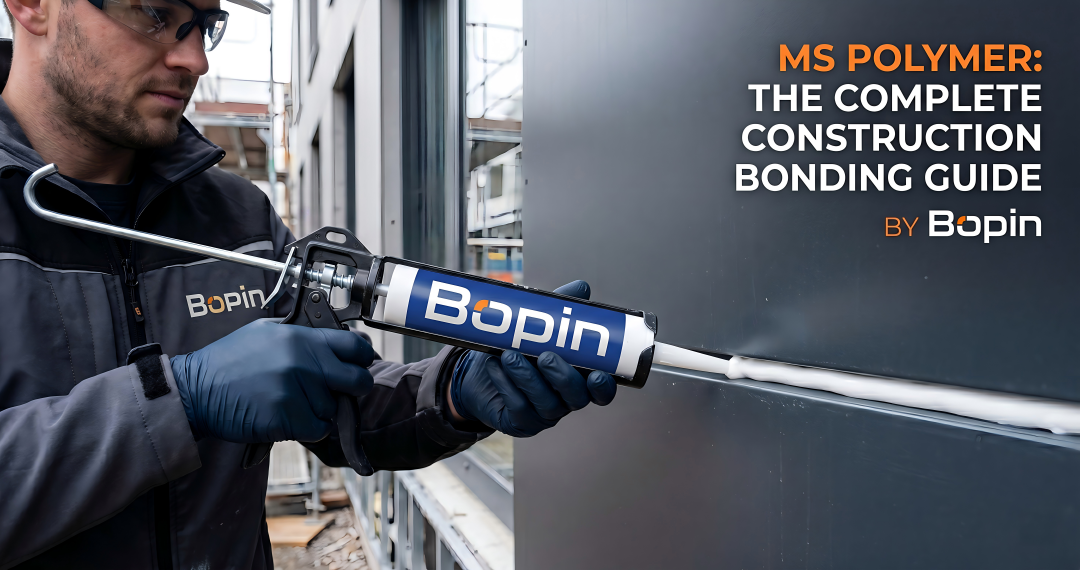
Expert guidance from BoPin Construction Chemicals – mastering sealing in extreme desert conditions
When Standard Products Fail in Desert Heat
You’ve completed a project in Dubai, Riyadh, or Cairo. The sealing work looked perfect when finished. But six months later, the sealant is cracking, discoloring, and pulling away from surfaces.
The intense desert sun has destroyed what should have lasted decades. The extreme temperature cycling from scorching days to cool nights has stressed joints beyond their limits. Sand and dust have penetrated compromised seals.
This isn’t a failure of workmanship. It’s the wrong product for one of the world’s most demanding climates.
Desert environments create unique challenges that standard construction sealants simply cannot survive. Surface temperatures exceeding 70°C. UV radiation intensity far beyond temperate regions. Massive daily temperature swings. Abrasive sand and dust contamination.
This comprehensive guide will show you how to select and apply sealants specifically engineered for desert performance. You’ll learn about the critical properties that determine survival in extreme heat. And you’ll discover proven techniques that ensure your sealing work lasts in the harshest conditions on Earth.
¿El resultado? Confidence to specify and install sealants that perform reliably year after year, despite desert extremes that destroy standard products.
1. Understanding Desert Climate Challenges
Desert environments assault construction sealants with multiple simultaneous stresses that temperate-climate products never encounter.
Extreme Temperature Exposure
Surface temperatures are the critical factor—not air temperature.
Air temperature vs. surface reality:
- Air temperature: 45°C (common summer maximum)
- Dark surface temperature: 70-80°C (direct sun exposure)
- Metal surface temperature: 85°C+ (steel, aluminum in sun)
- Glass surface temperature: 65-75°C (south-facing windows)
These surface temperatures exceed the capability of standard sealants rated for “high temperature” applications. A product rated to 80°C continuous sounds adequate, but that’s based on ambient temperature, not surface exposure.
Temperature cycling stress:
Desert climates create dramatic daily temperature cycles that stress sealant joints:
- Daytime surface peak: 70-85°C
- Nighttime surface low: 15-25°C
- Daily temperature swing: 50-60°C range
This cycling causes:
- Expansion during heating: Joints widen, sealant stretches
- Contraction during cooling: Joints narrow, sealant compresses
- Repeated stress cycles: 365 cycles per year, 7,300 cycles over 20 years
Sealants must accommodate this movement without losing adhesion or developing stress cracks. Products without adequate flexibility fail rapidly under desert conditions.
Intense UV Radiation
Desert locations receive UV exposure significantly exceeding temperate climates.
UV intensity factors:
- Latitude: Regions near the equator receive more intense UV
- Altitude: Higher elevations intensify UV exposure
- Atmospheric clarity: Desert air lacks moisture and pollution that filter UV in other climates
- Reflection: Sand and light-colored buildings reflect additional UV onto sealed joints
UV degradation mechanisms:
Standard sealants break down through several UV-related processes:
- Photo-oxidation: UV breaks chemical bonds in the polymer
- Chalking: Surface degrades to powdery residue
- Discoloration: Yellowing, darkening, or fading
- Embrittlement: Loss of flexibility leads to cracking
- Adhesion loss: UV degradation at bond interface causes pullaway
Premium desert-grade sealants incorporate UV stabilizers and inhibitors specifically formulated for extreme exposure. These additives sacrifice themselves to protect the base polymer, significantly extending service life.
Sand and Dust Contamination
Airborne sand and dust create problems unique to desert environments.
During application:
- Sand particles contaminate wet sealant surfaces
- Dust prevents proper adhesion to substrates
- Wind-blown contamination occurs despite precautions
- Freshly applied sealant attracts and traps particles
Long-term exposure:
- Abrasive wind erosion slowly removes surface material
- Dust accumulation in joints creates aesthetic problems
- Sand particles embedded in sealant create stress points
- Contaminated surfaces accelerate degradation
Surface preparation becomes critical in desert applications. Extra cleaning steps and timing work to avoid windy conditions make significant differences in performance.
Low Humidity Challenges
Desert humidity typically ranges 10-30%—far below ideal curing conditions for many sealants.
Curing complications:
- Moisture-curing sealants (silicone, PU, MS polymer) rely on atmospheric humidity
- Very low humidity slows cure rate significantly
- Surface may skin normally but deep cure takes much longer
- Incomplete cure reduces performance properties
Application adjustments:
- Lightly moisten substrates before application
- Apply during evening/morning when humidity is higher
- Avoid mid-day application in extreme low humidity
- Allow extended cure times beyond normal specifications
2. Critical Performance Requirements for Desert Sealants
Not all “high-temperature” or “weatherproof” sealants survive desert conditions. Understanding essential performance characteristics helps you specify correctly.
Temperature Resistance: Beyond the Numbers
Temperature ratings must be interpreted correctly for desert applications.
Continuous vs. intermittent ratings:
Standard specifications list two temperature values:
- Continuous service temperature: Maximum for constant exposure
- Intermittent temperature: Maximum for brief exposure
For desert applications:
- Surface temperatures routinely exceed 70°C
- Products rated “to 80°C” may fail if that’s continuous rating and surfaces reach 75-80°C regularly
- Safety margin is essential: Specify products rated significantly above expected surface temperatures
Recommended minimum specifications for desert use:
- General exterior applications: 90°C continuous minimum
- Metal surfaces (dark colored): 100°C+ continuous
- High-heat specific applications: 120°C+ continuous
Products meeting these requirements:
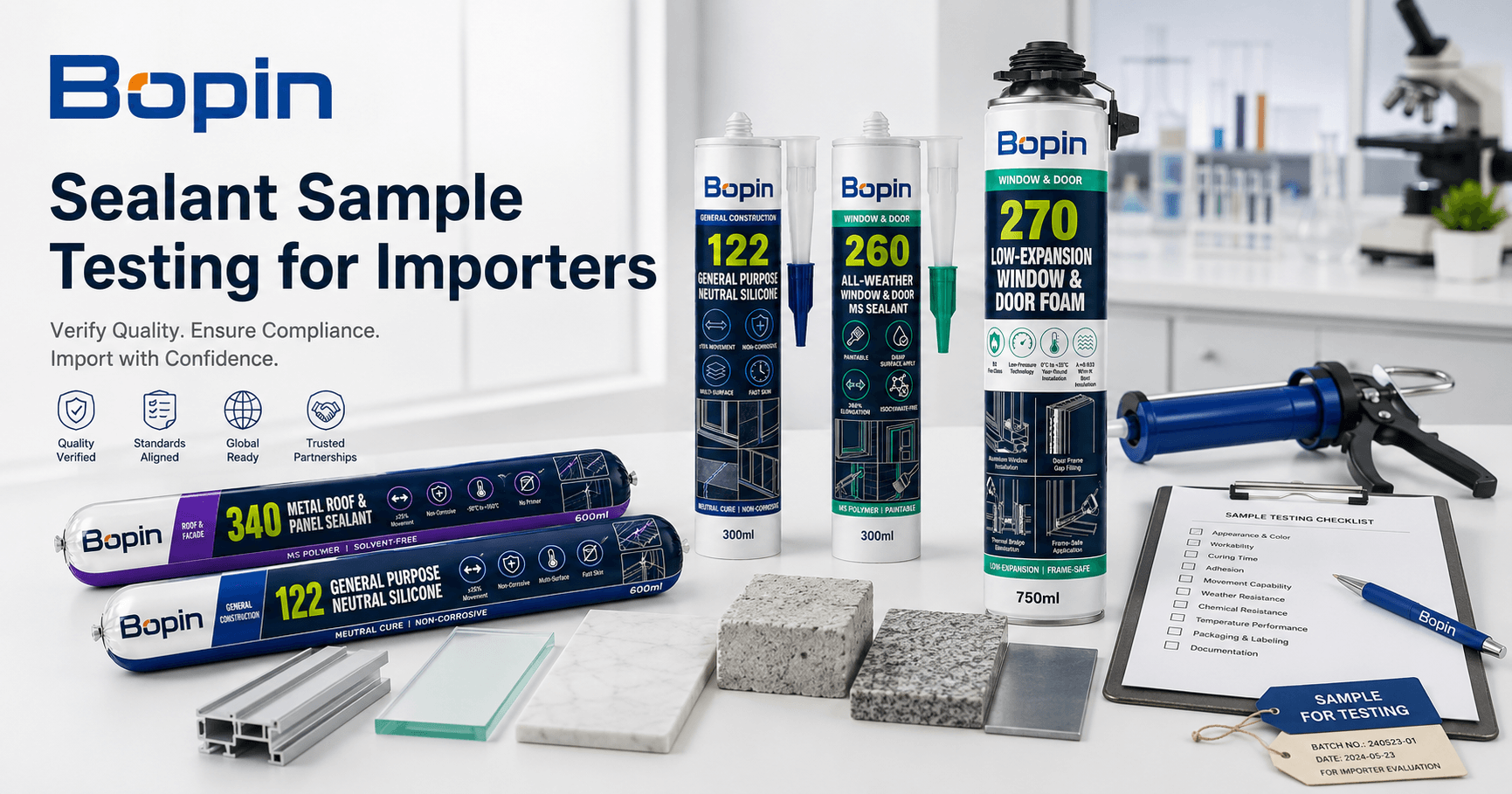
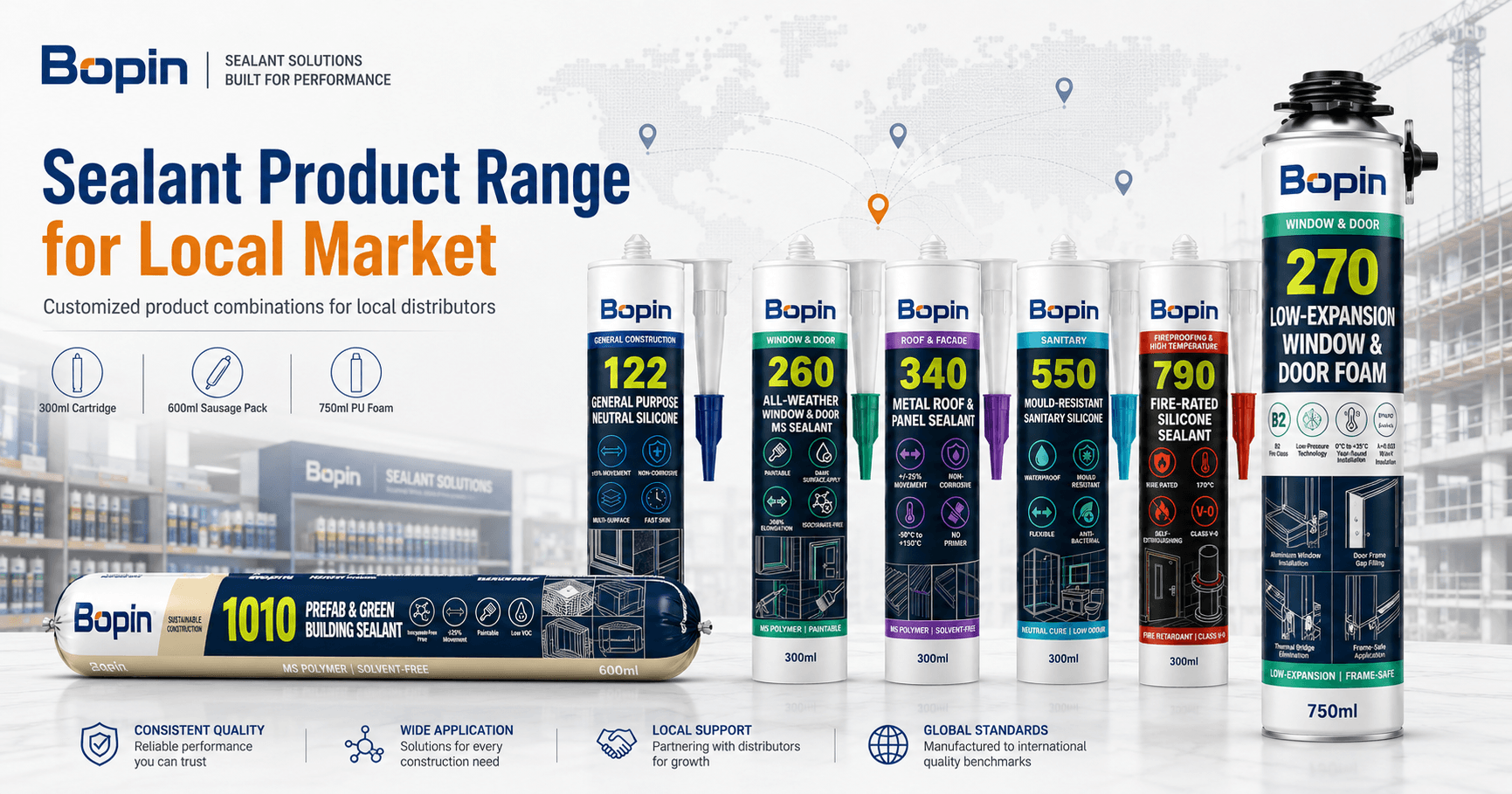
BoPin 122 Silicona neutra de uso general – Temperature resistance: -40°C to +120°C, specially enhanced with UV stabilizers for Middle East desert conditions.
BoPin 380 Sellador de fachadas resistente a la intemperie – Extreme performance: -50°C to +150°C, specifically engineered for challenging desert climates with enhanced heat resistance.
BoPin 770 Silicona de alta temperatura – For extreme applications: Continuous service to +300°C, ideal for metal roofing and industrial applications in desert heat.
UV Stability: The Long-Term Survival Factor
UV resistance determines whether sealants last 5 years or 25 years in desert climates.
UV stabilization technologies:
Inorganic polymers (silicone): Inherently UV stable due to silicon-oxygen backbone structure resistant to photo-oxidation.
Organic stabilizer packages: Added UV absorbers and hindered amine light stabilizers (HALS) protect susceptible polymer structures.
Pigmentation effects: Some colorants provide additional UV protection, while others accelerate degradation.
Desert-optimized formulations incorporate enhanced UV stabilizer packages specifically for intense desert exposure. Standard formulations adequate for temperate climates fail prematurely under desert UV intensity.
BoPin desert-enhanced products feature specialized UV protection:
- Middle East formula enhancements: Higher concentration UV stabilizers
- Rendimiento comprobado: Tested in actual desert conditions, not just laboratory accelerated aging
- Long-term stability: Maintained flexibility and adhesion after years of extreme exposure
Movement Capability: Accommodating Extreme Cycling
Daily temperature cycling creates extraordinary movement in desert building joints.
Calculating movement requirements:
Joint movement depends on:
- Temperature range (ΔT)
- Coefficient of thermal expansion (α)
- Joint width (L)
Example calculation:
- Aluminum facade panel: α = 24 × 10⁻⁶ /°C
- Daily temperature range: ΔT = 60°C
- Joint width: L = 20mm
- Movement = α × ΔT × L = 24 × 10⁻⁶ × 60 × 20 = 0.029mm per mm = 2.9%
For a 20mm joint: 0.58mm daily movement
Over 20 years: 7,300 cycles of 0.58mm movement
Standard ±12.5% movement capability (typical for basic sealants) provides only 2.5mm capacity in a 20mm joint—adequate but without safety margin.
Premium ±25% capability provides 5mm capacity—comfortable margin for extreme conditions.
High-performance ±50% capability provides 10mm capacity—ideal for challenging desert applications with mixed materials.
Recommended products for high-movement desert joints:
Sellador de fachadas BoPin 380 – ±50% movement capability, perfect for facade panels, expansion joints, and high-stress applications.
Sellador para techos de metal BoPin MS-340 – ±50% movement capability specifically for metal building systems common in desert construction.
Adhesion Performance in Extreme Heat
High temperatures test adhesion limits in ways temperate climates never challenge.
Heat-related adhesion challenges:
- Thermal stress: Differential expansion between sealant and substrate
- Creep: Tendency of heated sealant to flow under stress
- Falla del adhesivo: Bond breakdown at elevated temperatures
- Primer degradation: Some primers fail in extreme heat
Desert-grade sealants maintain adhesion through:
- Heat-stable adhesion promoters: Remain effective at elevated temperatures
- Higher crosslink density: Prevents creep and maintains dimensional stability
- Compatible thermal expansion: Reduces differential stress on adhesive bond
Surface preparation becomes even more critical in desert applications because heat amplifies any adhesion deficiency.
3. Product Selection for Desert Applications
Choosing the right sealant technology for desert conditions depends on specific application requirements and performance priorities.
Silicone: The Desert Standard
Silicone sealants dominate desert applications for good reasons.
Why silicone excels in deserts:
Inorganic polymer structure: Silicon-oxygen backbone is inherently stable against UV and heat—it doesn’t photo-oxidize like organic polymers.
Extreme temperature range: Quality silicones perform from -50°C to +150°C+, easily handling desert extremes.
Flexibilidad permanente: Maintains elastic properties despite endless temperature cycling and UV exposure.
Chemical stability: Desert dust, sand, and pollutants don’t degrade silicone performance.
Longevidad comprobada: 20-30+ year service life in desert climates with proper installation.
Recommended silicone products for desert use:
General purpose applications: BoPin 122 Silicona neutra de uso general
- Specially enhanced for Middle East, Southeast Asia, Central Asia, and African desert conditions
- UV-stabilized for extreme solar exposure
- Temperature range: -40°C to +120°C
- Capacidad de movimiento ±25%
- MEKO-free, environmentally safe formulation
High-performance facade and expansion joints: BoPin 380 Sellador de fachadas resistente a la intemperie
- Engineered specifically for extreme desert climates
- Temperature range: -50°C to +150°C
- ±50% movement capability for severe conditions
- Advanced UV stability for decades of exposure
- Non-staining technology for natural stone and sensitive materials
Natural stone applications: BoPin 635 Silicona de piedra natural
- ASTM C1248 tested non-staining formula
- Ideal for marble, granite, limestone in desert installations
- UV and heat stable for exterior stone applications
- Safe for porous materials in extreme conditions
Wet areas in desert climates: Silicona sanitaria BoPin 550
- XS1 clase sanitaria más alta
- Resists extreme heat and humidity variations
- Advanced anti-mold for desert oases and coastal humid zones
- Rapid waterproofing despite low humidity conditions
Extreme heat applications: BoPin 770 Silicona de alta temperatura
- Continuous service to +300°C
- Perfect for metal roofing, industrial applications, HVAC
- Specially formulated for Middle East and Central Asian extreme temperatures
- Maintains flexibility through severe thermal cycling
MS Polymer: The High-Performance Alternative
MS polymer sealants offer specific advantages in certain desert applications.
MS polymer benefits for desert use:
Superior adhesion: Bonds to virtually all substrates without primers—critical advantage in dusty desert conditions where primer application is challenging.
Paintability: Can be painted to match building aesthetics—important for visible exterior joints.
Resistencia a los rayos UV: Very good (though not quite matching silicone’s excellent rating).
Temperature capability: Adequate for most applications (-40°C to +90°C).
When to specify MS polymer in deserts:
Metal building systems: Sellador para techos y paneles metálicos BoPin MS-340
- ±50% movement for extreme metal expansion
- Non-corrosive to all metals including galvanized steel
- Low-temperature application capability (-10°C) for winter work
- Desert-enhanced formulation for UV and heat resistance
Window and door installation: Sellador para ventanas y puertas BoPin MS-220
- Excellent adhesion to aluminum, vinyl, and composite frames
- Paintable for color matching
- Weather-resistant for desert conditions
- ±50% movement for frame expansion
MS polymer limitations in extreme deserts:
Maximum continuous temperature (~90°C) may be marginal for darkest metal surfaces in peak summer. For critical applications on dark metals, consider silicone alternatives.
Polyurethane Foam: Special Considerations
PU foam insulation around windows and doors requires careful selection in desert climates.
Desert challenges for standard foam:
- Heat can cause foam degradation if not UV-protected
- Extreme temperature application range required
- Low humidity slows curing
Desert-optimized foam: Espuma de baja expansión para ventanas y puertas BoPin PU-270
- Specially formulated for Middle East and Central Asian climates
- Application range: 0°C to +35°C (extended high-temperature capability)
- Low expansion pressure prevents frame distortion in heat
- Enhanced UV resistance when covered with proper trim
Critical application rule: Always protect cured foam from direct UV exposure with trim, casing, or sealant coverage. Exposed foam degrades rapidly under desert sun.
4. Application Best Practices for Desert Conditions
Proper technique becomes even more critical in extreme climates where conditions amplify any installation deficiency.
Surface Preparation: Extra Steps for Desert Success
Desert dust and sand make surface preparation more challenging and more important.
Enhanced cleaning protocol:
Step 1: Remove loose dust and sand
- Use compressed air or blowers before wet cleaning
- Don’t spread contamination with wet methods initially
- Pay attention to recessed areas where dust accumulates
Step 2: Deep clean with appropriate solvents
- Isopropyl alcohol removes most contamination
- For oily residues, use appropriate degreasers
- Clean until rag shows no dust or discoloration
Step 3: Final wipe before application
- Clean surfaces immediately before applying sealant
- Dust settles quickly in desert environments
- Consider wind barriers or temporary enclosures
Step 4: Lightly moisten substrate (for moisture-curing products)
- Critical in desert’s low humidity
- Light misting, not saturation
- Improves adhesion and accelerates cure in dry air
Surface temperature management:
Problem: Direct sun exposure creates surface temperatures too hot for proper application.
Solution approaches:
- Work on shaded sides of building during hot hours
- Schedule application for early morning or evening
- Use temporary shade covers for critical applications
- Verify surface temperature with infrared thermometer (should be <40°C for application)
Timing Your Work: When to Apply in Desert Heat
Application timing significantly affects results in extreme climates.
Optimal application windows:
Early morning (5:00-9:00 AM):
- Ventajas: Cool surfaces, higher humidity, minimal wind, comfortable work conditions
- Ideal para: Exterior work on east-facing surfaces
- Challenges: Dew or condensation on surfaces in some seasons
Evening (5:00-8:00 PM):
- Ventajas: Cooling surfaces, rising humidity as sun sets
- Ideal para: West-facing surfaces, completion of morning-started work
- Challenges: Limited daylight for quality control, tooling visibility
Avoid mid-day application (11:00 AM – 4:00 PM):
- Surface temperatures excessive: Often 70-80°C in direct sun
- Low humidity: Slowest cure conditions
- Worker discomfort: Heat stress affects quality
- Dust and wind: Usually worst during peak heat
Seasonal considerations:
Summer (June-August):
- Most challenging conditions
- Restrict work to early morning and evening only
- Consider indoor-only work during peak summer weeks
- Hydration and worker safety paramount
Winter (December-February):
- More comfortable working conditions
- Longer application windows throughout day
- Still verify minimum application temperatures at dawn
Spring/Fall (Transition seasons):
- Optimal working conditions
- Extended daily work windows
- Balance temperature and weather considerations
Joint Design for Extreme Movement
Proper joint geometry becomes even more critical when thermal cycling is extreme.
Relación ancho-profundidad:
Standard recommendation is 2:1 (width twice the depth). In extreme desert applications, consider:
- 2:1 ratio minimum for standard joints
- 3:1 ratio for high-movement applications reduces stress
- Never exceed 4:1 as joint becomes too shallow for proper adhesion
Alojamiento del movimiento:
Design joints to accommodate expected movement plus safety margin:
- Calculate thermal movement based on worst-case temperature range
- Add 25-50% safety margin for unexpected conditions
- Verify sealant movement capability exceeds requirements
Backing material selection:
Closed-cell polyethylene foam backer rod:
- Standard choice for most applications
- Previene la adherencia por tres lados
- Controla la profundidad de la junta con precisión
For extreme heat applications:
- Verify backer rod temperature rating exceeds expected temperatures
- Some foam materials soften or degas at high temperatures
- Consider bond-breaker tape as alternative for very high-heat applications
Curing Protection: Critical 48 Hours
Freshly applied sealant requires protection during initial cure in harsh desert conditions.
Protect from:
Exposición directa al sol:
- Intense UV can damage curing sealant surface
- Extreme heat can cause surface defects
- Use temporary shade where possible
Dust and sand:
- Fresh sealant attracts and traps airborne particles
- Work during calm weather
- Consider temporary barriers for critical applications
Premature stress:
- Don’t allow joint movement during early cure
- Avoid vibration from nearby construction
- Protect from foot traffic or equipment contact
Moisture management:
Low humidity challenges:
- Lightly mist area (not directly on sealant) to raise local humidity
- Extend cure times beyond normal specifications
- Verify complete cure before exposing to stress
5. Troubleshooting Common Desert Climate Failures
Understanding failure modes helps prevent problems and diagnose issues when they occur.
Premature Cracking and Splitting
Síntomas:
- Cracks perpendicular to joint length
- Usually appears 6-18 months after application
- Often worse on sun-exposed joints
Root causes:
- Insufficient movement capability for thermal cycling magnitude
- Selección incorrecta de producto (acrylic or basic sealant in high-movement joint)
- Mala adhesión allowing edge pullback that concentrates stress
- Joint design error (wrong width-to-depth ratio)
Prevención:
- Specify sealants with ±25% minimum, ±50% for critical applications
- Calculate expected movement and verify sealant capability exceeds it
- Ensure proper surface preparation and adhesion
- Design joints with appropriate geometry
Remediation:
- Eliminación completa del sellador defectuoso
- Verify joint design is adequate
- Select higher-movement-capability product
- Re-apply with proper technique
Surface Discoloration and Chalking
Síntomas:
- Yellowing, darkening, or color change
- Powdery surface residue (chalking)
- Loss of gloss or surface texture
Root causes:
- UV degradation from inadequate stabilization
- Dirt attraction from certain formulations
- Reacción química with substrate or atmospheric pollutants
- Wrong product type for desert exposure
Prevención:
- Specify UV-stabilized formulations designed for desert climates
- Choose dirt-resistant formulations for dusty environments
- Verify compatibility with substrates (some stones react with certain sealants)
Remediation:
- Clean surface to assess actual degradation depth
- If only surface chalking, clean and continue monitoring
- If deep degradation, remove and replace with proper product
Adhesion Loss and Pullback
Síntomas:
- Gaps appearing at sealant edges
- Sealant pulling cleanly away from substrate
- Often starts at one edge and propagates
Root causes:
- superficies contaminadas during application (dust, oil, moisture)
- Preparación inadecuada de la superficie especially in dusty conditions
- Wrong primer or no primer when required
- Excessive joint movement beyond sealant capability
- Thermal stress from differential expansion
Prevención:
- Extra-thorough surface cleaning in desert environment
- Use appropriate primers for challenging substrates
- Verify movement capability is adequate
- Consider joints with lower stress (wider joints, less temperature range)
Remediation:
- Retire por completo el sellador defectuoso
- Identify and correct preparation deficiency
- Consider primer application for difficult surfaces
- Re-apply with proven technique
Heat-Related Flow and Sagging
Síntomas:
- Sealant droops or flows in vertical joints
- Loss of profile definition
- Accumulation at bottom of joints
Root causes:
- Product selection error (sealant not rated for surface temperatures reached)
- Application on overheated surfaces
- Low-quality formulation with inadequate heat resistance
Prevención:
- Specify sealants with temperature ratings well above expected surface temperatures
- Don’t apply on surfaces above 40°C
- Use premium formulations with proven desert performance
Remediation:
- Remove and replace with properly rated product
- Address application timing to avoid hot surfaces
6. Maintenance and Inspection in Desert Climates
Proactive maintenance extends service life even under extreme conditions.
Annual Inspection Protocol
Timing: Conduct thorough inspections twice annually:
- Spring: After winter temperature stress, before summer heat
- Fall: After summer heat exposure, before winter cooling
Áreas de enfoque de la inspección:
High-stress joints:
- Juntas de dilatación en edificios
- Conexiones de paneles de fachada
- Metal roofing seams
- Window and door perimeters
High-UV-exposure locations:
- South and west-facing facades
- Rooftop joints and penetrations
- Unshaded horizontal surfaces
Qué buscar:
- Cracking or splitting
- Edge pullback or gaps
- Discoloration or chalking
- Dirt accumulation or staining
- Sagging or profile loss
Cleaning and Preservation
Desert dust and sand accumulation affects both appearance and longevity.
Cleaning procedure:
Step 1: Dry dust removal
- Soft brush or compressed air
- Remove loose dust before wet cleaning
Step 2: Gentle washing
- Jabón suave y agua
- Soft brush or cloth
- Enjuague bien
Step 3: Inspection
- Check for damage during cleaning
- Note areas needing attention
Cleaning frequency:
- High-exposure areas: Quarterly cleaning recommended
- Moderate exposure: Semi-annual cleaning adequate
- Protected areas: Annual cleaning typically sufficient
Avoid:
- Harsh chemical cleaners that may attack sealant
- Abrasive tools that damage surface
- Pressure washing at close range (can damage sealant or force water behind seals)
- Solvent-based cleaners unless specifically approved
Cuándo reemplazar o reparar
Making the right decision extends asset life and controls costs.
Repair indicators (spot fixes adequate):
- Isolated failure in small section
- Majority of installation performing well
- Failure cause identified and correctable
- Accessible without major disruption
Replacement indicators (full replacement recommended):
- Widespread cracking or adhesion loss (>30% of joints)
- Systematic failure indicating wrong product selection
- Advanced age approaching expected service life
- Replacement would be more cost-effective than extensive repairs
Reemplazo preventivo:
Consider proactive replacement before failure when:
- Approaching manufacturer’s warranty limit
- Inspection reveals early deterioration signs
- Major renovation provides cost-effective opportunity
- Failure would cause significant collateral damage
7. Desert Climate Sealing FAQ
What makes a sealant “desert-grade” or suitable for extreme heat?
Desert-grade sealants feature specific enhancements beyond standard formulations:
Enhanced UV stabilizers: Higher concentrations of UV absorbers and HALS specifically for intense desert sun exposure.
Heat-stable polymers: Formulations that maintain flexibility and adhesion at surface temperatures exceeding 70-80°C.
Rendimiento comprobado: Testing in actual desert conditions, not just laboratory accelerated aging tests.
Capacidad de movimiento: Higher movement accommodation (±25-50%) for extreme thermal cycling.
Regional optimization: Products like BoPin’s Middle East-enhanced formulations specifically engineered for desert climates rather than generic global formulations.
Not all products marketed as “high temperature” or “weatherproof” meet these criteria. Verify specifications and look for evidence of desert-specific optimization.
Can standard silicone survive in desert climates, or do I need special products?
Standard silicone has better desert survival than most sealant types, but optimized formulations provide significantly better performance and longevity.
Standard silicone in deserts:
- May last 10-15 years vs. 20-30+ for desert-optimized products
- More likely to show discoloration or chalking
- Higher risk of premature adhesion loss in extreme conditions
- Adequate for non-critical applications with budget constraints
Desert-optimized silicone justification:
- Critical applications (waterproofing, structural)
- High-visibility installations (aesthetics matter)
- Difficult-to-access locations (replacement cost is high)
- Long-term ownership (lifecycle cost favors better products)
Cost difference is modest (typically 15-30% more) compared to total project value and replacement costs.
What’s the best time of year to do major sealing work in desert climates?
Optimal seasons: Spring (March-May) and Fall (October-November)
Spring advantages:
- Moderate temperatures allow all-day work
- Lower humidity than summer but adequate for curing
- Before peak heat makes work challenging
- Time for cure before summer stress begins
Fall advantages:
- Post-summer comfortable conditions
- Adequate curing time before winter
- Longer work windows than summer
- Often best overall working season
Summer work (June-September):
- Restrict to early morning/evening only
- Indoor applications preferred
- Consider deferring non-urgent projects
- Worker safety concerns paramount
Winter work (December-February):
- Generally good conditions in most desert regions
- Watch for minimum application temperatures at dawn
- Extended daily work windows
- Ideal in moderate desert climates
Project planning: Schedule major sealing projects for spring or fall when possible. If summer work is unavoidable, plan shorter daily work windows and increased crew size to complete critical work during optimal morning hours.
How do I prevent dust contamination during application in sandy desert environments?
Dust contamination is one of the most challenging aspects of desert sealing work.
Pre-application strategies:
Timing work for calm conditions:
- Early morning typically calmest
- Monitor weather forecasts for wind
- Avoid application during dust storms or high-wind periods
Site preparation:
- Water down surrounding ground areas to suppress dust
- Establish clean work zones
- Remove nearby dust sources when possible
Temporary protection:
- Wind barriers for critical applications
- Temporary enclosures for indoor-outdoor transitions
- Plastic sheeting strategically positioned
During application:
Minimize exposed time:
- Work in smaller sections that can be tooled quickly
- Don’t expose large areas of wet sealant simultaneously
- Complete and protect one section before moving to next
Immediate tooling:
- Tool sealant promptly after application
- Smooth surface reduces dust attraction
- Check surface for particles during tooling and remove if found
Post-application protection:
Cover fresh sealant if possible:
- Temporary barriers during initial cure
- Remove after skin formation (typically 15-30 minutes)
- Balance protection against interfering with cure
Accept some dust incorporation:
- Minor dust presence typically doesn’t affect performance
- Surface aesthetics may be slightly affected
- Judge acceptable level based on application criticality
Should primers be used in desert applications, and how does heat affect primer performance?
Primers become even more valuable in desert conditions but require careful selection and application.
When primers are essential:
Porous substrates in dusty conditions:
- Concrete, masonry, porous stone
- Primer seals surface and improves adhesion
- Critical in desert where thorough cleaning is challenging
High-stress applications:
- Expansion joints with severe movement
- High-temperature metal surfaces
- Any application where adhesion failure would be catastrophic
Difficult substrates:
- Some plastics and coated materials
- Aged weathered surfaces
- Previously failed installations
Desert-specific primer considerations:
Temperature resistance:
- Verify primer maintains effectiveness at surface temperatures you’ll encounter
- Some primers degrade or lose adhesion promotion at high temperatures
- Look for primers rated to 80°C+ for desert use
Momento de aplicación:
- Apply primer during cooler morning hours
- Allow proper drying/curing before sealant application
- Follow manufacturer’s timing windows carefully
- Extended drying time in low humidity
Recommended approach for desert applications:
- Use high-quality primers rated for extreme conditions
- Cebador universal BoPin PR-140 suitable for most desert applications
- Test adhesion on sample areas when uncertain
- Always follow manufacturer’s application instructions
Conclusion: Engineering for Desert Extremes
Desert climates represent some of the most demanding conditions any construction sealant will ever face. Success requires careful attention to product selection, application technique, and ongoing maintenance.
The key principles for desert sealing success:
Specify appropriately: Use products specifically enhanced for desert conditions with proven performance, not just basic formulations marketed as “weatherproof.”
Prepare thoroughly: Extra-careful surface preparation compensates for challenging dusty conditions and maximizes adhesion in extreme heat.
Time your work: Application during optimal temperature and humidity windows dramatically improves results.
Design properly: Joint geometry must accommodate extreme thermal movement through daily and seasonal cycles.
Maintain proactively: Regular inspection and cleaning extends service life even under harsh exposure.
The investment in proper products and techniques pays dividends through decades of reliable performance, avoiding the expensive failures that premature product breakdown causes.
Desert construction challenges are significant, but they’re fully manageable with the right approach. Projects throughout the Middle East, North Africa, and Central Asia demonstrate that proper product selection and application technique deliver lasting results despite extreme conditions.
Desert-Optimized Sealing Solutions from BoPin
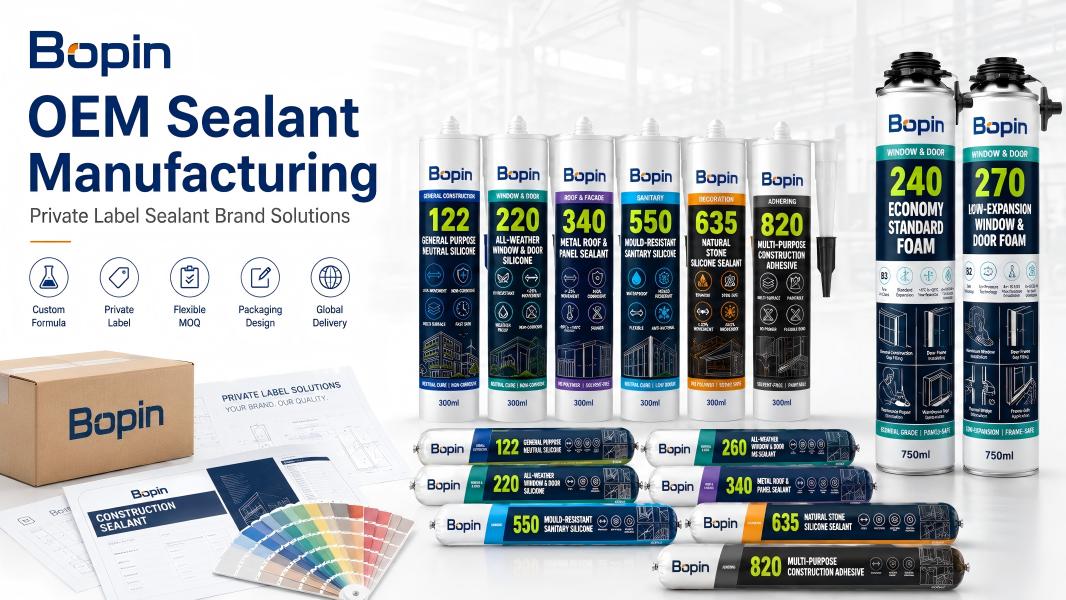
BoPin Construction Chemicals provides complete solutions specifically enhanced for desert climate performance:
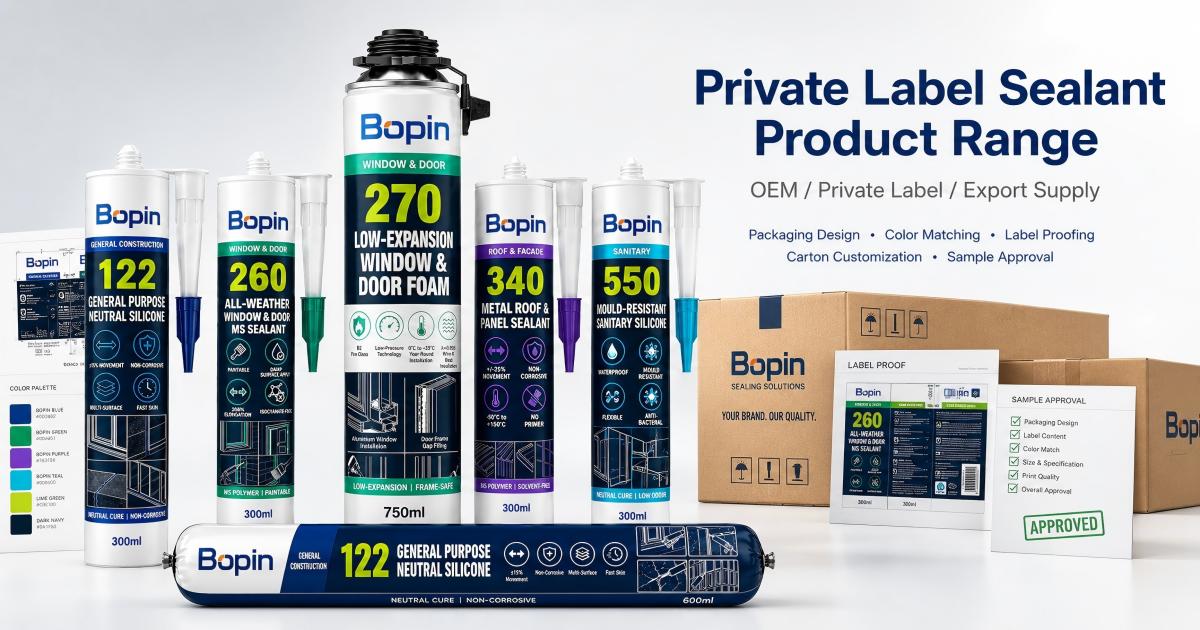
Premium general-purpose silicone: BoPin 122 Silicona neutra de uso general – Enhanced UV stabilizers and heat resistance specifically for Middle East, Central Asia, and African desert conditions.
High-performance facade and expansion joints: BoPin 380 Sellador de fachadas resistente a la intemperie – Extreme temperature range (-50°C to +150°C), ±50% movement capability, engineered for challenging desert environments.
Natural stone in desert installations: BoPin 635 Silicona de piedra natural – ASTM C1248 non-staining formula safe for marble, granite, limestone in extreme UV and heat exposure.
Metal roofing and cladding: Sellador para techos y paneles metálicos BoPin MS-340 – ±50% movement for extreme metal expansion, non-corrosive formulation, desert-enhanced UV resistance.
Extreme heat applications: BoPin 770 Silicona de alta temperatura – Continuous service to +300°C for metal roofing, industrial facilities, and extreme heat-exposed applications.
Window and door installation: Espuma de baja expansión para ventanas y puertas BoPin PU-270 – Specially formulated for Middle East and Central Asian climates with extended high-temperature application capability (0-35°C).
Need expert guidance for your desert project? Our technical team understands the unique challenges of Middle East, North Africa, and Central Asian construction environments.
Contactar con el soporte técnico →
BoPin Construction Chemicals – Professional solutions engineered for the world’s most demanding climates. When desert conditions challenge standard products, specify formulations proven in extreme Middle East, Central Asian, and African environments.
Regional Expertise: Our products are specifically enhanced for desert performance based on real-world testing in Gulf countries, Central Asian continental climates, and North African desert conditions. We understand the difference between laboratory ratings and actual desert survival.