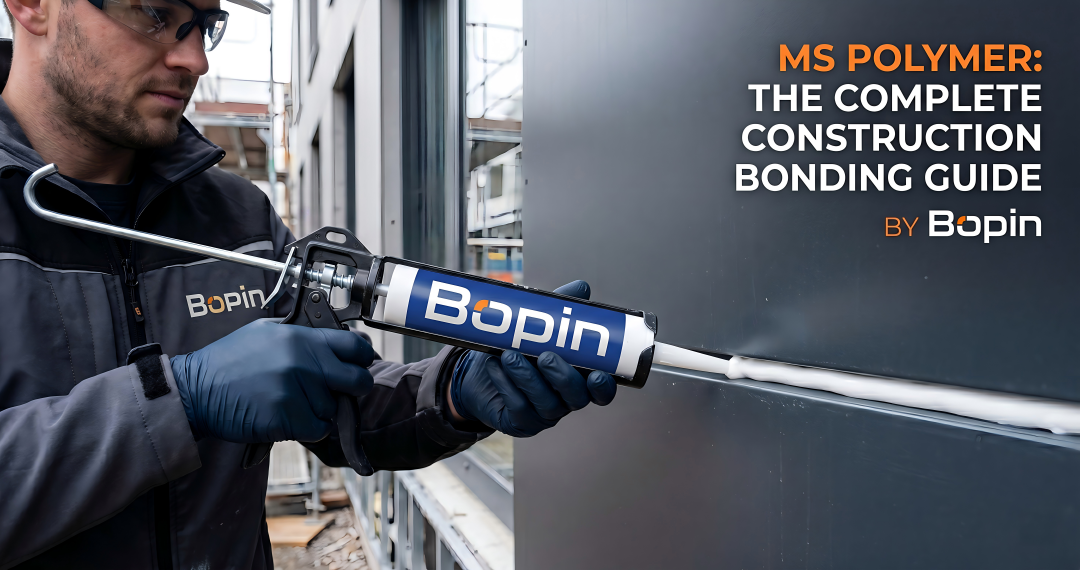
Professional guidance from BoPin Construction Chemicals – making waterproof sealing simple and reliable
Not All Caulks Are Created Equal, Especially When Water is Involved
A failed seal in a bathroom, kitchen, or on your home’s exterior can lead to thousands in water damage. The difference between a temporary patch and a permanent waterproof barrier comes down to one thing: choosing the right sealant technology.
Here’s what most people don’t realize: The word “caulk” on the label doesn’t guarantee waterproof protection. Many products that claim to seal actually fail when faced with continuous water exposure.
This guide will cut through the confusion. We’ll break down the different types of waterproof sealants. You’ll learn what the pros look for. And we’ll help you choose the absolute best product for a seal that will never let you down.
Kết quả thế nào? Complete confidence that your waterproof barriers will protect your investment for years to come.
What Actually Makes a Caulk Waterproof?
True waterproof protection comes from the chemistry, not marketing claims. Understanding this fundamental difference helps you avoid products that look good on the shelf but fail under real-world conditions.
The Science of Polymers
Real waterproofing comes from the chemical makeup of the sealant. Silicone polymers, for example, are inherently water-repellent at the molecular level. This isn’t just a surface coating – it’s built into the material’s structure.
These polymer chains create a barrier that water molecules simply cannot penetrate. When properly applied, this creates a permanent waterproof membrane that maintains its properties for decades.
Cheaper alternatives often rely on fillers and additives that may provide temporary water resistance but break down under constant moisture exposure.
Waterproof vs. Water-Resistant: The Critical Difference
This distinction can save you thousands in water damage costs. Many products claim water resistance when what you actually need is waterproof protection.
Sản phẩm chống nước can handle occasional splashes, light rain, or humid conditions. They’re fine for areas with minimal water exposure.
Waterproof products can withstand continuous water immersion, pressure washing, and years of daily exposure without failing. This is what you need for showers, exterior sealing, and critical protection areas.
Professional contractors never guess – they specify waterproof products for any application where water failure would cause damage.
The Big Three: Silicone vs. Hybrid vs. Advanced Acrylic
Choosing the wrong technology is the #1 reason waterproof seals fail. Each type of sealant has specific strengths and limitations that determine where it should be used.
The Professional’s Comparison
| Loại chất trám | Tốt nhất cho… | Waterproof Level | Tính linh hoạt |
|---|---|---|---|
| 100% Silicone | Bathrooms, Kitchens, Exteriors | Xuất sắc (Tốt nhất) | Xuất sắc (Tốt nhất) |
| Lai (Polyme MS) | Windows, Siding, All-Weather Use | Xuất sắc | Xuất sắc |
| “Siliconized” Acrylic | Interior Trim (less critical areas) | Good (Water-Resistant) | Good |
Why 100% Silicone Leads the Pack
For areas with constant water exposure like showers and sinks, 100% silicone is the non-negotiable professional choice. Here’s why it consistently outperforms other options:
Permanent Flexibility: Silicone never hardens or becomes brittle. It handles building movement, temperature changes, and water pressure without cracking.
Chemical Immunity: Household cleaners, bleach, and harsh chemicals can’t damage quality silicone sealants. This protection lasts for the life of the seal.
UV Stability: Direct sunlight and weather exposure don’t degrade silicone polymers, making them perfect for exterior applications.
When Hybrid Sealants Excel
MS Polymer (hybrid) sealants combine silicone-like performance with unique benefits. They’re paintable, which silicone typically isn’t. They also provide excellent adhesion to challenging materials.
These products excel in applications where you need both waterproof performance and the ability to paint or blend with surrounding surfaces.
Why “Siliconized” Acrylic Falls Short
Don’t be fooled by the word “siliconized” on acrylic products. These contain only small amounts of silicone and lack the waterproof performance of true silicone sealants.
They’re fine for interior trim work and areas with minimal water exposure. But for critical waterproofing, they’re simply not up to the task.
A Pro’s Checklist for Truly Waterproof Sealant
Professional contractors use these criteria to ensure their seals never fail. Following this checklist eliminates guesswork and guarantees reliable protection.
✓ 100% Waterproof Certification
The label should explicitly say “Waterproof,” not just “Water-Resistant.” Look for products that meet or exceed ASTM C920 standards for weatherproof sealants.
Avoid products with vague claims like “moisture resistant” or “suitable for damp areas.” These terms often indicate inferior water protection.
✓ Permanent Flexibility
The sealant must maintain flexibility permanently. Buildings move due to temperature changes, settling, and wind loads. Rigid sealants crack and fail.
Look for movement capability ratings of ±25% or higher. This means the sealant can stretch and compress by 25% of its original size without failing.
✓ Mold-Free Protection
For bathroom and kitchen applications, anti-mold protection is essential. Mold doesn’t just look bad – it can cause health problems and indicate deeper moisture issues.
Quality waterproof sealants include built-in biocides that prevent fungal growth for the life of the product.
✓ “Wet Surface” Application Capability
This premium feature allows application over damp surfaces – crucial for emergency repairs or situations where complete drying isn’t possible.
Most sealants require bone-dry surfaces for proper adhesion. Wet-surface capability provides flexibility for real-world conditions.
Our #1 Recommendation: The Complete Waterproof Solution
After extensive testing and real-world performance evaluation, we recommend a two-product approach for complete waterproof protection.
For Maximum Waterproof Protection: BoPin 550 Sanitary Silicone
Keo dán silicone trung tính vệ sinh BoPin 550 represents the pinnacle of waterproof sealant technology.
Why It’s the Professional’s Choice:
Absolute Waterproofing: Engineered with 100% silicone polymers, it creates a permanent, impenetrable barrier against water. Creates effective waterproof barrier within 30 minutes of application.
Crack-Proof Guarantee: Stays permanently flexible with ±25% movement capability, withstanding building movement and temperature changes without failing.
Lifetime Mold-Free Protection: Advanced anti-mold technology prevents fungal growth for 15-20 years of clean, healthy performance.
Chemical Immunity: Resists damage from household cleaners, bleach, and disinfectants without losing performance or changing appearance.
For Natural Stone Applications: BoPin 635 Non-Staining Formula
Keo dán silicone đá tự nhiên BoPin 635 provides waterproof protection specifically designed for marble, granite, and other natural stones.
Special Features:
- Công thức không gây ố màu prevents edge discoloration on porous materials
- Superior stone adhesion không yêu cầu mồi
- UV stable for exterior stone applications
How to Apply Waterproof Caulk for a Perfect Seal
Even the best waterproof sealant will fail with poor application. Follow these professional steps for guaranteed results.
Step 1: Complete Removal of Old Caulk
This is the #1 key to success. Any old sealant left behind will prevent proper adhesion and create failure points.
Use a sharp utility knife to cut along both edges of existing caulk. Remove every trace – even small pieces can cause problems.
For stubborn residue, use a specialized caulk remover or scrape carefully with a plastic tool to avoid surface damage.
Step 2: Deep Clean & Dry
Perfect adhesion requires perfectly clean surfaces. Any dirt, soap residue, or oils will create weak spots in your seal.
Clean with rubbing alcohol using a lint-free cloth. This removes residues that soap and water can’t eliminate.
Cho phép bề mặt khô hoàn toàn – typically 2-4 hours depending on humidity. For critical applications, use a hair dryer to ensure complete drying.
Step 3: Apply & Tool
Apply a steady, continuous bead without gaps or air bubbles. Keep the gun moving at consistent speed for uniform thickness.
Tool within 5-10 minutes using a wet finger or professional tooling spatula. This creates the smooth, concave profile that sheds water effectively.
Remove excess immediately before it begins to skin over. Clean tools and surfaces with appropriate solvents.
Step 4: Respect the Cure Time
Understanding cure stages prevents premature failure. There’s a critical difference between “water-ready” and “fully cured.”
Skin formation (10-25 minutes): Surface becomes touch-dry but interior remains liquid.
Water-ready (30 minutes – 2 hours): Can handle light water exposure but not pressure or movement.
Full cure (24-48 hours): Achieves complete waterproof properties and maximum performance.
Rushing this process is the fastest way to ruin an otherwise perfect application.
Waterproof Caulk FAQ
Can I apply waterproof caulk to wet surfaces?
Most waterproof caulks require completely dry surfaces for proper adhesion. However, premium products like BoPin 550 Sanitary Silicone can be applied to damp surfaces in emergency situations.
For best results, always clean and dry surfaces completely before application when possible.
Is waterproof caulk paintable?
100% silicone sealants are generally not paintable because paint doesn’t adhere well to the smooth silicone surface. If you need paintable waterproof protection, consider MS Polymer hybrid sealants that combine waterproof performance with paintability.
How long does waterproof caulk last?
Quality waterproof sealants like BoPin products last 15-20 years when properly applied and maintained. Cheap alternatives may only last 3-5 years before requiring replacement.
The investment in premium products pays for itself through longer service life and better protection.
Can I use bathroom caulk for exterior applications?
Specialized bathroom caulks are designed for interior wet areas. For exterior waterproofing, choose products specifically rated for outdoor use with UV resistance and weatherproofing capabilities.
What’s the difference between neutral-cure and acetoxy-cure sealants?
Neutral-cure sealants work safely with all materials including mirrors, natural stone, and metals. Acetoxy-cure products cure faster but can damage sensitive materials and produce strong vinegar odors during curing.
For most applications, neutral-cure provides better versatility and safety.
Don’t Just Seal It, Make It Waterproof
A lasting waterproof seal depends on choosing the right technology and meticulous surface preparation. Usually, this means 100% silicone for wet areas, with proper cleaning and application techniques.
The difference between water-resistant and truly waterproof can mean the difference between minor maintenance and major water damage repairs. Professional contractors understand this distinction and specify accordingly.
Quality waterproof sealants are an investment, not an expense. The cost difference between premium and budget products is minimal compared to the cost of water damage repairs.
Nhớ: Your waterproof barriers are only as strong as the weakest seal. Don’t compromise on materials or application quality when water protection is critical.
Stop worrying about leaks. Get the professional-grade protection your home deserves. Explore our complete line of waterproof sealants and do the job right, once.
Need expert guidance on waterproof sealing products and techniques? BoPin Construction Chemicals provides specialized sealants and professional technical support for optimal waterproofing results.