Cold climates and winter construction create some of the most challenging conditions for sealants, where freezing temperatures, ice formation, and freeze-thaw cycling test products and application methods to their limits. Using standard sealants or summer application techniques in cold conditions leads to premature failure, leaks, and expensive repairs that could have been prevented with proper product selection and methods.
Understanding how extreme cold affects sealant performance and adapting your approach to winter conditions ensures reliable, long-lasting seals even in the harshest climates. Whether you’re building in Central Asian winters, maintaining structures through arctic conditions, or working in high-altitude environments, the right strategies deliver durable results despite the cold.
Understanding Cold Climate Sealing Challenges
Cold weather fundamentally changes how sealants perform, cure, and survive over time. Ignoring these differences virtually guarantees problems regardless of product quality or installer skill.
How Temperature Affects Sealants
Temperature impacts sealants in multiple ways throughout their service life. Understanding these effects guides proper product selection and application timing.
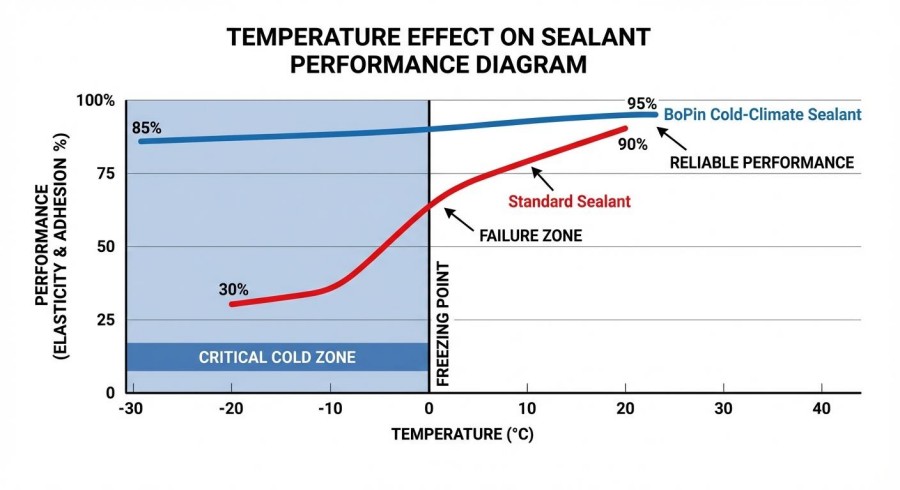
Application temperature limitations restrict when standard sealants can be installed. Most conventional products require minimum application temperatures of +5°C to +10°C for proper adhesion and cure. Below these thresholds, sealants become stiff and difficult to extrude, adhesion decreases, and curing slows or stops entirely.
Sealant viscosity increases dramatically in cold. A sealant that flows smoothly at 20°C becomes thick and difficult to gun at 0°C, and may barely extrude at all at -10°C. This increased viscosity makes application physically difficult and prevents proper wetting of substrate surfaces – a critical requirement for good adhesion.
Cure rates slow significantly as temperature drops. Moisture-cure sealants (silicones, polyurethanes, MS polymers) that skin over in 15-20 minutes at room temperature may take several hours at near-freezing temperatures. Full cure, which normally takes 24-48 hours, can extend to weeks in sustained cold conditions.
Substrate temperatures matter as much as air temperature. Concrete, metal, and masonry hold cold longer than air warms. On a winter morning when air temperature has risen to +5°C, substrate surfaces may still be at -5°C or colder from overnight freezing. Sealants applied to these cold surfaces fail to develop proper adhesion regardless of acceptable air temperature.
Service temperature range defines long-term performance. Sealants must maintain flexibility and adhesion throughout the temperature range they’ll experience during their service life. Products rated only to -20°C may become brittle and crack in regions where temperatures regularly reach -30°C or colder.
Freeze-Thaw Cycling Effects
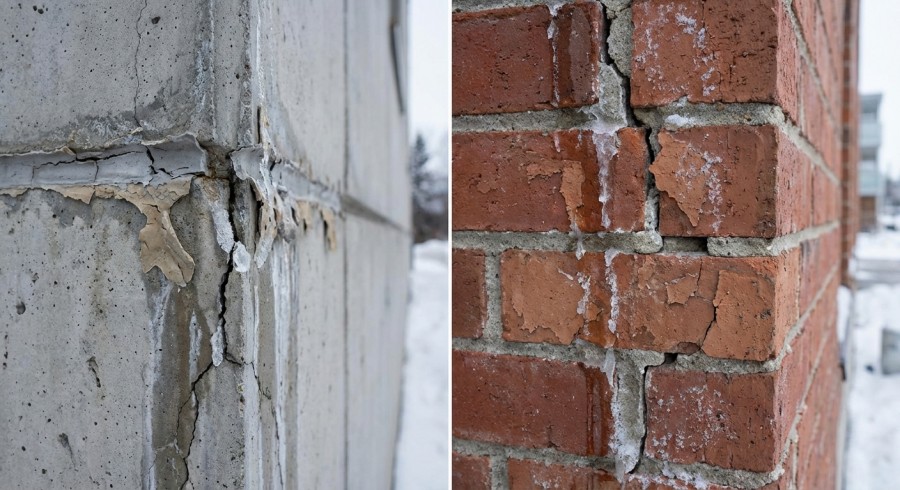
Freeze-thaw cycling creates one of the most destructive conditions sealants face. The repeated expansion and contraction from daily or seasonal temperature swings stresses sealants mechanically and compromises their ability to maintain watertight seals.
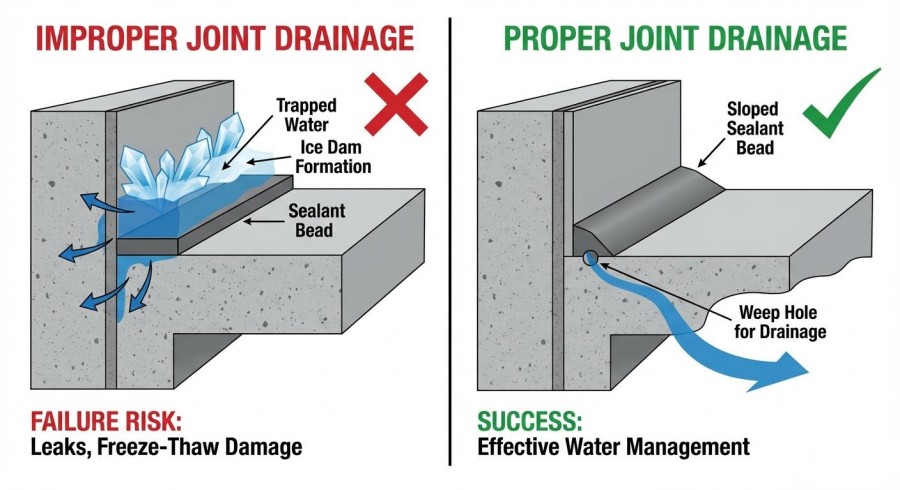
Water trapped in or behind sealant joints expands approximately 9% when freezing. This expansion creates tremendous pressure – ice formation can exert forces exceeding 200 MPa, more than enough to tear sealant away from substrates or crack the sealant itself. Proper joint design that allows drainage prevents this ice formation damage.
Thermal cycling from freeze-thaw creates constant movement. Substrates expand and contract with temperature changes, creating joint movement that sealants must accommodate. In regions experiencing daily freeze-thaw cycles, joints move every single day throughout winter and transitional seasons, accumulating hundreds or thousands of movement cycles annually – far more than structures in stable climates experience.
Surface deterioration accelerates under freeze-thaw conditions. Concrete especially suffers from freeze-thaw damage as water in pores freezes and causes scaling and spalling. This deteriorating substrate provides progressively worse bonding surface for sealants, eventually causing adhesion failure even in products that initially bonded well.
Sealant chemistry affects freeze-thaw resistance. Some sealant types maintain flexibility and adhesion through repeated freezing better than others. Silicones generally excel in freeze-thaw conditions, while some polyurethanes and acrylics may lose flexibility or adhesion after numerous freeze-thaw cycles.
Ice and Snow Complications
Ice and snow create practical challenges for winter sealing work. These conditions affect both application and long-term performance.
Surface moisture from melting snow or ice prevents proper adhesion. Most sealants require dry substrates for reliable bonding. In winter conditions, surfaces may appear dry while retaining microscopic moisture or ice crystals that interfere with adhesion. This invisible moisture causes adhesion failures that may not become apparent until later.
Ice formation in joints can damage newly applied sealants. If water enters joints before sealants fully cure, subsequent freezing can damage the forming seal. Protect fresh sealant from precipitation and runoff during the critical first 24-48 hours of cure.
Snow loads stress sealed joints. Heavy snow accumulation on roofs creates loads that deflect structures and stress joints. Sealants must accommodate this additional movement beyond normal thermal cycling. Inadequate movement capability leads to seal failure when snow loads exceed what the sealant can handle.
Ice dams create sustained water exposure. Ice dams at roof eaves trap water behind them, creating ponding that submerges sealed joints for extended periods. This prolonged water exposure combined with freeze-thaw cycling represents one of the most severe conditions sealants face. Only premium products with excellent water resistance survive these conditions.
Cold Climate Product Selection
Not all sealants perform equally in cold conditions. Selecting products specifically formulated for low-temperature service and application ensures reliable performance.
Silicone Sealants: Cold Climate Champions
Silicone sealants generally provide the best performance in extreme cold conditions. Their wide temperature range, flexibility retention at low temperatures, and resistance to freeze-thaw damage make them the preferred choice for demanding cold climate applications.
Key silicone advantages in cold climates:
- Extreme low-temperature flexibility – quality silicones remain flexible to -50°C or lower
- Excellent freeze-thaw resistance – maintains properties through countless freeze-thaw cycles
- Wide temperature range – continuous service from -50°C to +150°C or higher
- Reliable cure in cold – some formulations cure at temperatures down to -20°C
- Tuổi thọ sử dụng lâu dài – 20-30+ years even in harsh freeze-thaw conditions
However, standard silicones still have application temperature limits. Most conventional neutral-cure silicones require +5°C to +10°C minimum for application. For true cold-weather work, specialty low-temperature formulations extend application ranges to 0°C, -5°C, or even -10°C depending on specific products.
Products like BoPin 770 Silicone trung tính chống thấm nước provide excellent cold climate performance with service temperatures from -40°C to +150°C and resistance to freeze-thaw cycling. For critical applications in extreme cold, verify that selected silicones meet both application and service temperature requirements.
Silicone limitations in cold weather:
- Cold viscosity – even cold-weather formulations become stiffer and harder to gun in extreme cold
- Slow cure – cure rates decrease significantly at low temperatures
- Substrate temperature critical – cold substrates prevent proper adhesion regardless of air temperature
- Moisture availability – very dry cold air slows moisture-cure reactions
Despite these limitations, silicones remain the gold standard for cold climate sealing when properly applied.
MS Polymer Sealants: Versatile Cold Weather Performance
MS (Modified Silane) polymer sealants offer good cold climate performance with some advantages over silicones in specific applications. Their paintability and multi-substrate adhesion make them valuable where these characteristics matter.
MS polymer advantages in cold climates:
- Good low-temperature flexibility – typically remain flexible to -40°C
- Có thể sơn sau khi khô. – important for matching building aesthetics
- Độ bám dính tuyệt vời to diverse substrates without primers
- Reasonable cold-weather cure – moisture-cure mechanism works in cold
- Good freeze-thaw resistance – maintains performance through cycling
Products like BoPin MS-220 Multi-Purpose MS Polymer provide reliable performance with service temperatures from -40°C to +90°C and good resistance to freeze-thaw conditions. For applications requiring paintability or dealing with multiple substrate types, MS polymers offer excellent cold climate solutions.
MS polymer considerations for cold weather:
- Application temperature limits – most require +5°C minimum, though some low-temperature versions extend to 0°C
- Temperature range narrower than silicones – maximum service temperature typically +90°C versus +150°C for silicones
- Cure speed in cold – slows significantly below +10°C
- Cold substrate sensitivity – like silicones, require adequate substrate temperature
MS polymers work very well in moderate cold climates and represent good value where extreme cold (below -40°C) isn’t regularly encountered.
Polyurethane Sealants: Limited Cold Climate Use
Polyurethane (PU) sealants have significant limitations in cold climates though they can work in specific applications with proper precautions.
PU sealant challenges in cold:
- Limited low-temperature flexibility – typically rated to -25°C to -30°C
- Application temperature requirements – most need +5°C to +10°C minimum
- Freeze-thaw sensitivity – some formulations lose flexibility after repeated cycles
- Cold cure problems – moisture-cure mechanism very slow in cold, dry conditions
- Hardening in extreme cold – may become brittle below rated temperature range
However, PU advantages include:
- Cost-effectiveness – typically less expensive than silicones or MS polymers
- Abrasion resistance – good for traffic areas even in cold climates
- Độ bám dính mạnh – bonds well to most substrates when properly applied
- Khả năng sơn – accepts coatings after curing
PU sealants can serve cold climate applications in protected areas, moderate cold regions, or where specific PU advantages (abrasion resistance, cost) outweigh cold climate limitations. For extreme cold or severe freeze-thaw exposure, silicones or MS polymers prove more reliable.
Specialized Cold-Weather Formulations
Several manufacturers offer sealants specifically formulated for cold weather application. These products typically feature:
Extended low-temperature application ranges – some products claim workability to -10°C or even -15°C, dramatically expanding winter work windows compared to standard formulations.
Modified viscosity – adjusted to remain gunnable in cold while still providing proper substrate wetting and adhesion.
Accelerated low-temperature cure – catalyst systems optimized to function at lower temperatures than standard products.
Enhanced flexibility retention – formulations that maintain elasticity at extreme low temperatures beyond standard products.
However, cold-weather formulations often involve trade-offs:
- Higher cost – specialty formulations typically cost 20-50% more than standard products
- Reduced high-temperature performance – optimizing for cold may reduce maximum service temperature
- Limited availability – not all product lines offer cold-weather variants
- Shorter shelf life – some cold-weather catalysts reduce storage stability
For projects in genuinely cold conditions where standard products won’t work, specialty cold-weather sealants prove worth the extra cost. For occasional cold weather work, working methods and timing adjustments with standard products may suffice.
Cold Weather Application Best Practices
Even cold-weather rated sealants fail without proper application techniques. Winter conditions demand adjusted methods compared to warm weather work.

Timing and Temperature Management
Strategic timing dramatically affects winter sealing success. Working at the warmest part of the day with proper preparation extends the practical working season.
Monitor both air and substrate temperatures. Use infrared thermometers to verify actual surface temperatures rather than assuming they match air temperature. Substrates warm more slowly than air, and shaded or north-facing surfaces may remain frozen even when air temperature reaches acceptable levels.
Plan work for afternoon hours when possible. Even in winter, afternoon sun warms substrates significantly above morning temperatures. A concrete wall might be -5°C at 9 AM but reach +5°C by 2 PM on a clear winter day. This temperature gain creates an application window where none existed in morning hours.
Consider temporary heating of work areas. Enclosing areas with plastic sheeting and using heaters creates controlled microclimates where sealants can be applied successfully despite frigid ambient conditions. This approach works for windows, doors, and smaller areas though it’s impractical for large-scale work.
Store sealants in warm areas before use. Bringing sealants from cold storage directly to application results in cold, stiff material that’s difficult to gun. Store in heated buildings or vehicles overnight, and keep cartridges warm in insulated containers during transport to job sites. Warm sealant flows better and bonds better than cold product even when substrate temperature is acceptable.
Protect fresh sealant from rapid cooling. Sealants applied late in the day may be exposed to freezing temperatures before adequate skinning occurs. Plan application timing so sealants have several hours of above-freezing conditions during critical initial cure. Temporary protection with tarps or enclosures helps in marginal conditions.
Surface Preparation in Winter Conditions
Cold weather complicates surface preparation significantly. Moisture, frost, and frozen substrates create challenges unknown in warm weather work.
Verify surfaces are completely dry before application. Frost, ice crystals, or frozen moisture on substrates must be completely removed and surfaces thoroughly dried. Visual inspection isn’t sufficient – use moisture meters or heating methods to ensure substrates are genuinely dry at microscopic level.
Remove ice, frost, and snow completely. Mechanical removal with scrapers or brushes followed by heat drying ensures no moisture remains. Simply waiting for natural melting leaves water on surfaces that interferes with adhesion. Active heating with heat guns or propane torches (used carefully to avoid substrate damage) drives off moisture effectively.
Warm substrates before sealant application when possible. Even if substrates are dry, warming them to 10-15°C improves sealant wetting and initial adhesion. Heat guns, propane heaters, or infrared heaters can warm concrete, metal, or masonry surfaces enough to significantly improve results. However, avoid overheating which can damage substrates or create thermal shock.
Clean surfaces more thoroughly in winter. Salt, de-icing chemicals, and winter road grime contaminate surfaces and interfere with adhesion. Solvent cleaning followed by clean water rinsing (and complete drying) removes these contaminants. Don’t skip cleaning despite cold making it uncomfortable – contaminated surfaces cause failures regardless of temperature.
Check for frost returning to prepared surfaces. In very cold conditions, cleaned and warmed surfaces may frost over again if work proceeds slowly. Prepare only as much area as you can seal before frost returns, or maintain surface warmth with heaters during preparation and application.
Application Technique Adjustments
Winter application techniques differ from warm weather methods. Adapting your approach to cold conditions improves success rates.
Cut nozzles slightly larger in cold weather. Cold, viscous sealant requires more force to extrude and benefits from slightly larger openings. This also helps ensure adequate material flow to completely fill joints rather than creating voids.
Gun sealant more slowly and deliberately. Cold sealant doesn’t flow as readily into joint irregularities. Slow, steady pressure allows time for material to wet surfaces properly. Rushing application in cold creates voids and weak spots that cause premature failure.
Tool sealant while it’s still workable. Cold weather slows skinning, but it still occurs – just more slowly than in warm conditions. Monitor sealant surface carefully and complete tooling before skinning begins. Once surface cure starts, tooling becomes difficult and may damage the forming seal.
Apply slightly thicker beads in cold. Cold sealant doesn’t self-level as readily as warm material. Slightly overfilling joints and tooling to final profile ensures complete filling without voids. Underfilled joints in cold weather almost certainly create problems.
Use backer rod more consistently in winter. Proper joint depth control becomes even more critical in cold as thick sealant sections cure very slowly in low temperatures. Backer rod ensures proper depth-to-width ratios and prevents three-sided adhesion that restricts movement capability.
Protect newly applied sealant from precipitation. Snow or freezing rain within 24-48 hours of application can damage forming seals. Monitor weather forecasts carefully and provide temporary protection with tarps or enclosures if precipitation threatens during critical cure period.
Regional Considerations for Extreme Cold
Different cold regions present unique combinations of challenges. Understanding regional variations helps adapt strategies appropriately.
Central Asia: Continental Extreme Cold
Central Asian winters feature extreme cold with temperatures regularly reaching -20°C to -40°C, combined with dry conditions and intense sun despite low temperatures.
Key Central Asian cold climate challenges:
- Extreme temperature ranges – daily swings from -30°C at night to -5°C afternoon are common
- Very dry air – low humidity slows moisture-cure sealants significantly
- Intense winter sun – strong UV even in winter accelerates sealant aging
- Sustained cold periods – weeks or months below freezing limit work windows
- Severe freeze-thaw at transitions – spring and fall create destructive cycling
Strategies for Central Asian conditions:
Schedule major sealing work for spring or early fall when temperatures are moderate but before or after severe cold arrives. Winter emergency repairs require cold-weather products and careful technique, but planned work should avoid deep winter if possible.
Select products rated for extreme cold service temperatures. Verify sealants maintain flexibility to at least -40°C to handle typical Central Asian winter conditions. Products rated only to -25°C prove inadequate for the coldest regions.
Address low humidity effects on moisture-cure sealants. Light misting of joint surfaces with water before sealant application provides moisture that accelerates cure in very dry air. However, ensure misted water doesn’t freeze before sealant application.
Protect against rapid day-night temperature cycling. The large daily temperature swings create substantial joint movement. Ensure joints are sized adequately for this movement and use sealants with maximum movement capability – ±50% provides necessary margin.
Nordic Regions: Sustained Cold with Moisture
Northern European and similar regions experience sustained cold combined with higher humidity and precipitation than Central Asian climates.
Key Nordic cold climate challenges:
- Persistent moisture – rain, snow, and humidity create constant moisture exposure
- Moderate but sustained cold – temperatures typically -10°C to -25°C for extended periods
- Limited sunlight – short winter days provide little solar warming for substrates
- Freeze-thaw at coasts – maritime influence creates frequent freeze-thaw cycling
- Ice dam formation – heavy snow and freeze-thaw create damaging ice dams
Strategies for Nordic conditions:
Moisture management becomes paramount. More humid conditions than Central Asia help moisture-cure sealants but also create more surface moisture problems. Thorough drying before application and protection from precipitation during cure prove critical.
Schedule work for the few warm days that occur. Even Nordic winters have occasional warmer periods – plan major sealing work for these windows. Monitor weather forecasts carefully and mobilize quickly when suitable conditions arrive.
Address ice dam prevention in roof details. Proper ventilation and insulation reduce ice dam formation, but sealed details must also handle the extreme conditions ice dams create. Use premium sealants with excellent water resistance and freeze-thaw durability in vulnerable areas.
Consider hybrid systems for critical applications. Combining primary sealing with secondary drainage planes or water management systems provides backup if primary seals are compromised by ice or freeze-thaw damage.
High Altitude: Extreme UV Combined with Cold
Mountain and high-altitude construction faces unique combinations of cold temperatures and intense UV exposure.
Key high-altitude challenges:
- Cold despite strong sun – intense UV exposure combined with low air temperatures
- Thin atmosphere – less UV filtration increases radiation intensity
- Rapid temperature swings – morning freeze to afternoon thaw cycling daily
- Lower atmospheric pressure – affects some sealant cure mechanisms
- Difficult logistics – remote locations complicate material transport and storage
Strategies for high-altitude conditions:
Select sealants with both cold performance and extreme UV resistance. The combination of cold and intense UV demands products that excel in both characteristics. Premium silicones generally handle this combination best.
Account for daily freeze-thaw cycling in joint design. Joints must accommodate movement from daily temperature swings that can exceed 30-40°C from dawn to afternoon. Size joints conservatively and use maximum movement capability sealants.
Protect stored materials from temperature extremes. Mountain conditions can freeze stored sealants overnight then heat them to uncomfortable levels in afternoon sun. Store in insulated, temperature-controlled containers to maintain workability.
Test application procedures at actual site conditions. Lower atmospheric pressure at altitude may affect sealant flow, cure, or foam expansion. If possible, test products at project elevation before full-scale application to verify expected performance.
Maintenance and Freeze-Thaw Damage Prevention
Proper maintenance and preventive measures extend sealant life significantly in cold climates. The harsh conditions make proactive care especially important.
Inspection and Maintenance Schedule
Inspect sealed joints twice annually minimum in cold climates – once after winter freeze-thaw season, once before winter arrives. This timing catches damage early and allows repairs before next winter season begins.
Focus inspection on high-stress areas:
- Horizontal joints where water ponds and freeze-thaw damage concentrates
- North-facing joints that remain frozen longest and experience most severe conditions
- Roof details subject to ice dam formation
- Previously repaired areas to verify repair effectiveness
- Joints in shade that freeze-thaw more frequently than sun-exposed joints
Signs requiring immediate attention:
- Visible gaps between sealant and substrate indicate adhesion loss
- Cracks or tears penetrating sealant thickness allow water infiltration
- Hardening or brittleness suggests advanced aging or cold damage
- Ice damage evidence – torn sealant or displaced material from ice formation
- Substrate deterioration around joints from water infiltration or freeze-thaw
Preventing Freeze-Thaw Damage
Design strategies minimize freeze-thaw damage potential:
Ensure positive drainage from all sealed joints. Standing water that freezes causes tremendous damage. Design joints with slight slopes or weep holes preventing water accumulation. Horizontal joints face greatest freeze-thaw risk – consider if vertical joint orientations are possible.
Size joints generously for movement. Freeze-thaw cycling creates constant movement. Conservative joint sizing reduces sealant stress and extends service life. Joints under stress fail faster when subjected to freeze-thaw cycling.
Use backer rod to prevent water entrapment behind sealant. Proper backer rod installation ensures water cannot access the back side of joints where freezing creates force pushing sealant outward. This simple detail prevents much freeze-thaw damage.
Select appropriate sealants for exposure level. Protected joints under eaves can use less expensive products, trong khi fully exposed horizontal joints need premium freeze-thaw resistant sealants. Match product quality to exposure severity.
Apply adequate sealant depth. Too-shallow sealant freezes through completely, creating ice formation that can tear sealant from substrates. Proper depth creates mass that insulates inner portions even when surface freezes.
Repairing Cold Climate Seal Failures
When failures occur despite best efforts, proper repair techniques restore performance.
Complete removal of failed sealant is essential. Leaving old material prevents proper adhesion of repair sealant. Cut out failed sections completely, extending slightly beyond obvious damage to ensure all compromised material is removed.
Address substrate damage before resealing. Freeze-thaw often damages concrete surfaces around failed seals. Repair spalled or deteriorated concrete first, then apply sealant to sound substrate. Sealing over damaged substrate guarantees repeat failure.
Use cold-weather techniques even for summer repairs. Damage from cold climate exposure often indicates the original installation was marginal. Use better products and techniques for repairs than original installation to prevent recurrence.
Consider upgrading joint design during repairs. If original joints were too narrow or lacked backer rod, redesign during repair to prevent future problems. Routing joints wider or installing proper backer rod improves long-term performance.
Những câu hỏi thường gặp
What’s the coldest temperature I can apply sealant?
Standard construction sealants require minimum +5°C to +10°C for application, though specialty cold-weather formulations extend this to 0°C, -5°C, or even -10°C depending on specific products. However, substrate temperature matters as much as air temperature – surfaces must be above freezing and completely dry regardless of air temperature. For true extreme cold application (-15°C or colder), consider temporary enclosure with heating rather than relying solely on cold-weather products.
How do I know if my sealant can handle freeze-thaw cycles?
Check technical data sheets for freeze-thaw cycle testing results. Quality products specify testing per ASTM standards showing performance through 50-100+ freeze-thaw cycles without adhesion loss or property degradation. Silicones and MS polymers generally excel in freeze-thaw, while some polyurethanes and most acrylics show limitations. For severe freeze-thaw exposure, look for products specifically rating freeze-thaw resistance rather than assuming all sealants handle it equally.
Can I seal in winter if I warm the surfaces first?
Yes, warming substrates can create suitable application conditions even in cold ambient temperatures. Use heat guns, infrared heaters, or enclosed spaces with temporary heating to warm surfaces to acceptable temperatures. Tuy nhiên, ensure surfaces remain warm long enough for sealant to develop initial adhesion – just briefly warming surfaces that immediately cool again doesn’t help. Also verify surfaces are completely dry after warming – melted frost creates moisture problems.
Why does sealant cure so slowly in cold weather?
Most construction sealants use moisture-cure mechanisms that slow dramatically at low temperatures. The chemical reactions driving cure proceed more slowly in cold, and cold air often holds less moisture needed for the curing reaction. Additionally, substrates in cold conditions may draw heat from sealant further slowing cure. Silicones at 0°C may take 5-10 times longer to cure than at 20°C. Plan projects accounting for these extended cure times when working in cold.
What maintenance prevents cold climate seal failures?
The most important preventive maintenance includes ensuring positive drainage from joints, regular cleaning to remove ice-dam-promoting debris, and annual inspections to catch small problems before they escalate. Remove ice dams promptly rather than letting them persist and damage seals. Keep gutters and drains clear so water doesn’t pond near sealed joints where it can freeze. Annual inspection and minor repairs prove far less expensive than major restoration after neglected seals fail completely.
Phần kết luận
Cold climates and winter construction create extreme challenges for sealants, demanding specialized products and adjusted application techniques that warm weather work doesn’t require. Attempting to use standard products and summer methods in cold conditions virtually guarantees premature failure, wasting time and money on repairs that could have been prevented.
Product selection makes enormous difference in cold climate success. Silicone sealants generally provide best overall performance in extreme cold, maintaining flexibility to -50°C and resisting freeze-thaw damage through decades of service. MS polymer alternatives offer excellent value for moderate cold climates where paintability or cost constraints make silicones less attractive. Understanding each product’s actual low-temperature capabilities and limitations ensures appropriate selection.
Application timing and technique require significant adjustment from warm weather practices. Working during warmest hours, warming substrates before application, thoroughly removing frost and ice, and protecting fresh sealant from rapid cooling all become critical success factors. Rushing winter work without these precautions causes failures regardless of product quality.
Different cold regions present unique challenge combinations. Central Asian extreme continental cold, Nordic sustained moderate cold with moisture, and high-altitude cold with intense UV each demand tailored approaches. Understanding regional specifics helps optimize strategies for local conditions.
Freeze-thaw cycling creates one of the most destructive conditions sealants face. Proper joint design preventing water accumulation, adequate joint sizing for movement, and selection of proven freeze-thaw resistant products protect against this damage. Maintenance focused on drainage, inspection, and early intervention prevents small problems from becoming major failures.
Whether building new structures in cold climates or maintaining existing buildings through harsh winters, success requires respecting cold’s unique challenges and adjusting accordingly. The investment in cold-weather products and proper techniques pays dividends through reliable performance that standard approaches simply cannot deliver in extreme conditions.
Working on cold climate construction projects and need expert guidance on winter sealing solutions? Liên hệ với đội ngũ kỹ thuật của chúng tôi for personalized product recommendations and application advice suited to your specific temperature conditions and project requirements.
Related Articles: