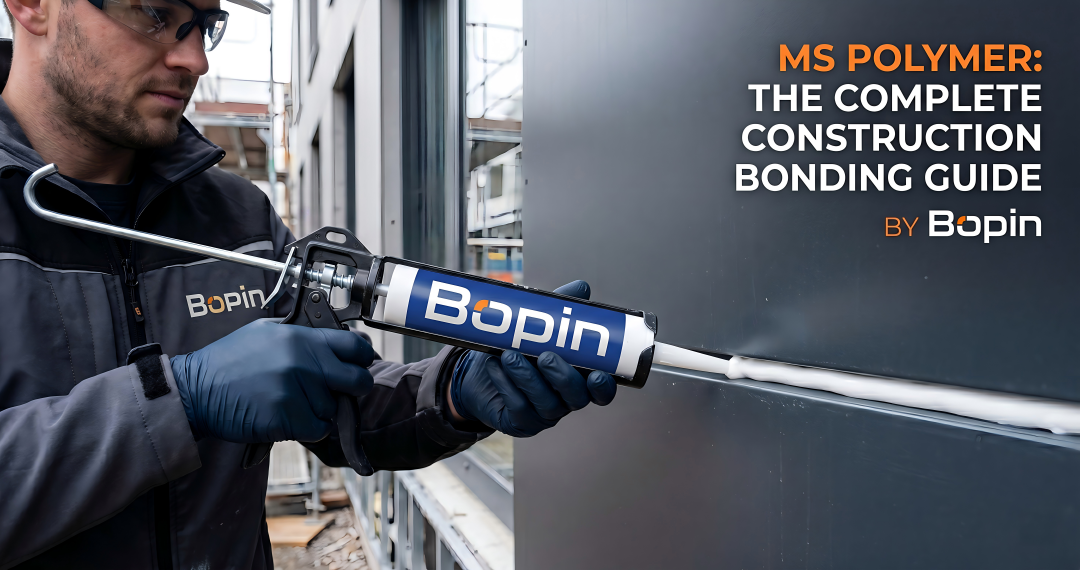
Expert guidance from BoPin Construction Chemicals – doing the job right the first time
The Tempting Shortcut That Leads to Failure
Your old caulk is cracked, moldy, and peeling. It’s tempting to take the easy route: just apply a new, clean bead of caulk right on top. It seems like a quick fix.
This is one of the most common questions we hear from homeowners and DIYers. The logic seems sound – cover the old, failed caulk with fresh new material and you’re done in minutes instead of hours.
But is it the right fix? Will it actually solve your problem, or are you just setting yourself up for an even bigger headache down the road?
This guide will give you the definitive, professional answer. We’ll explain the science behind why this shortcut fails. And we’ll show you the correct process that will guarantee a long-lasting, professional-looking seal.
Kết quả thế nào? A seal that actually works and lasts for years, not weeks.
The Short Answer is NO. Here’s Why.
Let’s be direct: Caulking over old caulk is not a viable solution. It might look acceptable for a short time, but it will fail. Every professional contractor knows this.
Here are the three critical reasons why this shortcut always ends in failure:
Reason 1: Nothing Sticks to Silicone, Not Even Silicone
This is basic chemistry that you can’t cheat. Cured silicone has extremely low surface energy. Think of it like trying to stick tape to Teflon – the surface actively resists adhesion.
What actually happens:
- New, uncured silicone cannot form a chemical bond with old, cured silicone
- The bond is purely mechanical and extremely weak
- Within days or weeks, the new layer starts peeling away at the edges
- Soon you’ll have both old AND new caulk peeling off in sheets
Even the exact same brand and type of silicone won’t bond reliably to its own cured form. This isn’t a quality issue – it’s the nature of cured silicone itself.
Professional contractors never attempt this because they know they’ll be back to fix it for free within weeks.
Reason 2: You’re Sealing in the Problem
If your old caulk has mold, you’re not fixing the mold problem – you’re hiding it. That black or green growth doesn’t die when you cover it up.
What actually happens under the new caulk:
- Mold continues to grow in the dark, moist environment you’ve created
- It spreads along the interface between old and new caulk
- Eventually it emerges through or around the new caulk
- You’ll have an even worse mold problem than when you started
Mold needs moisture and organic material to thrive. Old, degraded caulk provides both. Covering it with a new layer is like putting a bandage over an infected wound without treating the infection.
Reason 3: You’re Building on a Failing Foundation
If the old caulk is cracked and peeling, it has already lost adhesion to the surfaces. You’re trying to build your new seal on top of material that’s literally falling off the wall.
What actually happens:
- The old layer continues to lose adhesion and peel away
- As it peels, it takes your new caulk with it since they’re stuck together
- You now have TWO layers of failed caulk to remove instead of one
- The substrate underneath may have water damage that continues to worsen
Think of it like trying to build a house on quicksand. No matter how good your new materials are, they can’t overcome a fundamentally unstable foundation.
The Only Time You Can Do a Minor Touch-Up
Honesty builds trust, so let’s address the one exception to this rule.
The 24-Hour Exception
If you applied caulk within the last 24 hours and discovered you missed a small spot, you can usually add a small amount of the exact same product to fill the gap.
This works because:
- The original application is still curing and hasn’t reached full cure
- The new material can integrate with the partially-cured original
- You’re essentially continuing the same application rather than layering two separate applications
Critical requirements for this exception:
- Must be within 24 hours of original application
- Must use the exact same product
- Only for small gaps or missed spots
- The original caulk must be in good condition
When This Exception Does NOT Apply
If the caulk is old, fully cured, and showing signs of failure, this exception does not apply. Even if it’s the same brand you originally used.
Don’t fool yourself into thinking:
- “It’s only been a few weeks” – if it’s cured, it’s too late
- “I’ll use the same brand” – doesn’t matter once cured
- “Just the edges are bad” – if any part is failing, it’s all coming off
The Professional Method: The 3 R’s
Now that you understand why shortcuts don’t work, here’s the professional process that guarantees success.
1. REMOVE: The Most Critical Step
This is the most important part of the entire job. You must remove 100% of the old caulk – not 95%, not 99%, but every last bit.
Professional removal technique:
Cut along both edges with a sharp utility knife to break the adhesion to surfaces.
Pull away the bulk of the old caulk using pliers or your fingers. Get as much as possible in this first pass.
Scrape remaining residue using a plastic scraper or specialized caulk removal tool. Metal tools can damage surfaces, so use them carefully.
Use caulk remover solvent for stubborn residues that won’t scrape away. Apply, wait as directed, then scrape again.
Inspect your work carefully by running your finger along the joint. You should feel only the substrate material, not any slick silicone residue.
This step takes time – often 50-75% of the total project time. Don’t rush it. Every bit of old caulk you leave behind is a failure point for your new seal.
Read Our Complete Guide: How to Remove Old Caulk →
2. RE-PREP: Surface Must Be Perfect
Even after complete removal, the surface isn’t ready for new caulk yet. Years of soap, oils, and residues have built up.
Professional preparation:
Clean with rubbing alcohol or a degreasing cleaner to remove all soap scum, oils, and residues. This step is critical for adhesion.
Dry completely before applying new caulk. Any moisture prevents proper curing and adhesion.
Check for mold or mildew in the joint area. If present, treat with bleach solution or mold killer, then rinse and dry completely.
Inspect the surfaces for damage. Crumbling grout, damaged tile, or deteriorating drywall should be repaired before caulking.
This cleaning step is not optional. Kết quả chuyên nghiệp đòi hỏi sự chuẩn bị chuyên nghiệp.
3. REPLACE: Apply Quality Caulk to a Clean Slate
Now you’re ready for the easiest step – applying fresh caulk to properly prepared surfaces.
Kỹ thuật ứng dụng chuyên nghiệp:
Use quality, application-specific caulk. Kitchen and bathroom areas require specialized products with mold resistance and waterproofing properties.
Apply a continuous bead without gaps or stops in the middle of a joint.
Tool within 5-10 minutes using a wet finger or smoothing tool to create the proper concave shape.
Cần thời gian để khô hoàn toàn. – typically 24-48 hours before exposing to water or stress.
With proper preparation, this new caulk will last 15-20 years instead of failing within weeks.
Learn Professional Application: How to Apply Caulk Like a Pro →
What Happens if I Caulk Over Old Caulk Anyway?
Some people learn best from understanding the consequences. Here’s exactly what happens when you ignore professional advice and try the shortcut.
Short-Term (First Few Weeks)
It will look better temporarily. The crisp, white bead covers the ugly old caulk. You feel good about the “quick fix.”
Hidden problems are developing:
- The new caulk hasn’t actually bonded to anything
- Mold underneath continues growing
- The old layer continues losing adhesion
- Moisture is getting trapped between layers
Medium-Term (1-3 Months)
Visible failure begins:
- Edges start lifting and peeling away from surfaces
- Gaps appear between new and old caulk layers
- Dark spots emerge as trapped mold finds its way through
- The seal no longer prevents water penetration
You’re back where you started, but now with a more difficult cleanup job ahead.
Long-Term (3-6 Months and Beyond)
Complete failure is inevitable:
- Both layers peel away in sheets or strips
- Water damage behind the surfaces worsens
- Sự phát triển của nấm mốc is more extensive than before
- You must remove TWO layers of caulk instead of one
The “quick fix” has cost you:
- Money for caulk that failed
- Time to apply it
- More time to remove both layers later
- Potential water damage repair costs
- Possible mold remediation costs
The total cost of the shortcut far exceeds the time you thought you were saving.
Caulk Over Caulk FAQ
Will new silicone stick to old silicone?
No, not reliably or permanently. While you might achieve temporary mechanical adhesion, cured silicone’s low surface energy prevents proper chemical bonding. The new layer will eventually peel away within weeks or months.
Professional contractors never attempt this because they know it always fails.
Can I caulk over cracked caulk?
No, absolutely not. The cracked caulk has already failed adhesively or cohesively. As the cracked layer continues to pull apart, your new caulk will crack and fail along the same lines.
You’re not repairing the crack – you’re just temporarily hiding it while the problem worsens underneath.
Is it OK to put a second layer of caulk?
Only if the first layer is brand new and still curing (within 24 hours of application). Once the first layer has cured – even partially – a second layer won’t bond properly.
If you’re trying to make a thicker bead, remove what you have and apply the correct amount in one application.
What about caulking over a different type of caulk?
This is even worse than caulking over the same type. Different formulations have different cure systems, surface energies, and chemical compositions that make bonding even less likely.
There’s no shortcut here – complete removal is the only reliable solution.
How long does it take to remove old caulk?
Plan on 1-3 hours for a typical bathroom depending on how much old caulk there is and how stubborn it is to remove.
This represents 50-75% of the total project time but it’s where success or failure is determined. Time spent here is time well invested.
Do It Right, Do It Once
While it’s tempting to take a shortcut, caulking over old caulk is a recipe for failure. The science is clear: silicone doesn’t bond to silicone, you can’t seal in mold and make it go away, and you can’t build a reliable seal on a failing foundation.
The only way to achieve a lasting, professional, and mold-free seal is to completely remove all old material first. Yes, this takes time. Yes, it requires effort. But it’s the difference between a job that lasts 15-20 years and one that fails within weeks.
Professional contractors follow the 3 R’s – Remove, Re-prep, Replace – because they know there are no shortcuts to quality work. Their reputation depends on it.
Your home deserves the same professional approach. The small amount of extra time spent doing proper removal and preparation pays massive dividends in longevity, appearance, and peace of mind.
Nhớ: The bitterness of poor quality lingers long after the sweetness of low price is forgotten. Do it right the first time, and you won’t have to do it again for decades.
Now that you know the professional method, you’re ready to get the job done right. Explore our full line of high-performance kitchen and bath sealants to ensure your new seal lasts a lifetime.
Need expert guidance on caulk removal and application? BoPin Construction Chemicals provides professional-grade sealants and comprehensive technical support for lasting results.