Tropical climates create some of the harshest conditions for construction sealants, where year-round high humidity, intense monsoon rains, and constant heat test every sealed joint. Choosing the wrong sealant or applying it incorrectly in these conditions leads to rapid mold growth, adhesion failure, and water damage that undermines entire building structures.
Understanding how to select and apply sealants specifically for tropical environments protects your construction investment and delivers reliable, long-lasting performance. Whether you’re building in Southeast Asia’s monsoon regions, coastal tropical zones, or highland areas with temperature swings, the right approach makes all the difference.
Understanding Tropical Climate Challenges for Construction Sealing
Tropical environments subject building sealants to conditions that accelerate degradation and challenge even premium products. Recognizing these challenges helps you choose appropriate materials and application methods.
Monsoon Season Impact on Sealed Joints
Monsoon rains don’t just bring water – they create sustained moisture exposure that few other climates match. In regions like Southeast Asia, buildings face months of near-constant rainfall where sealed joints remain wet for extended periods.
This prolonged moisture exposure tests sealant adhesion continuously. Water finds every weakness in application technique or material selection. Joints that weren’t properly prepared or sealed with inferior products begin failing within the first monsoon season.
Driving rain creates water pressure that forces moisture behind poorly sealed joints. This trapped water causes substrate damage, promotes mold growth, and eventually destroys the sealant bond from behind. Prevention requires both proper product selection and meticulous application technique.
Temperature drops during heavy rainfall create thermal shock. Joints expand in tropical heat then contract rapidly when monsoon storms arrive. This constant movement stresses sealant bonds and accelerates fatigue in products lacking adequate flexibility.
Year-Round High Humidity Effects
Unlike temperate climates where humidity fluctuates seasonally, tropical regions maintain 70-90% relative humidity year-round. This constant moisture affects sealant performance in ways that standard product testing often doesn’t fully capture.
High humidity slows solvent evaporation in some sealant types. Products that cure quickly in dry climates may take significantly longer in tropical conditions. This extended cure time creates vulnerability windows where partially cured sealants can be damaged or contaminated.
Moisture-cure sealants like silicones actually cure faster in high humidity. But the abundant moisture also provides ideal conditions for mold and mildew growth on sealant surfaces. Without anti-microbial additives, even quality sealants become unsightly and potentially unhealthy within months.
Constant humidity prevents substrates from fully drying. Applying sealants to surfaces that feel dry but retain internal moisture leads to adhesion problems that may not appear immediately. By the time the problem becomes visible, water has already penetrated the building envelope.
Temperature and UV Exposure Considerations
Tropical temperatures remain consistently high, typically 25-35°C year-round. This constant heat accelerates chemical degradation processes in sealants, particularly in lower-quality formulations.
UV exposure near the equator is intense and sustained. Sealed joints on building facades receive more UV radiation annually than structures in temperate zones. Sealants without adequate UV stabilizers become brittle, discolored, and cracked within 2-3 years instead of the 15-20 year lifespan expected from quality products.
Surface temperatures on south-facing facades can exceed 60°C during afternoon sun. This extreme heat causes rapid expansion of both substrates and sealants. Products must maintain flexibility and adhesion across this wide temperature range, from air-conditioned interior temperatures around 20°C to these extreme exterior highs.
Thermal cycling – the daily temperature swing from cool night to hot day – creates constant joint movement. In tropical climates, this cycle happens every single day rather than seasonally. Sealants experience hundreds more movement cycles per year than in temperate regions, requiring superior fatigue resistance.
Critical Sealing Points in Tropical Construction
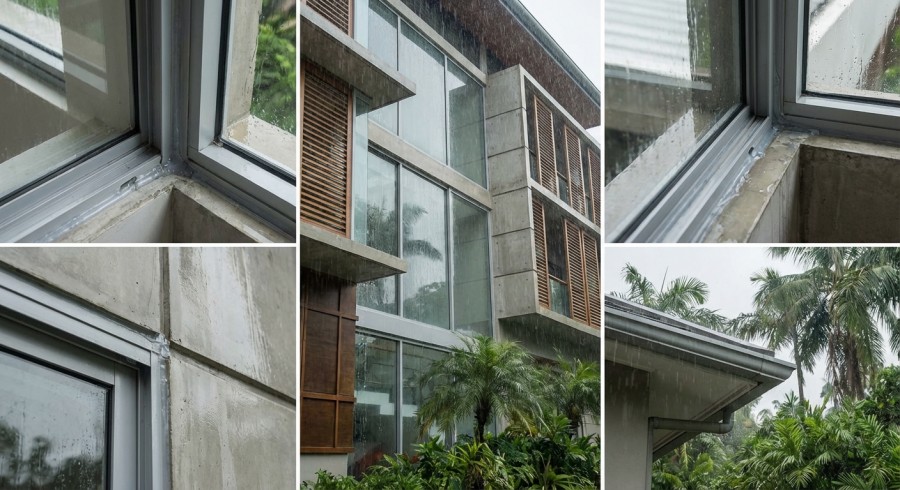
Tropical buildings have specific vulnerable areas where proper sealing becomes critical to long-term performance. Focusing your attention and best materials on these points prevents the majority of moisture-related problems.
Exterior Wall Joints and Cladding
Expansion joints in exterior walls face the full force of tropical weather. These joints must accommodate thermal movement while preventing water penetration through driving rain.
Concrete panel joints are particularly challenging. Concrete expands and contracts significantly with temperature changes, and tropical thermal cycling is relentless. Use sealants with movement capability of at least ±25% and proven UV resistance for these critical joints.
Metal cladding systems create unique sealing challenges. Metal expands more than concrete with temperature changes, creating substantial joint movement. Professional weatherproof silicone sealants like BoPin 770 handle these demanding conditions with movement capability up to ±50% and excellent metal adhesion.
Stone and brick facades require non-staining products. Many standard sealants leach plasticizers or other compounds that discolor porous stone. This becomes particularly visible on light-colored materials common in tropical architecture.
Window and Door Perimeters
Window perimeters represent the most common water intrusion points in tropical buildings. The junction between window frames and wall structures creates complex sealing geometries that must remain watertight through years of thermal cycling and structural movement.
Installation quality matters enormously here. Even premium sealants fail if applied over contaminated surfaces or without proper backing materials. The warm, humid conditions accelerate adhesion problems from poor preparation.
Door thresholds require special attention. These horizontal joints collect water and debris while experiencing mechanical stress from daily use. Standard sealants deteriorate rapidly in these conditions without proper joint design and product selection.
For optimal window and door sealing performance, consider specialized low-expansion polyurethane foams like BoPin PU-270 for filling gaps, followed by weatherproof silicone for final sealing. This two-material approach provides both structural support and weather protection.
Roof and Gutter Connections
Roof systems in tropical climates face extraordinary stress from intense sun, heavy rainfall, and temperature extremes. Improperly sealed roof penetrations and gutter connections account for a large percentage of building water damage in these regions.
Roof membrane terminations must seal perfectly. Water that bypasses these seals can travel surprisingly far through building systems before becoming visible as interior damage. By that time, extensive substrate deterioration may have occurred.
Gutter joints and downspout connections require flexible sealants. Metal gutters expand substantially in tropical heat, creating significant movement at joints. Rigid sealants crack quickly, allowing water to seep behind gutter systems and damage fascia boards or walls.
Roof penetrations for vents, skylights, and equipment need special consideration. These create complex three-dimensional sealing situations where multiple materials meet. Using MS polymer sealants like BoPin MS-220 provides excellent adhesion to diverse substrates while maintaining flexibility through thermal cycling.
Foundation and Ground Level Sealing
Ground-level joints face unique challenges from soil moisture, splash-back during heavy rains, and potential contact with aggressive soils or groundwater. These conditions require sealants with excellent water immersion resistance and chemical stability.
Foundation to wall transitions must prevent rising damp. In tropical regions with high water tables and intense rainfall, hydrostatic pressure can force water through inadequate seals. This requires not just good sealants but proper joint design with adequate depth and backing.
Expansion joints at ground level collect debris. Leaves, dirt, and organic matter accumulate in horizontal joints, holding moisture against sealants and promoting mold growth. Regular cleaning becomes part of necessary maintenance in tropical environments.
Below-grade sealing applications need waterproofing-grade products. Standard construction sealants may not provide adequate performance in continuous water immersion conditions. Consult with suppliers about specific product recommendations for these demanding applications.
Selecting the Right Sealants for Tropical Conditions
The sealant you choose makes the difference between decades of reliable performance and failure within the first few years. Tropical applications require specific performance characteristics that not all products deliver.
Silicone Sealants: The Premium Choice
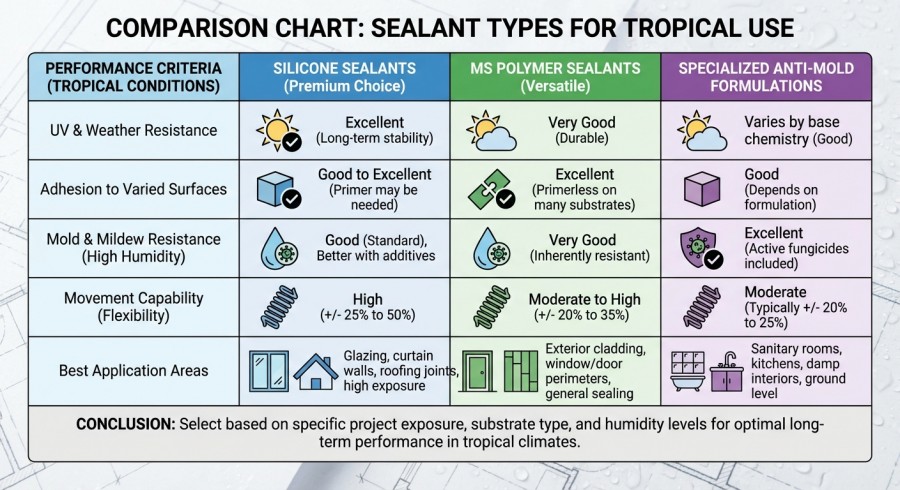
Silicone sealants dominate tropical construction for good reasons – they handle heat, UV exposure, and moisture better than most alternatives. But not all silicones perform equally in these demanding conditions.
Neutral-cure silicones outperform acetic-cure in tropical applications. Acetic-cure products release acetic acid during curing, which can corrode metals and etch sensitive surfaces – problems that worsen in humid conditions. Neutral-cure formulations avoid these issues while providing comparable performance.
UV resistance separates premium from economy silicones. In tropical sun exposure, inadequate UV stabilizers lead to surface chalking, yellowing, and eventual brittleness. Quality weatherproof silicones maintain flexibility and appearance for 15-20 years even under intense tropical UV exposure.
Anti-fungal additives are essential, not optional, in tropical silicones. The constant humidity creates ideal conditions for mold and mildew growth. Products like BoPin 550 Sanitary Silicone include fungicides that prevent microbial growth even in the most humid environments, maintaining both appearance and hygiene.
Movement capability determines joint longevity. Tropical thermal cycling demands sealants that maintain adhesion through repeated extension and compression. Look for products rated for at least ±25% movement capability, with ±50% ideal for metal or highly exposed applications.
MS Polymer Sealants: Versatile Solutions
MS (Modified Silicone) polymer sealants bridge the gap between silicones and polyurethanes, offering unique advantages for certain tropical applications. They paint better than silicones while providing superior UV resistance compared to polyurethanes.
Paintability matters for architectural applications. Many tropical buildings use painted finishes that require periodic refinishing. Unlike silicones which reject paint, MS polymers accept coatings, allowing sealed joints to disappear into surrounding finishes.
Low odor makes MS polymers preferable for occupied spaces. In tropical climates where natural ventilation often replaces air conditioning in budget-conscious projects, the lack of cure odor becomes important. MS polymers cure without releasing strong-smelling compounds.
Multi-substrate adhesion simplifies specifications. MS polymers bond well to concrete, metal, wood, glass, and most plastics without primers. This versatility reduces application complexity in mixed-material construction common in tropical regions.
Temperature flexibility serves highland tropical zones. Areas at elevation in tropical regions experience greater temperature ranges than coastal lowlands. MS polymers maintain flexibility from -40°C to +90°C, handling these conditions reliably.
Specialized Anti-Mold Formulations
Standard sealants without anti-microbial protection fail quickly in tropical bathrooms, kitchens, and other wet areas. Mold growth doesn’t just look bad – it indicates ongoing moisture problems that threaten building integrity.
Bathroom and kitchen sealants need aggressive anti-fungal packages. The combination of high humidity, warm temperatures, and organic residues from cooking or bathing creates perfect mold conditions. Products formulated specifically for these areas include multiple fungicides that remain active throughout the sealant’s lifespan.
Exterior anti-mold protection differs from interior needs. Outdoor mold and algae species differ from bathroom fungi, requiring different biocide formulations. Make sure exterior sealants specify weather-resistant anti-microbial protection, not just bathroom-grade fungicides.
Natural stone and porous materials need non-staining anti-mold sealants. Some fungicides can cause discoloration on sensitive stones. For premium projects with marble, limestone, or light granite, use specialized products like BoPin 635 Natural Stone Silicone that prevent mold without staining.
Product Specifications to Look For
Reading technical data sheets helps you verify products meet tropical requirements. Key specifications directly indicate performance in hot, humid conditions.
Check the service temperature range carefully. Products rated only to +70°C may fail on sun-exposed tropical facades where surface temperatures exceed this regularly. Look for continuous service ratings of +100°C or higher for extreme exposure locations.
UV resistance testing should meet ASTM G154 or equivalent standards. Products claiming UV resistance without independent test data may disappoint in actual tropical sun exposure. Reputable manufacturers provide specific test results.
Fungal resistance certification matters. Look for ISO 846 or ASTM G21 test results showing resistance to common mold species. Products making general “anti-mold” claims without test data may not perform in actual tropical conditions.
Shore A hardness indicates final flexibility. Sealants in the 20-35 Shore A range provide good flexibility for most applications. Very soft sealants (below 20) may not support themselves in vertical joints in tropical heat, while hard sealants (above 40) may not handle movement adequately.
Elongation at break should exceed 400% for demanding applications. This indicates the sealant can stretch significantly without tearing. For high-movement joints or extreme temperature cycling, 600%+ elongation provides additional safety margin.
Application Best Practices for High Humidity Environments
Even the best sealants fail if applied incorrectly. Tropical humidity and temperature create application challenges that require adjusted techniques compared to temperate climates.
Timing Your Sealing Work
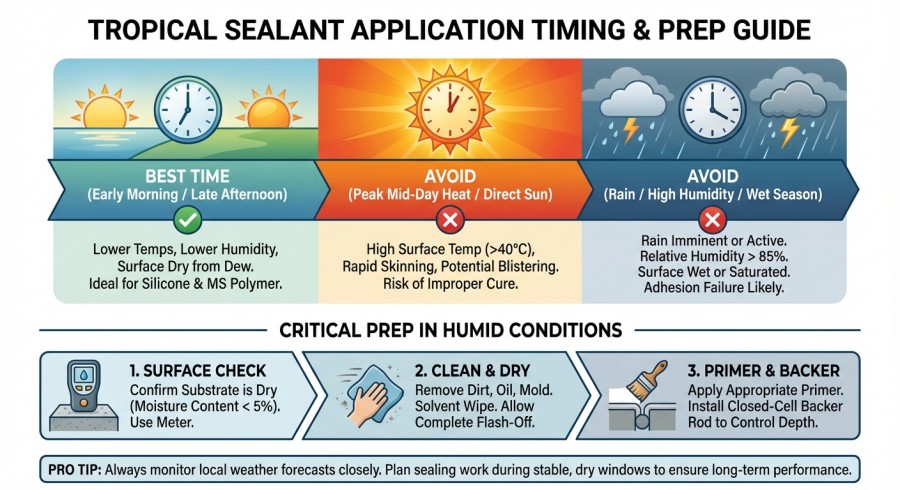
In tropical regions, timing applications around weather patterns improves success rates dramatically. Attempting to seal during active rainfall or in the wet season creates problems no amount of skill can overcome.
Schedule exterior sealing during the dry season when possible. In most tropical regions, a relatively drier period occurs even if true “dry” conditions never arrive. This window provides optimal conditions for surface preparation and initial curing.
Start early in the morning for exterior work. Dawn applications allow sealants to skin over before afternoon heat becomes extreme and before afternoon thunderstorms arrive. Surface temperatures are also more moderate in morning hours.
Avoid sealing in direct afternoon sun on facades. Surface temperatures exceeding 50°C accelerate sealant cure too rapidly, potentially causing poor tooling and surface issues. Work in shade or wait for surfaces to cool.
Monitor weather forecasts closely. Tropical weather can change rapidly, and a surprise downpour within 24 hours of sealing can compromise cure in certain products. Plan work when at least 24-48 hours of dry weather is forecast.
Surface Preparation in Humid Conditions
Surface preparation becomes more challenging in humid environments where substrates never fully dry. Proper technique compensates for these difficult conditions.
Clean surfaces more thoroughly than in dry climates. Humidity allows mold, algae, and biofilm to establish on substrates quickly. Use appropriate cleaners to remove all biological growth, not just visible dirt. Allow cleaned surfaces to dry completely before proceeding.
Check for concealed moisture with moisture meters. Substrates may feel dry on the surface while retaining moisture internally. For critical applications, use pin-type or non-invasive moisture meters to verify dryness before sealing.
Use solvents to verify surface dryness. Wipe suspect areas with isopropyl alcohol or acetone. If the surface darkens or alcohol beads instead of spreading, moisture remains in the substrate. Allow more drying time or use heat guns carefully to drive off surface moisture.
Prime porous substrates more often in tropical climates. High humidity can prevent porous materials like concrete or wood from drying adequately for good sealant adhesion. Quality primers create a sealed surface that accepts sealants reliably even when substrate moisture is borderline.
Remove old sealant completely – never seal over failing material. The warm, humid environment accelerates adhesion loss in deteriorating sealants. Attempting to seal over old material traps moisture and contaminants that cause premature failure. Cut out all old sealant and prepare joints as new work.
Curing Considerations
High humidity affects curing differently depending on sealant chemistry. Understanding these effects helps you predict actual cure times and plan project schedules accordingly.
Moisture-cure sealants (silicones, MS polymers) cure faster in high humidity. The abundant moisture accelerates the curing reaction. A silicone that takes 48 hours to full cure in temperate climates might achieve this in 24-36 hours in tropical humidity. This faster cure is beneficial once the sealant is applied, but it also reduces working time.
Working time shortens in hot, humid conditions. Sealants may skin over in half the normal time during tropical afternoons. Plan to complete tooling within 5-10 minutes of application rather than the 15-20 minutes typical in temperate conditions. Work in shorter bead lengths and tool frequently.
Polyurethane foam products expand more rapidly in humidity. The moisture-activated expansion happens faster and more completely in tropical conditions. For products like window installation foam, this means faster processing but also requires careful application to prevent over-expansion.
Temperature affects cure speed independently of humidity. At 30-35°C, chemical reactions proceed significantly faster than at 20°C. Combined with high humidity, tropical conditions can double cure speeds for some products. Adjust your expectations and techniques accordingly.
Protect fresh sealant from rain. Even though some sealants cure faster in humidity, direct water contact before skinning damages the forming surface. If rain threatens, cover fresh applications with temporary protection for at least the first 4-6 hours.
Quality Control Measures
Tropical conditions make quality control more important, not less. The forgiving nature of temperate climates where minor errors often don’t cause immediate problems doesn’t exist in harsh tropical environments.
Inspect substrate preparation before allowing sealant application. Once poor preparation is sealed over, the damage is done. Implement hold points in your process where supervisors verify surface condition before crews proceed.
Test adhesion on small areas before full application. Apply small test beads and allow them to cure completely, then test adhesion by attempting to peel the sealant away. On critical projects, this simple test prevents wholesale failure from incompatible materials or inadequate preparation.
Monitor bead geometry carefully. In tropical heat, sealants may sag or slump in vertical joints before skinning. Overfilled joints waste material and look unprofessional, while underfilled joints won’t perform adequately. Use backer rod to support proper geometry.
Document weather conditions during application. Record temperature, humidity, and any rainfall within 24 hours before or after sealing. This documentation proves valuable if warranty claims arise later and helps identify patterns if problems develop.
Implement staged inspections as projects progress. Check sealed joints after 24 hours, one week, and one month to identify any early problems. Issues discovered quickly can often be corrected before they cause major damage or require extensive rework.
Maintenance and Long-Term Performance
Proper maintenance extends sealant life significantly in tropical climates. The harsh conditions mean that minor issues quickly become major problems without attention.
Inspection Schedules for Tropical Buildings
Regular inspection finds problems early when repairs are simple and inexpensive. Waiting until obvious failure appears often means water has already caused hidden damage.
Inspect all exterior sealant joints annually minimum. Schedule inspections before and after monsoon seasons to catch storm damage early and identify vulnerable areas before the next wet season. This timing provides maximum value from inspection efforts.
High-exposure areas need more frequent attention. Facades receiving direct sun and rain, horizontal joints collecting water, and areas prone to debris accumulation should be checked every 6 months. These vulnerable points fail first and cause the most damage.
Interior wet area sealants require different inspection frequency. Bathroom and kitchen sealants face constant moisture and cleaning chemical exposure. Check these quarterly for mold growth, adhesion loss, or gaps developing between sealant and substrate.
Create inspection checklists that guide consistent evaluation. Include specific items: adhesion condition, surface cracking, mold growth, substrate staining, gaps or voids, and general appearance. Consistent criteria help identify deterioration trends across multiple inspection cycles.
Document findings with photos and notes. Visual records allow comparison over time to track deterioration rates. This data helps predict when resealing becomes necessary and validates maintenance budgets.
Early Warning Signs of Seal Failure
Recognizing early failure signs allows intervention before major damage occurs. Different failure modes produce characteristic symptoms that trained observers can identify.
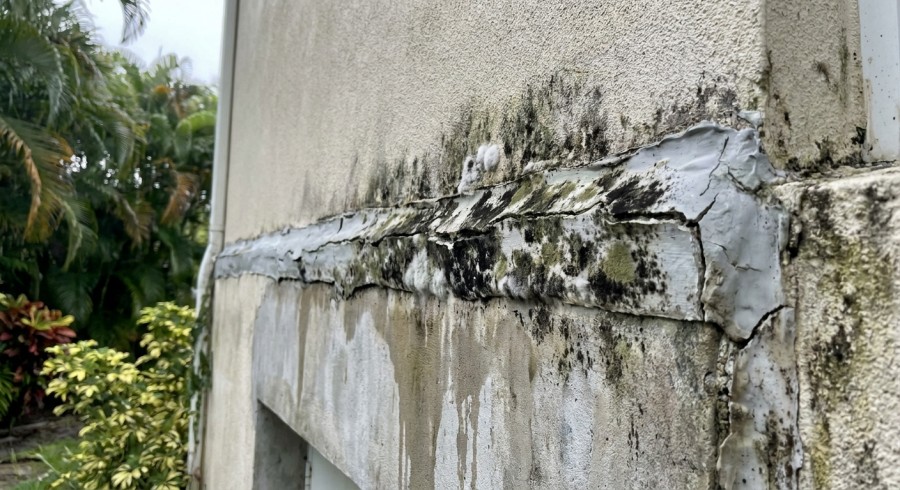
Adhesion loss shows as gaps between sealant and substrate. These gaps may appear as fine hairline separations initially but widen quickly once started. Water entering through these gaps undermines remaining adhesion rapidly in tropical humidity.
Surface mold or discoloration indicates inadequate anti-fungal protection. While surface mold doesn’t necessarily mean sealant failure, it shows the product’s protective additives are depleted. Water may be penetrating behind the sealant through microscopic gaps.
Hardening or loss of flexibility causes surface cracks. UV degradation typically appears first as fine checking on the sealant surface exposed to sun. As degradation progresses, these surface cracks deepen until they penetrate fully, allowing water intrusion.
Chalking or powdery surface indicates UV breakdown. Running your finger across weathered sealant shouldn’t leave significant residue. Heavy chalking means the product’s surface has degraded and may lose structural integrity soon.
Bubbling or blistering shows substrate moisture problems. Water vapor driving through porous substrates can collect under sealant, creating blisters. This indicates either the substrate wasn’t dry during application or moisture sources behind the seal need addressing.
Preventive Maintenance Strategies
Proactive maintenance prevents small issues from becoming expensive problems. In tropical climates, a ounce of prevention truly is worth a pound of cure.
Clean sealant joints regularly to remove dirt and debris. Gentle washing with mild detergent and soft brushes removes contamination before it causes problems. Avoid harsh cleaners or abrasive scrubbing that can damage sealant surfaces.
Address small gaps or cracks immediately. Cutting out failed sections and replacing them is far less expensive than ignoring problems until major water damage occurs. Keep appropriate sealants in stock for quick repairs.
Manage water drainage properly around the building. Keep gutters clean, maintain proper grading around foundations, and ensure drainage systems function correctly. The best sealants can’t compensate for poor water management.
Control vegetation near sealed joints. Plants growing against buildings hold moisture against seals and can grow through gaps, accelerating damage. Maintain clear zones around sealed areas in building maintenance programs.
Plan for periodic resealing. Even the best sealants have finite lifespans, typically 15-20 years in tropical conditions for premium products. Budget for resealing in long-term maintenance plans rather than treating it as emergency repair.
Regional Considerations Across Tropical Markets
Different tropical regions present unique combinations of conditions. Understanding regional variations helps you specify appropriate solutions for specific locations.
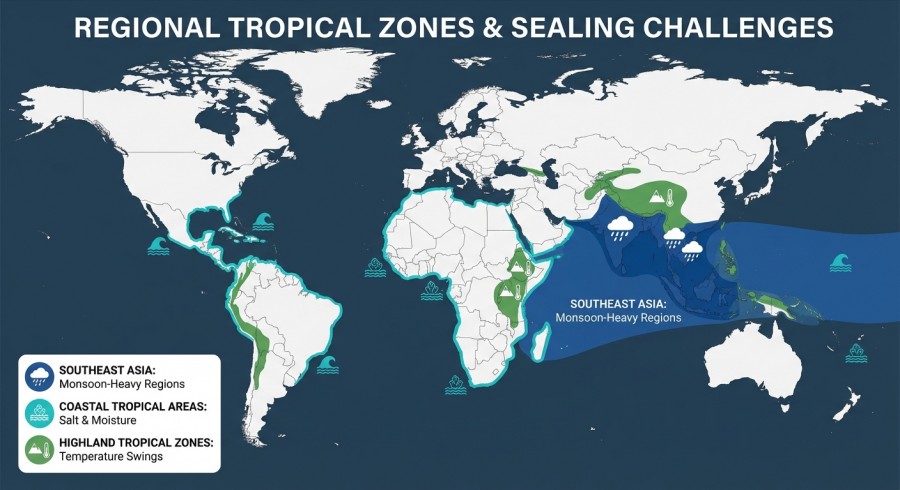
Southeast Asia: Monsoon-Heavy Regions
Southeast Asia combines the most challenging elements: high humidity, intense rainfall, tropical heat, and significant UV exposure. Buildings in this region need the most robust sealing solutions available.
Monsoon rainfall in regions like Thailand, Vietnam, and Malaysia can exceed 250mm per month for extended periods. Sealed joints face continuous water exposure that tests adhesion relentlessly. Products must maintain bond strength even when constantly wet.
The combination of heat and rain creates ideal mold conditions. Anti-fungal protection isn’t optional in Southeast Asian applications – it’s essential for both performance and appearance. Even exterior joints need anti-microbial additives in these conditions.
Coastal areas add salt exposure to the challenge mix. Sea salt accelerates corrosion of metal substrates and can degrade some sealant types. Ensure products specify resistance to salt water or salt spray exposure for coastal projects.
Building practices in the region often emphasize natural ventilation over air conditioning. This means interior humidity levels approach exterior levels, extending tropical conditions throughout the building. Interior sealants need the same robust moisture resistance as exterior products.
Coastal Tropical Areas: Salt and Moisture
Coastal tropical zones face additional challenges from salt-laden air and direct sea spray. These conditions accelerate material degradation and require specific product selection.
Salt spray testing (ASTM B117) results indicate coastal suitability. Products that perform well in this test resist the corrosive effects of salt exposure. For critical coastal applications, verify sealants meet or exceed 1000-hour salt spray testing without adhesion loss or significant degradation.
Metal substrates need careful sealant selection in coastal zones. Some sealants accelerate corrosion on certain metals in salt environments. Neutral-cure silicones generally provide safe compatibility with most metals in coastal conditions.
Additional UV protection helps in coastal areas. Reflection from water and bright sand increases total UV exposure compared to inland locations at the same latitude. The best coastal sealants include extra UV stabilizers to compensate.
Maintenance schedules should be more aggressive in coastal locations. Salt buildup on sealant surfaces should be washed off periodically with fresh water. This simple maintenance extends life significantly by preventing salt crystallization damage.
Highland Tropical Zones: Temperature Swings
Tropical regions at elevation experience greater daily temperature variations than lowland areas. Cities like Mexico City, Addis Ababa, or highland areas in Southeast Asia combine tropical UV exposure with wider temperature ranges.
Morning frost can occur even near the equator at sufficient elevation. Sealants must handle expansion from 0°C morning temperatures to 40°C+ afternoon highs. This 40-degree daily swing creates more movement cycles than many temperate applications experience.
Lower atmospheric pressure at altitude affects some sealant application. Particularly for foam products, expansion rates may differ from sea-level applications. Test application techniques at the actual project elevation before full-scale work.
Thinner air provides less UV filtration. At 2000+ meters elevation, UV intensity increases significantly. Already-intense tropical UV becomes even more damaging, requiring products with maximum UV protection.
Less humidity at elevation changes cure characteristics. Highland tropical areas may experience 40-60% relative humidity rather than the 70-90% typical of lowlands. This affects moisture-cure sealants, potentially slowing cure rates despite warm temperatures.
Frequently Asked Questions
How long does silicone sealant take to cure in high humidity?
High humidity actually accelerates silicone cure times. In tropical conditions with 70-90% relative humidity, silicones typically skin over in 10-20 minutes and reach full cure in 24-36 hours compared to 48-72 hours in dry climates. The abundant moisture drives the curing reaction faster. However, this also means shorter working time for tooling.
What’s the best sealant for preventing mold in tropical bathrooms?
Neutral-cure silicone sealants with active fungicide packages provide the best mold resistance in tropical bathrooms. Products specifically formulated for sanitary applications include multiple anti-microbial additives that remain effective throughout the sealant’s lifetime. Look for products tested against common bathroom mold species and rated for continuous wet conditions. Regular cleaning still helps, but proper product selection makes maintenance much easier.
Can I apply sealant during the rainy season?
You can apply sealant during rainy season if you work around actual rainfall and ensure surfaces are dry. The key is protecting both the substrate before application and the fresh sealant for at least 6-8 hours after application. Early morning work often provides a rain-free window. For interior work, rainy season presents fewer challenges. For critical exterior applications, waiting for the dry season provides better reliability and less risk.
How often should I inspect sealants in tropical climates?
Exterior sealants in tropical climates should be inspected at least annually, ideally before and after monsoon season. High-exposure areas like sun-facing facades or horizontal joints need inspection every 6 months. Interior wet areas like bathrooms benefit from quarterly visual checks. This frequency catches problems early before they cause major damage. Buildings in extremely harsh conditions like direct coastal exposure may need even more frequent attention.
What causes sealant failure in humid environments?
The most common causes of sealant failure in tropical conditions are inadequate surface preparation, using products not designed for high humidity, and insufficient anti-fungal protection. Poor surface preparation – especially not allowing substrates to dry adequately – prevents proper adhesion from developing. Using products without appropriate fungicides leads to mold growth that degrades sealants. UV degradation from intense tropical sun also causes premature aging if products lack adequate stabilizers. Finally, attempting to seal during active rain or extreme heat creates application conditions where even good products fail.
Conclusion
Successfully sealing buildings in tropical climates requires understanding the unique challenges these environments present and selecting materials specifically designed to handle them. High humidity, intense UV exposure, thermal cycling, and constant moisture exposure test sealants far more severely than temperate conditions.
The right product selection makes all the difference. Premium silicone sealants with anti-fungal protection, MS polymer products for paintable applications, and specialized formulations for extreme conditions provide the performance tropical construction demands. Cutting costs on sealant selection inevitably leads to higher costs from premature failure and water damage.
Application technique adapted to tropical conditions is equally critical. Timing work to avoid rain, preparing surfaces despite high humidity, understanding accelerated cure times, and implementing rigorous quality control all contribute to long-term success. The forgiving conditions of temperate climates don’t exist in tropical environments – small mistakes cause rapid problems.
Regular inspection and proactive maintenance extend sealant life significantly. The harsh conditions mean that problems develop and worsen quickly without attention. Annual inspections, immediate repair of small issues, and planned resealing at appropriate intervals protect your investment and prevent expensive emergency repairs.
Different tropical regions present varying combinations of challenges. Southeast Asia’s monsoon rains, coastal zones’ salt exposure, and highland areas’ temperature swings each require slightly different approaches. Understanding your specific location’s conditions helps you specify optimal solutions.
Whether you’re building in Bangkok or Manila, on Indonesia’s coast or in highland Central America, proper tropical sealing is achievable with the right knowledge and materials. The key is recognizing that tropical construction demands more from sealants than most other environments and planning accordingly.
Working on a tropical construction project and need expert advice on sealing solutions? Contact our technical team for personalized product recommendations tailored to your specific climate conditions and application requirements. As a specialized SOHO supplier, we provide direct technical support and flexible solutions that larger suppliers can’t match.
Related Articles: