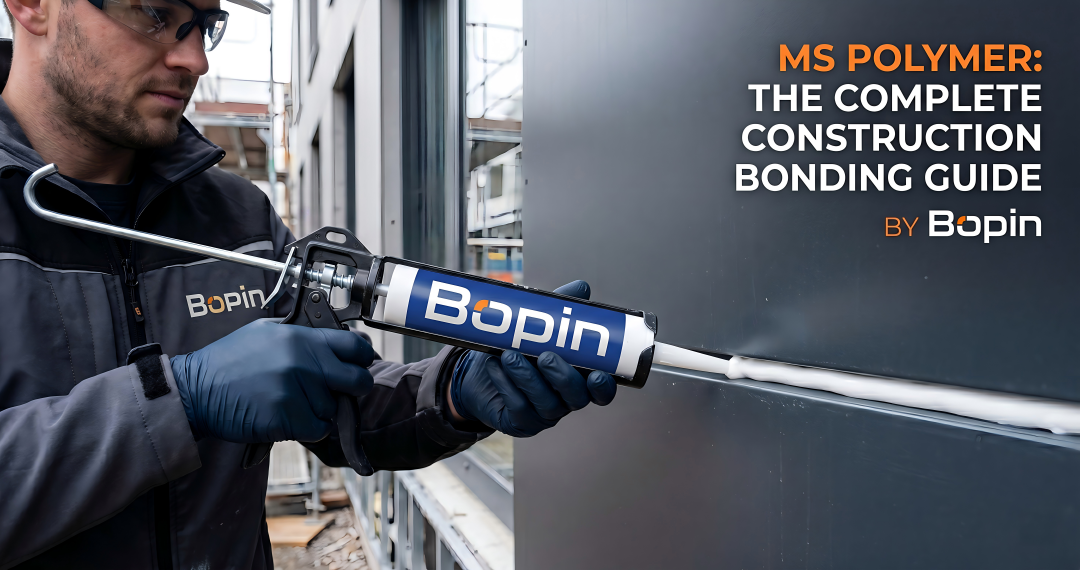
Protect your investment with the right sealing technology
Your RV represents freedom, adventure, and significant financial investment. However, inadequate sealing can quickly turn your dream vehicle into a maintenance nightmare, leading to water damage, structural issues, and costly repairs. This comprehensive guide will help you understand, select, and properly apply 100% RTV silicone sealants to ensure your recreational vehicle remains watertight and protected for years to come.
As construction chemical specialists, BoPin Chemical brings decades of expertise in providing professional-grade sealing solutions for demanding applications. This guide combines technical knowledge with practical application techniques to help you make informed decisions about protecting your RV investment.
1. Understanding Core Technology: What is Silicone RTV?
RTV stands for Room-Temperature Vulcanizing, a specialized silicone technology that cures at ambient temperatures without requiring heat or special catalysts. Traditional rubber compounds require high-temperature processing to cure. In contrast, RTV silicones cure simply through exposure to atmospheric moisture. This makes them ideal for field applications where professional equipment is not available.
Key advantages of RTV technology include:
- Exceptional flexibility – maintains elasticity across temperature extremes from -40°C to +120°C
- Superior weather resistance – withstands UV radiation, ozone, and temperature cycling without degradation
- Excellente adhérence – bonds effectively to multiple substrates without primers in most applications
- Chemical stability – resists oils, cleaning chemicals, and environmental contaminants
- Longue durée de vie – properly applied RTV sealants can last 15-20 years in demanding outdoor conditions
The vulcanization process creates cross-linked polymer chains that provide permanent flexibility while maintaining structural integrity. This unique combination makes RTV silicones the preferred choice for applications requiring both sealing performance and movement accommodation. Simply put, this is why professionals trust RTV technology for the most demanding sealing challenges.
2. Why “100% Silicone” is Critical for RV Applications
RV environments present unique challenges that demand the highest performance sealing materials. Your vehicle experiences constant vibration, extreme temperature variations, UV exposure, and weather extremes – conditions that quickly reveal the weaknesses of inferior sealants.
100% silicone formulations outperform hybrid alternatives in several critical areas:
Durability Under Stress: Pure silicone polymers maintain their molecular structure under mechanical stress. In contrast, hybrid sealants containing acrylics or other fillers can develop micro-cracks that lead to water infiltration. The continuous vibration from road travel makes this durability absolutely essential for maintaining long-term seals.
Performances en termes de température : 100% silicone sealants maintain flexibility across the full temperature range your RV will encounter. This includes desert heat exceeding 50°C and freezing mountain conditions below -20°C. Hybrid products often become brittle in cold conditions or soften excessively in heat.
Material Compatibility: RV construction utilizes diverse materials including fiberglass, EPDM rubber, TPO membranes, aluminum, steel, and various plastics. 100% silicone formulations provide reliable adhesion to this broad material palette without the compatibility concerns associated with other sealant types. This versatility simplifies your material selection and reduces the risk of adhesion failure.
Stabilité aux UV : Prolonged sun exposure is inevitable for RVs, and UV radiation quickly degrades lower-quality sealants. 100% silicone polymers contain inherent UV resistance that prevents chalking, cracking, and color changes that compromise both appearance and performance.
3. RTV Silicone Types: Neutral-Cure vs. Acetoxy-Cure
Understanding cure chemistry is essential for selecting the right product for your specific application. The curing system determines not only performance characteristics but also material compatibility and application safety.
Neutral-Cure (Oxime) Systems:
Neutral-cure RTV silicones release alcohol-based compounds during curing, resulting in odor-free, non-corrosive curing that’s safe for occupied spaces. This cure system is strongly recommended for most RV applications due to several key advantages:
- Non corrosif pour les métaux – safe for use on aluminum window frames, steel components, and galvanized hardware
- Compatible with coated surfaces – won’t damage paint, anodized finishes, or protective coatings
- Faible odeur – convient aux applications intérieures et aux zones occupées
- Compatibilité étendue avec les matériaux – works with plastics, rubbers, and composites commonly used in RV construction
Systèmes de polymérisation acétoxy :
Acetoxy-cure silicones release acetic acid during curing, creating the characteristic vinegar odor. These products cure faster and often cost less. However, they have significant limitations for RV applications that you should carefully consider:
- Potentiellement corrosif – can damage aluminum, copper, and other reactive metals
- Strong odor – unsuitable for interior applications
- Compatibilité matérielle limitée – may damage certain plastics and coatings
- Temps de séchage plus rapide – while this seems advantageous, it provides less working time for proper application
For RV applications, neutral-cure systems are strongly preferred unless specific circumstances require the faster cure speed of acetoxy systems for non-critical, well-ventilated applications. Therefore, for peace of mind and long-term reliability, always opt for a neutral-cure system.
4. Application Guide: Selecting the Right Sealant for Different RV Components
Different areas of your RV require specific performance characteristics. Understanding these requirements ensures you select the optimal product for each application. Let’s examine the key areas where proper sealant selection makes the difference between success and failure.
Roof Applications (Vents, Antennas, Solar Panel Mounts):
Exigences: Maximum UV resistance, thermal cycling resistance, and adhesion to diverse substrates
Recommended specifications:
- Neutral-cure RTV silicone
- Temperature range: -40°C to +120°C minimum
- Movement capability: ±25%
- UV-stable formulation
- Multiple color options for aesthetic matching
Window and Door Frame Sealing:
Exigences: Structural adhesion, weather sealing, and compatibility with glazing materials
Key considerations:
- Strong adhesion to aluminum and glass sans exigences d'apprêt
- Excellent water resistance to prevent frame deterioration
- Clear or architectural colors to maintain appearance
- Proven glazing performance according to international standards
Exterior Trim and Storage Compartments:
Exigences: Flexibility to accommodate road vibration and thermal movement
Performance criteria:
- High elongation capability (>450%) to handle substrate movement
- Excellent recovery properties to maintain seal integrity after deformation
- résistance chimique to fuels, cleaning products, and environmental contaminants
- Long-term adhesion under cyclical stress conditions
Interior Applications (Kitchen and Bathroom):
Exigences: Mold resistance, chemical compatibility, and food-safe properties
Specialized features:
- Additifs antifongiques for humid environments
- Resistance to household cleaners and personal care products
- faible teneur en COV for indoor air quality
- Easy cleaning and maintenance characteristics
Now that you understand the performance requirements for different RV areas, let’s explore our proven solutions that deliver these exact capabilities.
5. Our Professional Solutions: BoPin Chemical Industrial-Grade RTV Silicone
Based on these demanding requirements, we recommend our proven professional solutions that have demonstrated exceptional performance in mobile and marine applications.
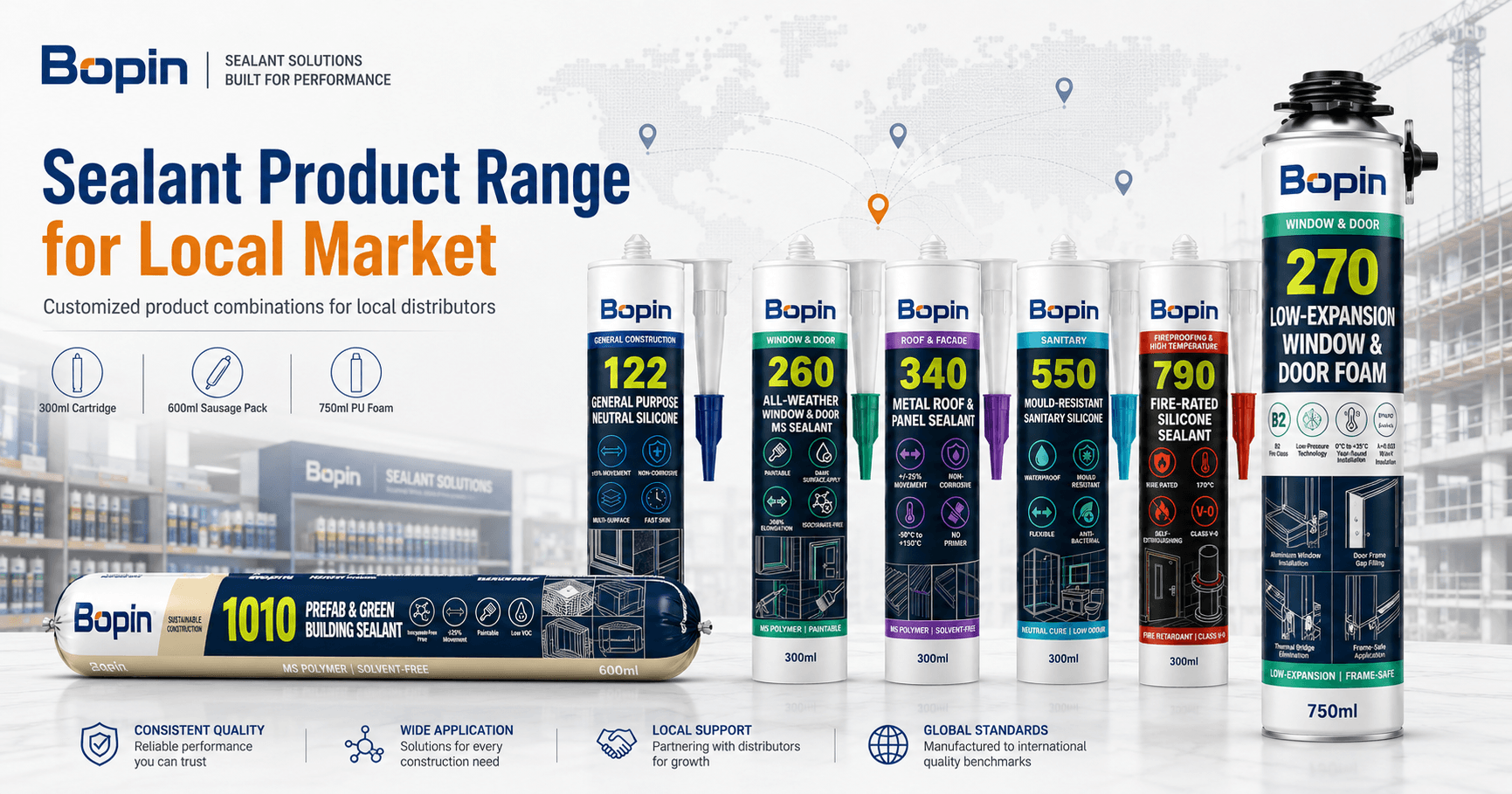
BoPin 122 Colle silicone neutre à usage général
The versatile solution for most RV sealing applications
Caractéristiques principales de performance :
- système de cure à l'oxime neutre – safe for all RV materials including metals and coatings
- Capacité de mouvement ±25% – exceptional flexibility for thermal and mechanical movement
- Plage de température de -40 °C à +120 °C – handles extreme climate conditions
- >550% allongement à la rupture – propriétés d'étirement et de récupération supérieures
- Formule sans MEKO – respectueux de l’environnement et sûr pour les occupants
Optimal Applications: Most suitable for exterior perimeter sealing, window frames, and general weatherproofing where broad material compatibility and proven performance are essential.
Disponible en cartouches professionnelles de 300 ml et en emballages aluminium de 600 ml with color options including Clear, White, Black, Grey, and Brown for aesthetic coordination.
BoPin 550 Joint silicone neutre sanitaire
Specialized solution for RV interior wet areas
Enhanced Features:
- résistance supérieure aux moisissures et aux champignons – engineered for high-humidity environments
- Waterproof barrier formation in 30 minutes – rapid protection against moisture intrusion
- Resistance to household chemicals – maintains performance with cleaning products
- Safe for natural surfaces – compatible with stone and ceramic installations
Recommended Uses: Ideal for bathroom and kitchen sealing where moisture resistance and hygiene are paramount concerns.
Product Comparison Quick Reference:
| Fonctionnalité | BoPin 122 General | BoPin 550 Sanitaire |
|---|---|---|
| Utilisation principale | Exterior/General | Interior Wet Areas |
| Capacité de mouvement | ±25% | ±25% |
| Special Features | Broad compatibility | Anti-mold protection |
| Cure Chemistry | Neutral oxime | Neutral oxime |
| Temperature Range | De -40°C à +120°C | De -40°C à +120°C |
6. Professional Installation Techniques: Step-by-Step Application Guide
Proper application technique is as important as product selection for achieving long-lasting, professional results. Your investment deserves professional-quality installation. Follow these proven procedures for optimal performance.
Préparation de la surface
1. Complete Removal of Old Sealant
- Découpez le long des deux bords with a sharp utility knife to break adhesion
- Enlevez toute trace de vieux matériaux – residual sealant prevents proper adhesion to your new application
- Use mechanical methods – chemical removers can leave contaminating residues that interfere with bonding
2. Surface Cleaning and Inspection
- Nettoyer avec de l'alcool isopropylique to remove oils, residues, and contaminants
- Laisser sécher complètement – moisture interferes with adhesion development
- Inspect for damage – repair substrate issues before sealing to ensure long-term success
3. Masking and Protection
- Appliquez du ruban de masquage de haute qualité pour définir des lignes de perles nettes et droites
- Protéger les surfaces environnantes suite à un contact accidentel avec du mastic
- Plan d'application continue – avoid stopping mid-joint when possible
Application Technique
1. Préparation de la cartouche
- Couper la buse à un angle de 45 degrés to match desired bead width
- Test flow rate on practice surface to ensure consistent application
- Charger correctement la cartouche in gun to prevent air pockets
2. Application du mastic
- Maintenir une vitesse constante – environ 25 à 30 cm par minute pour des perles de 6 mm
- Appliquer une pression continue to avoid gaps or inconsistent thickness
- Overfill slightly to ensure complete joint filling before tooling
3. Professional Tooling
- Outil en 5 à 10 minutes application avant la formation de la peau
- Use proper tooling radius – typically half the joint width
- Travail en mouvements continus to avoid visible tool marks
- Retirez immédiatement le ruban adhésif de masquage after tooling while sealant is still workable
Curing and Protection
1. Initial Cure Period
- Formation de la peau : 10 à 25 minutes (varies with temperature and humidity)
- Avoid contact or disturbance during initial cure period
- Protect from contamination – dust, debris, or moisture
2. Complete Cure Schedule
- Surface cured: 2-4 hours – light moisture exposure acceptable
- Through-cure: 24-48 hours – full performance and chemical resistance
- Prévoir 7 jours before intensive cleaning or chemical exposure
3. Quality Inspection
- Check for continuous adhesion along entire joint length
- Verify proper depth – sealant should not be over-compressed
- Confirm aesthetic appearance meets project standards
7. Technical Questions & Professional Answers
How long does RTV silicone require for complete cure?
Complete cure time depends on several factors including temperature, humidity, and sealant thickness. Under standard conditions (23°C, 50% RH), you can expect 2-3mm cure depth per 24 hours. Your sealant will develop full structural properties within 7 days for most applications, though initial weather resistance begins within hours of application.
Should I choose neutral-cure or acetoxy-cure for my RV project?
Neutral-cure systems are strongly recommended for your RV applications due to their broad material compatibility and non-corrosive properties. Acetoxy-cure products cure faster but can damage your aluminum frames, coated surfaces, and produce objectionable odors. The marginal time savings rarely justify the increased risk in RV applications. Your best choice for reliable, long-term performance is always neutral-cure.
Can I apply RTV silicone in light rain or high humidity?
Light moisture actually accelerates cure. However, you should avoid application during active precipitation that could wash away uncured sealant. High humidity (>60%) improves cure speed, while very low humidity (<30%) may extend cure times. Your best approach is to plan applications for stable weather conditions when possible.
Will BoPin silicone products accept paint or stain?
Cured silicone surfaces generally do not accept paint or stain due to their low surface energy. Your best strategy is to plan color selection during initial application rather than attempting subsequent coating. If you require future painting, you’ll need to use mechanical bonding aids or specialized primer systems designed for silicone substrates.
How do I remove failed or incorrectly applied silicone?
You’ll find that mechanical removal is the most effective method. Your goal is to cut along the edges and pull the material out in strips. Heat guns can help soften the material for easier removal, but avoid overheating your substrates. Chemical removers work slowly and may leave residues that interfere with new sealant adhesion. Remember, complete removal is essential for proper re-sealing success.
Conclusion: Protect Your Investment with Professional-Grade Solutions
Your RV represents significant financial and emotional investment – protect it with proven sealing technology rather than compromise with inferior alternatives. The difference between success and failure often lies in selecting the right materials and applying them with professional techniques.
100% RTV silicone sealants provide the durability, flexibility, and weather resistance essential for demanding mobile applications. Neutral-cure formulations offer the broad compatibility and safety margins required for complex RV construction materials and occupied spaces.
Don’t let inferior sealants compromise your investment and adventures. Contact BoPin Chemical’s technical specialists today to discuss your specific requirements, or explore our professional-grade product line designed for the most demanding sealing applications. Your RV deserves the protection that only proven, professional-grade sealants can provide.