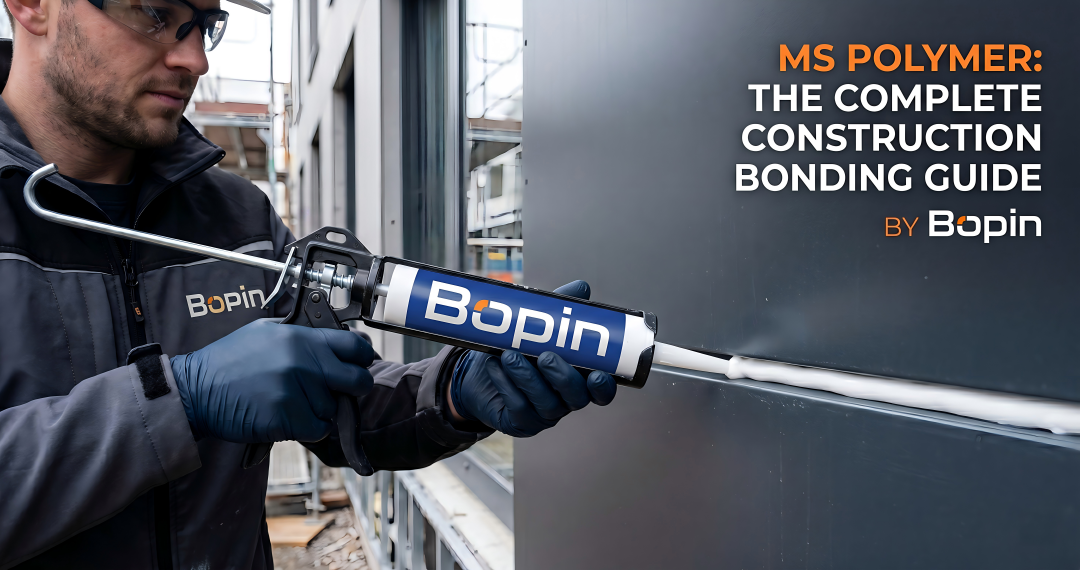
Expert problem-solving guidance from BoPin Construction Chemicals – ending the mold cycle permanently
Tired of Scrubbing? The Permanent Solution to Moldy Caulk is Here
It’s a frustrating cycle that drives homeowners to desperation. You clean your shower thoroughly, scrubbing every surface until it sparkles. Within weeks, those ugly black spots of mold and mildew are back. They creep along the edges of your bathtub, spread across shower corners, and ruin the clean appearance of your bathroom.
You might think you’re not cleaning enough, but here’s the truth: the problem isn’t your cleaning routine—it’s your caulk.
Most homeowners are fighting a losing battle because they’re using the wrong weapon. Standard caulk is actually feeding the enemy. Every time you clean and think you’ve won, the mold spores are already planning their comeback. They’re living in and on your caulk, multiplying in conditions that regular sealants can’t resist.
This guide will show you how to end that cycle for good. We’ll explain why most caulks fail against mold, what makes a sealant truly “mold-proof,” and how to choose and apply a product that will stay clean and pristine for years to come. No more endless scrubbing. No more embarrassing black streaks when guests use your bathroom.
Why Does Caulk Get Moldy in the First Place?
Understanding your enemy is the first step to defeating it. Mold isn’t just unsightly—it’s a living organism that’s actively working to colonize your bathroom. But mold needs specific conditions to thrive.
The Mold Triangle: Three Requirements for Growth
Mold needs three things to survive and multiply:
Moisture: Your bathroom provides this in abundance. Every shower, bath, and sink use creates the humid environment mold loves. Even with ventilation, microscopic moisture remains in the porous spaces around your fixtures.
Warmth: Bathroom temperatures are perfect for mold growth. The combination of heated water and enclosed spaces creates an ideal incubator for fungal spores.
Food: Here’s where most people don’t realize they’re feeding the problem. Mold doesn’t just appear—it feeds on organic matter to grow and spread.
Your Old Caulk Might Be Feeding the Enemy
Soap scum, body oils, and inferior caulk materials create a buffet for mold spores. When soap residue builds up on your sealant, it provides nutrients that mold organisms need. But here’s the shocking truth: some caulks themselves provide food for mold.
Inferior latex or acrylic caulks contain organic compounds that mold can actually digest. Your caulk becomes not just a surface where mold grows, but actual food for the organisms. This is why some caulks turn black throughout their entire thickness, not just on the surface.
Even worse, once mold establishes a colony, it produces spores constantly. These microscopic seeds float through your bathroom air, waiting to land on any suitable surface. No amount of surface cleaning can eliminate this cycle if the source remains in your caulk.
Why Standard Cleaning Isn’t Enough
Surface cleaning removes visible mold but doesn’t eliminate the root system that penetrates into porous caulk materials. Bleach and antimicrobial cleaners kill surface mold temporarily, but the underlying conditions that allow growth remain unchanged.
Within days or weeks, new growth appears because the fundamental problem—a caulk that supports mold growth—hasn’t been solved. This is why the same spots keep getting moldy no matter how often you clean them.
The Solution: The Science of a Mold-Proof Sealant
True mold resistance requires advanced chemistry specifically designed to create hostile conditions for fungal growth. This isn’t just marketing—it’s materials science applied to solve a real problem.
Ingredient #1: 100% Silicone Chemistry
Silicone is inherently waterproof and doesn’t break down in wet environments like acrylic or latex caulks do. This non-porous structure prevents water infiltration where mold could take root.
Unlike organic-based sealants, pure silicone contains no nutrients that mold organisms can use for growth. The polymer structure is completely synthetic and provides no organic compounds that fungi can digest.
Silicone also maintains its integrity under constant moisture exposure. While other materials deteriorate and become more porous over time, quality silicone remains sealed and non-permeable for decades.
Ingredient #2: Active Biocide Protection – The Key Technology
This is where ordinary sealants and true mold-proof products diverge completely. Mold-proof silicones are infused with specialized fungicides (biocides) that actively kill mold and mildew spores on contact.
These biocides work continuously throughout the life of the sealant. They’re not surface treatments that wash away—they’re integrated into the polymer matrix itself. When mold spores land on the surface, the biocide immediately neutralizes them before they can establish colonies.
The technology uses slow-release chemistry that provides consistent antifungal protection for years. This means your caulk becomes an active defense system rather than just a passive barrier.
Advanced biocide systems are also designed to be safe for humans while lethal to fungal organisms. They target specific biological processes in fungi that don’t exist in human cells, providing selective toxicity.
Why This Combination Works
The 100% silicone base denies mold the food and moisture it needs, while the biocide technology actively eliminates any spores that attempt to colonize the surface. It’s a two-part defense system that addresses both prevention and active elimination.
This approach doesn’t just resist mold—it prevents the conditions that allow mold to establish itself in the first place. The result is a sealant that stays clean and mold-free without constant maintenance and scrubbing.
Buyer’s Guide: How to Choose a Genuinely Mold-Resistant Caulk
Not all products labeled “mold-resistant” deliver real protection. Understanding what to look for helps you identify truly effective products versus marketing claims.
Checklist for Pro-Grade Mold Resistance
Look for “100% Silicone” Specification: Anything less than 100% silicone is a compromise in wet environments. Hybrid or acrylic formulations may save money initially but cannot provide the same level of mold resistance.
Verify Active Biocide Technology: Look for specific mentions of antimicrobial or biocide additives rather than vague “mold-resistant” claims. Quality products will specify their anti-mold technology.
Check for a “Mold-Free” Guarantee: Reputable manufacturers back their claims with specific guarantees such as 10-year or lifetime mold-free product protection. This indicates confidence in the technology.
Ensure Scrubbable Durability: The seal should be durable enough to withstand regular cleaning without degrading or losing its protective properties. Look for products specifically tested for chemical resistance.
Choose a Reputable Brand: Quality anti-mold ingredients are expensive and require specialized manufacturing. Established brands with proven track records are more likely to deliver genuine protection.
Verify Sanitary Classification: Look for products meeting XS1 sanitary class standards – the highest classification for anti-microbial performance in wet environments.
Red Flags to Avoid
“Mold-resistant” without active biocides: Surface treatments or basic formulations that rely only on non-porous surfaces provide limited protection.
Extremely low prices: Effective anti-mold technology costs more to produce. Suspiciously cheap products likely lack genuine biocide protection.
Vague performance claims: Quality products specify their mold-resistance technology and provide concrete performance data rather than marketing language.
Our #1 Recommendation: The Best Caulk to Prevent Mold
Based on extensive testing in demanding wet environments, BoPin 550 Sanitary Neutral Silicone represents the pinnacle of mold-resistant sealing technology.
BoPin 550: Engineered to End the Mold Cycle
Why It’s the Professional’s Choice for Mold Prevention:
Advanced Anti-Mold Technology: Our formula contains a powerful, slow-release biocide system that provides active mold and mildew protection for the life of the seal. This isn’t just mold resistance—it’s active mold elimination at the source.
100% Silicone Base: Provides permanent waterproofing and crack-proof flexibility that maintains its integrity through decades of wet environment exposure. No organic compounds for mold to feed on.
Rapid Waterproofing: Creates an effective water barrier within just 30 minutes of application. This quick seal formation prevents water infiltration during the critical early curing period.
Chemical Resistance: Withstands household cleaning products, bleach, and disinfectants without degradation. Your anti-mold protection stays effective despite aggressive cleaning routines.
Stone-Safe Formula: Can be used safely on natural stone surfaces like marble and granite without causing discoloration. No compromises on material compatibility.
XS1 Sanitary Class: Meets the highest international standards for antimicrobial performance in wet areas. This certification verifies genuine mold-fighting capability.
MEKO-Free Composition: Environmentally safer alternative that doesn’t compromise performance. Safe for occupied spaces during and after application.
Available Colors: Clear, White, Grey, Manhattan (warm beige), and Black to complement any bathroom design while providing identical mold protection.
Extended Service Life: Maintains active mold protection for 15-20 years when properly applied, eliminating the need for frequent replacement.
Application is Key: How to Ensure Your Mold-Free Seal Lasts
Even the best mold-resistant caulk will fail if not applied correctly. These application rules are non-negotiable for achieving long-term mold-free performance.
The Golden Rule: Complete Old Caulk Removal
You MUST remove 100% of the old caulk. This is the most critical step and the most common cause of failure. Applying new caulk over old material is the #1 reason for mold-resistant caulk failure.
Why complete removal matters:
- Old caulk may harbor mold spores that can contaminate new sealant
- New caulk cannot bond properly to old material, creating gaps where mold can grow
- Moisture can become trapped between old and new layers, creating ideal conditions for mold
The removal process must be thorough. Use proper tools and techniques to eliminate every trace of old material. Shortcuts during preparation guarantee problems later.
Learn Professional Caulk Removal Techniques →
The Second Rule: Perfect Surface Preparation
The surface MUST be perfectly clean and dry before applying your mold-resistant caulk. Contaminated surfaces prevent proper adhesion and can provide nutrients for mold growth.
Essential cleaning steps:
- Remove all soap scum and mineral deposits using appropriate cleaners
- Disinfect the area to eliminate existing mold spores
- Clean with isopropyl alcohol to remove all residues and oils
- Allow complete drying – any moisture prevents proper adhesion
Pay special attention to corners and detail areas where soap residue and mold spores tend to accumulate. These hidden contaminated areas often cause localized seal failures.
Critical Application Factors
Environmental conditions during application significantly affect long-term performance:
Temperature and humidity: Apply within manufacturer specifications for optimal curing and biocide activation.
Ventilation: Ensure adequate air circulation during application and curing to prevent contamination.
Cure time: Allow full cure before water exposure to ensure maximum mold resistance is achieved.
Post-Application Care
The first 48 hours are critical for developing full mold resistance. Avoid heavy water exposure during this period to allow proper curing and biocide activation.
Regular maintenance enhances performance: Clean sealed areas regularly to prevent soap scum buildup that can harbor mold spores above the protected surface.
Mold-Resistant Caulk FAQ
Why did my “mold-free” caulk get moldy?
The most common cause is soap scum buildup on top of the caulk surface providing a food source for mold growth. Even the best anti-mold caulk can’t prevent mold from growing on contamination that accumulates above the protected surface.
Other common causes:
- Incomplete removal of old caulk during installation
- Poor surface preparation allowing contamination
- Using non-genuine mold-resistant products
- Inadequate ventilation creating extreme conditions
The solution: Clean regularly to prevent soap scum accumulation and ensure your bathroom has adequate ventilation. If mold appears despite proper maintenance, the caulk may not have genuine anti-mold technology.
Can I just clean the mold off my existing caulk?
You can temporarily remove surface mold, but it will likely return if the underlying caulk is the problem. Surface cleaning doesn’t address mold that has penetrated into porous caulk materials or established root systems within the sealant.
If your caulk repeatedly develops mold despite regular cleaning, the material itself is supporting mold growth. Replacement with genuine mold-resistant caulk is the only permanent solution.
Continuing to clean moldy caulk is a waste of time and effort when the fundamental problem is using the wrong product for the environment.
How long does mold-resistant caulk take to cure?
BoPin 550 forms a skin within 10-20 minutes and develops initial water resistance within 30 minutes. Full cure and maximum anti-mold protection develop over 24-48 hours depending on temperature and humidity.
Allow at least 24 hours before heavy water exposure for optimal performance. The biocide system becomes fully active as the sealant completes its curing process.
Do I need special tools to apply mold-resistant caulk?
Standard caulk application tools work perfectly with mold-resistant formulations. The key is technique and preparation rather than specialized equipment.
Essential tools:
- Quality caulk gun for smooth, consistent application
- Sharp utility knife for cutting cartridge tips
- Tooling stick or wet finger for smooth finishing
- Clean rags for excess removal
The difference between success and failure lies in thorough preparation and proper application technique, not expensive tools.
How do I maintain mold-resistant caulk?
Regular cleaning prevents soap scum accumulation that can provide nutrients for mold growth above the protected surface. Use mild, non-abrasive cleaners that won’t damage the sealant.
Ensure adequate bathroom ventilation to minimize extreme humidity conditions. While mold-resistant caulk can handle normal bathroom conditions, excessive moisture can overwhelm any protection system.
Inspect periodically for any gaps or adhesion loss that might allow water infiltration behind the seal. Address small problems immediately to prevent larger failures.
Conclusion: Do the Job Once, Do it Right
The fight against bathroom mold is won by choosing superior technology and applying it correctly to a perfectly prepared surface. Half-measures and shortcuts guarantee disappointment – the environment is too challenging for anything less than the best.
The key factors for permanent success:
- Choose 100% silicone with active biocide technology
- Remove all old caulk completely
- Prepare surfaces perfectly
- Apply according to manufacturer specifications
- Allow proper cure time before use
BoPin 550 Sanitary Neutral Silicone provides the advanced chemistry and proven performance that ends the mold cycle permanently. This isn’t just another caulk – it’s a complete defense system against the conditions that create bathroom mold problems.
Consider the long-term economics: Spending slightly more on genuine mold-resistant technology eliminates years of cleaning frustration, repeated replacement costs, and the embarrassment of moldy bathrooms. Quality mold-resistant caulk pays for itself through reduced maintenance and extended service life.
Stop the endless cycle of scrubbing and re-caulking. Invest in a truly mold-proof solution that works as hard as you do to maintain a clean, healthy bathroom environment. Your family deserves a bathroom that stays clean and fresh without constant battle against mold and mildew.
BoPin Construction Chemicals – Advanced anti-mold technology that ends the cycle of bathroom mold problems. When clean, healthy bathrooms matter, choose the proven chemistry that professionals trust for permanent mold protection.