
Rò rỉ không khí qua lớp vỏ công trình làm lãng phí 25-401 tấn năng lượng sưởi ấm và làm mát trong các tòa nhà thông thường, gây tốn kém hàng nghìn đô la tiền điện nước không cần thiết, đồng thời ảnh hưởng đến sự thoải mái của người sử dụng và chất lượng không khí trong nhà. Tại những vùng khí hậu khắc nghiệt như Trung Đông, nơi điều hòa không khí chiếm từ 70-801 tấn đến 3 tấn công suất tiêu thụ của các tòa nhà, việc bịt kín các khe hở không đầy đủ sẽ tạo ra sự lãng phí lớn và có thể tránh được.
Hiểu rõ các nguyên tắc bịt kín khe hở của lớp vỏ công trình và áp dụng các chiến lược bịt kín toàn diện giúp giảm tiêu thụ năng lượng từ 15-30%, cải thiện sự thoải mái, đáp ứng các yêu cầu chứng nhận công trình xanh và mang lại lợi tức đầu tư nhanh chóng. Cho dù bạn đang xây dựng các công trình đạt chứng nhận LEED, cải tạo các tòa nhà hiện có để tiết kiệm năng lượng, hay đơn giản chỉ là tìm cách giảm chi phí vận hành, việc bịt kín các khe hở đúng cách là nền tảng của hiệu suất tiết kiệm năng lượng của tòa nhà.
Hiểu về hiện tượng rò rỉ khí của lớp vỏ công trình
Rò rỉ khí – sự chuyển động không kiểm soát của không khí qua lớp vỏ tòa nhà – về cơ bản làm suy giảm hiệu quả năng lượng bất kể chất lượng cách nhiệt hay hiệu suất hệ thống HVAC. Mọi khe hở, vết nứt hoặc điểm xuyên thủng đều cho phép không khí đã được điều hòa thoát ra ngoài và không khí chưa được điều hòa xâm nhập vào.
Vật lý học về sự rò rỉ không khí
Không khí chuyển động bên trong các tòa nhà được thúc đẩy bởi ba lực chính: Chênh lệch áp suất do gió, hiệu ứng ống khói do nhiệt độ và hoạt động của hệ thống cơ khí. Hiểu rõ những động lực này giúp xác định các ưu tiên quan trọng trong việc bịt kín các khe hở.
Áp suất gió Tạo áp suất dương lên mặt tiền hướng gió của các tòa nhà và áp suất âm lên mặt tiền khuất gió. Sự chênh lệch áp suất này buộc không khí phải đi qua bất kỳ khe hở nào có sẵn. Tại các tòa nhà cao tầng hoặc những vị trí lộ thiên, áp suất gió có thể đạt từ 50-100 Pa trở lên, gây ra sự trao đổi không khí đáng kể qua các khe hở của lớp vỏ công trình.
Hiệu ứng chồng chất Kết quả là do sự chênh lệch nhiệt độ trong nhà và ngoài trời tạo ra sự chuyển động không khí nhờ lực nổi. Không khí ấm bốc lên, tạo ra áp suất dương ở các tầng trên của tòa nhà và áp suất âm ở các tầng dưới. Ở những vùng khí hậu lạnh, cơ chế này hút không khí lạnh từ phía dưới và đẩy không khí ấm ra ở phía trên. Ở những vùng khí hậu nóng bức với hệ thống điều hòa không khí mạnh, hiện tượng hiệu ứng ống khói ngược sẽ xảy ra. – Không khí mát trong nhà sẽ chìm xuống tạo ra các luồng áp suất ngược chiều.
Đối với các tòa nhà ở Trung Đông duy trì nhiệt độ trong nhà ở mức 22-24°C trong khi nhiệt độ ngoài trời là 45-50°C, hiệu ứng ống khói ngược tạo ra luồng không khí mạnh mẽ đi xuống. Lực này liên tục hoạt động để đưa không khí nóng từ bên ngoài vào các tầng trên trong khi đẩy không khí mát ra ở các tầng dưới, trực tiếp gây cản trở hoạt động của hệ thống HVAC.
Hệ thống cơ khí – Đặc biệt là hệ thống thông gió không cân bằng – gây ra hiện tượng tăng hoặc giảm áp suất trong tòa nhà. Quạt hút gió không có đủ không khí bù sẽ làm giảm áp suất trong các tòa nhà., sự xâm nhập ngày càng tăng. Hệ thống cung cấp chiếm ưu thế tạo áp suất cho các tòa nhà., sự rò rỉ ngày càng tăng. Cả hai trường hợp đều làm tăng mức tiêu thụ năng lượng. vượt xa những gì mà các hệ thống cân bằng tạo ra.

Định lượng tác động của rò rỉ khí
Mức độ rò rỉ khí được định lượng thông qua số lần thay đổi không khí mỗi giờ (ACH) ở áp suất thử nghiệm xác định., Thông thường là 50 Pa (ACH50). Chỉ số này cho biết toàn bộ thể tích không khí của tòa nhà được trao đổi bao nhiêu lần mỗi giờ trong điều kiện thử nghiệm.
Phạm vi rò rỉ không khí điển hình của các tòa nhà:
- Các tòa nhà cũ không được cách nhiệt.: 10-20 ACH50 (rất dễ bị rò rỉ)
- Xây dựng mới tiêu chuẩn: 5-10 ACH50 (rò rỉ vừa phải)
- Thực hành bịt kín khe hở tốt: 2-5 ACH50 (chặt)
- Tiêu chuẩn nhà thụ động: <0,6 ACH50 (cực kỳ chặt chẽ)
- Chứng nhận công trình xanhThông thường cần 3-5 ACH50 trở lên.
Tác động về năng lượng tăng lên một cách phi tuyến tính so với tỷ lệ rò rỉ. Một tòa nhà có công suất 10 ACH50 không lãng phí năng lượng gấp đôi so với tòa nhà có công suất 5 ACH50 – mà lãng phí gấp 2,5-3 lần do thời gian hoạt động của hệ thống HVAC tăng lên và hiệu suất hệ thống giảm xuống do tải trọng không đổi.
Trong điều kiện khí hậu khắc nghiệt, tác động của rò rỉ không khí càng trở nên nghiêm trọng hơn. Các tòa nhà ở Trung Đông duy trì chênh lệch nhiệt độ 28°C (50°C bên ngoài, 22°C bên trong) mất nhiều năng lượng hơn trên mỗi lần thay đổi không khí so với các tòa nhà ở vùng khí hậu ôn đới có chênh lệch nhiệt độ 10-15°C. Điều này làm cho việc bịt kín các khe hở trở nên đặc biệt hiệu quả về mặt chi phí ở những vùng khí hậu sa mạc nóng bức.
Vượt xa hiệu quả năng lượng: Những lợi ích bổ sung về khả năng cách nhiệt.
Mặc dù tiết kiệm năng lượng là động lực chính thúc đẩy hầu hết các khoản đầu tư vào việc bịt kín các khe hở, nhưng những lợi ích bổ sung thường vượt xa giá trị năng lượng đơn thuần.
Cải thiện sự thoải mái Việc giảm thiểu luồng gió lùa và phân tầng nhiệt độ giúp nâng cao đáng kể sự hài lòng của người sử dụng. Các tòa nhà có khả năng cách nhiệt tốt sẽ duy trì nhiệt độ đồng đều hơn. trải rộng khắp các không gian và qua các mùa.
Lợi ích về chất lượng không khí trong nhà So sánh giữa thông khí có kiểm soát và sự xâm nhập ngẫu nhiên. Các tòa nhà được bịt kín đúng cách và có hệ thống thông gió cơ học sẽ cung cấp không khí trong lành theo lịch trình. trong quá trình lọc và xử lý. Các tòa nhà bị dột sẽ tiếp nhận sự xâm nhập không kiểm soát và không được lọc. Mang theo các chất ô nhiễm, bụi bẩn và chất gây dị ứng.
Kiểm soát độ ẩm Hiệu quả được cải thiện đáng kể nếu có khả năng cách âm tốt. Sự chuyển động của không khí mang theo lượng hơi ẩm nhiều hơn nhiều so với sự khuếch tán. thông qua vật liệu. Việc bịt kín các khe hở không khí giúp ngăn ngừa sự xâm nhập của hơi ẩm. Điều đó gây ra hiện tượng ngưng tụ hơi nước, nấm mốc và sự xuống cấp vật liệu.
Giảm tiếng ồn Việc cách âm giúp giảm thiểu tiếng ồn vì âm thanh truyền qua những khe hở mà không khí sử dụng. Các tòa nhà có khả năng cách âm tốt sẽ đạt được hiệu quả cách âm tốt hơn đáng kể. không có lớp cách âm chuyên dụng.
Kích thước và hiệu suất của hệ thống HVAC hưởng lợi từ việc giảm tải. Các tòa nhà được bịt kín đúng cách sẽ cần thiết bị HVAC nhỏ hơn và ít tốn kém hơn. trong khi các hệ thống hiện có hoạt động hiệu quả hơn với thời gian vận hành ngắn hơn và khả năng kiểm soát nhiệt độ tốt hơn.

Các điểm rò rỉ khí quan trọng trong lớp vỏ công trình
Hiện tượng rò rỉ khí tập trung ở những chi tiết cụ thể của lớp vỏ bao che chứ không xảy ra đồng đều. Hiểu rõ và giải quyết những điểm quan trọng này sẽ mang lại hiệu quả bịt kín tối đa so với công sức bỏ ra.

Cửa sổ và Cửa ra vào
Viền cửa sổ và cửa ra vào là những đường rò rỉ chính trong hầu hết các tòa nhà. Mối nối giữa các khung và các khe hở tạo ra những khoảng trống cho phép không khí lưu thông đáng kể. nếu không được niêm phong đúng cách.
Việc bịt kín các khe hở khi lắp đặt cửa sổ đòi hỏi:
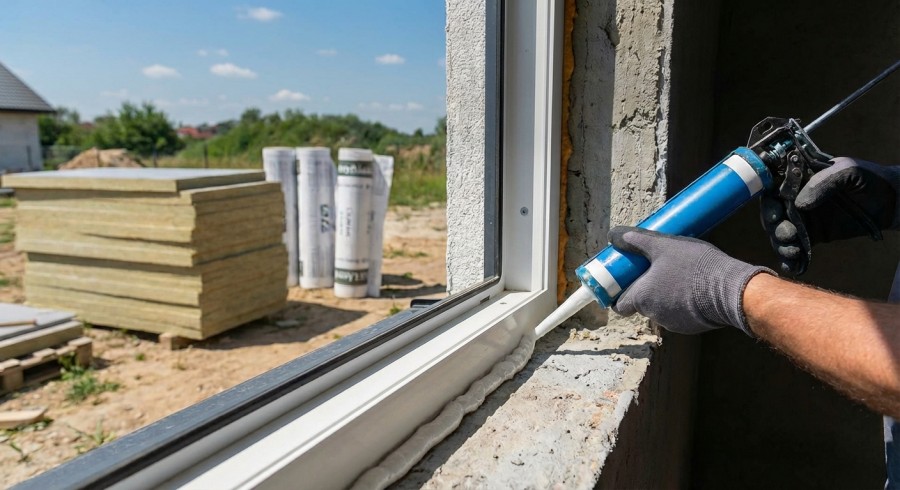
- Bọt polyurethane Các sản phẩm như: lấp đầy khoảng trống giữa khung và lỗ chờ, Xốp cửa sổ và cửa ra vào BoPin PU-270 có độ giãn nở thấp Cung cấp lớp cách nhiệt và lớp chắn khí.
- Chất trám kín ở các chu vi khung bên trong và bên ngoài ngăn không cho không khí đi vòng qua lớp xốp.
- Trình tự lắp đặt thích hợp – Mặt phẳng thoát nước bên ngoài, lớp cách nhiệt/lớp chắn khí bằng xốp, kiểm soát hơi ẩm bên trong
- Kiểm soát chất lượng Đảm bảo lấp đầy hoàn toàn các khe hở mà không để lại khoảng trống.
Ngưỡng cửa và gioăng chắn gió Cần được kiểm tra và bảo trì thường xuyên. Gioăng cửa bị mòn gây ra hiện tượng rò rỉ đáng kể. Mặc dù đã niêm phong tốt các khu vực xung quanh. Bộ phận đóng cửa tự động và thiết kế tiền sảnh Giảm sự trao đổi không khí tại các lối vào có lưu lượng người qua lại cao.
Cửa sổ có thể mở Đối mặt với những thách thức bổ sung từ việc vận hành phần cứng và các cơ chế khóa tạo ra các đường dẫn rò rỉ tiềm tàng. Hệ thống khóa đa điểm Cải thiện khả năng niêm phong so với khóa một điểm. Tình trạng gioăng Xác định hiệu suất lâu dài, đòi hỏi phải thay thế định kỳ.
Các điểm chuyển tiếp từ tường lên mái và từ tường lên móng
Các điểm nối giữa các cấu kiện chính của tòa nhà tạo ra những thách thức phức tạp trong việc đảm bảo kín khí. Nơi các vật liệu và trình tự thi công khác nhau gặp nhau.
Sự chuyển tiếp từ tường sang mái Phải duy trì lớp chắn không khí liên tục bất chấp sự phức tạp của công trình. Dù sử dụng gioăng, chất bịt kín hay bọt xịt, tính liên tục vẫn là yếu tố cực kỳ quan trọng. Các lỗi thường gặp xảy ra ở nơi lớp chắn gió của tường kết thúc và lớp chắn gió của mái bắt đầu do sự chồng lấp hoặc bịt kín không đầy đủ.
Giao diện tường-móng Việc bịt kín các khe hở đặc biệt khó khăn vì chúng xảy ra ở tầng trệt, nơi việc kiểm soát độ ẩm cũng rất quan trọng. Bọt phun, chất bịt kín hoặc gioăng chuyên dụng Tạo ra các lớp chắn khí đồng thời bù đắp sự chênh lệch chuyển động giữa móng và kết cấu tường.
Tường chắn Tạo ra những điều kiện đặc biệt phức tạp đòi hỏi sự tỉ mỉ trong từng chi tiết. Điểm giao nhau giữa màng chống thấm mái, kết cấu lan can và lớp ốp tường ngoài. Tập trung nhiều điểm chuyển tiếp giữa các lớp vỏ bao che, đòi hỏi khả năng bịt kín khí triệt để.
Sự xuyên thấu qua lớp vỏ
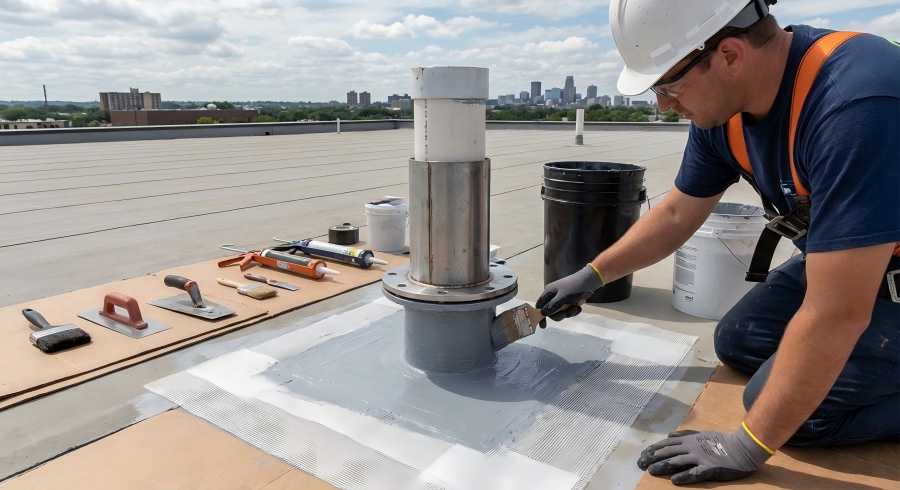
Mỗi đường ống, dây cáp, ống dẫn hoặc cấu kiện kết cấu xuyên qua lớp vỏ bao che đều tiềm ẩn nguy cơ rò rỉ khí. Nhìn chung, các khe hở thường chiếm từ 20 đến 30 tấn tổng lượng rò rỉ không khí trong tòa nhà.
Các lỗ xuyên qua tường dành cho đường dây điện và đường ống nước. through exterior walls require sealing around each service. Fire-rated assemblies add complexity requiring products maintaining both air seal and fire rating. Grouped penetrations benefit from sleeves allowing single large seal versus many small ones.
HVAC penetrations for supply/return ducts, refrigerant lines, and condensate drainage create substantial openings. Oversized penetrations allowing installation flexibility become major leakage paths if remaining gaps aren’t completely sealed.
Structural penetrations – columns, beams, or other elements passing through envelope – require special attention. Movement between structure and envelope must be accommodated while maintaining air seal, typically using flexible sealants rather than rigid materials.
Attic access points and hatches represent often-overlooked envelope penetrations. Unsealed or poorly sealed hatches create direct paths between conditioned space and unconditioned attics, causing substantial energy loss and moisture migration.
Floor-to-Exterior Wall Connections
Multi-story buildings must seal floor-to-wall connections preventing vertical air movement through interior cavities.
The gap between floor slabs and exterior walls allows air to move between floors through wall cavities if not sealed. This vertical air movement can account for significant whole-building leakage despite appearing as small gaps at individual floors.
Spray foam, sealant, or prefabricated gaskets applied at each floor level create barriers. In cold climates, this detail prevents warm air rising through walls. In hot climates with strong air conditioning, it prevents cool air sinking through walls and hot air infiltrating at upper levels.
Curtain Wall Systems
Modern curtain wall facades create unique air sealing challenges through numerous panel joints and complex geometries.
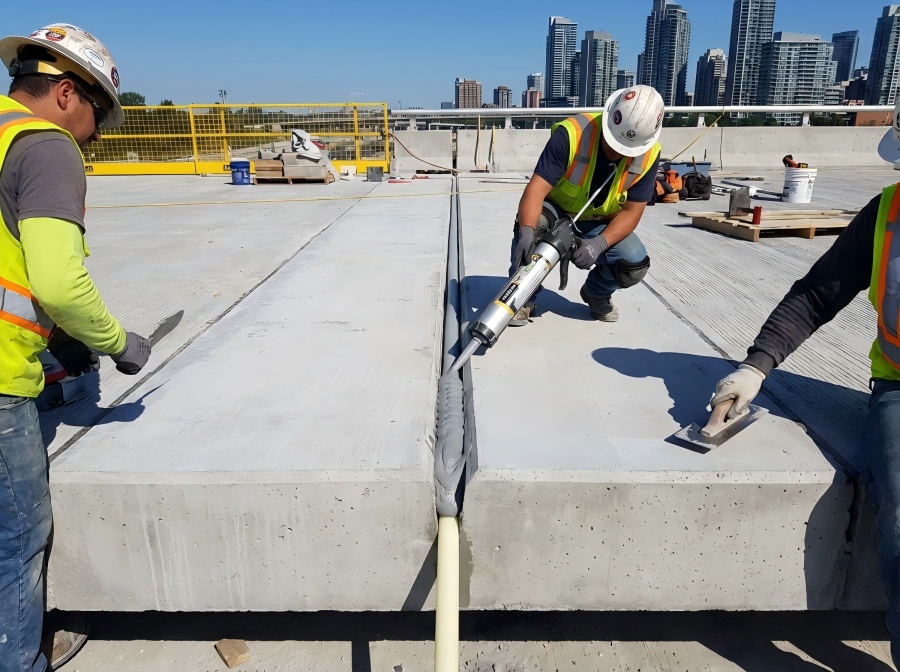
Inter-panel joints between curtain wall units must seal against air passage while accommodating thermal movement and building deflection. Quality weatherproofing sealants like BoPin 770 Weatherproof Neutral Silicone provide necessary movement capability and durability.
Spandrel panels and vision glass transitions create material changes requiring careful joint design. Differential thermal expansion between glass and metal panels stresses seals unless proper joint width and sealant selection accommodate movement.
Curtain wall-to-floor connections must maintain air barrier continuity where facade systems attach to building structure. This detail often receives inadequate attention during design and construction despite its significance to overall building air tightness.
Materials and Systems for Air Sealing
Effective air sealing requires selecting appropriate materials matching specific detail conditions. No single product handles all situations – comprehensive strategies use multiple materials systematically.
Polyurethane Foam Air Sealing
Polyurethane foam products provide excellent air sealing while simultaneously insulating, making them particularly effective for gap filling around windows, doors, and penetrations.
One-component foam applications:
Low-expansion foams like BoPin PU-270 Window & Door Foam suit sensitive applications around window and door frames where high expansion might distort frames. These products provide both air barrier and insulation in single application.
Standard expansion foams handle larger gaps and general penetration sealing where distortion isn’t a concern. Higher expansion provides more insulation value but requires more careful application preventing overfilling.
Fire-rated foams address penetrations through fire-rated assemblies maintaining both air seal and fire barrier. These specialized products cost more but prove necessary for code compliance in rated assemblies.
Foam application best practices:
- Clean, dry substrates ensure proper adhesion
- Controlled filling prevents over-expansion and waste
- Trimming excess foam after cure rather than attempting perfect initial application
- Protection from UV exposure on exterior applications
- Coating trimmed foam with sealants or coatings improving durability
Sealants for Air Barrier Continuity
Flexible sealants create air-tight seals in joints experiencing movement or requiring smooth finish. Sealant selection should match movement requirements and exposure conditions.
Silicone sealants provide excellent durability and movement capability for exterior joints. Neutral-cure formulations like BoPin 770 Weatherproof Silicone handle extreme temperature ranges and UV exposure while maintaining flexibility.
MS polymer sealants offer paintability and good performance in moderate conditions. Products like BoPin MS-220 Multi-Purpose MS Polymer work well for interior applications or where color matching requires painting.
Acoustic sealants specifically formulated for sound control also provide excellent air sealing. These non-hardening products maintain flexibility indefinitely while damping vibration and sealing effectively.
Application considerations:
- Joint sizing accommodating expected movement
- Backer rod preventing three-sided adhesion
- Surface preparation ensuring clean, dry bonding surfaces
- Dụng cụ phù hợp creating optimal geometry and surface contact
Air Barrier Membranes and Tapes
Sheet materials – membranes, tapes, and gaskets – provide continuous air barriers over large areas or seal specific details.
Fluid-applied air barriers coat surfaces creating seamless barriers conforming to complex geometries. These products excel at irregular surfaces, numerous penetrations, or areas where sheet materials prove difficult.
Self-adhered membranes provide durable air barriers with faster installation than fluid-applied products. Proper surface preparation remains critical for reliable long-term adhesion.
Specialized tapes seal specific details like window flanges, membrane laps, or penetration boots. High-performance tapes with acrylic adhesives provide superior durability versus rubber-based alternatives, particularly in hot climates where heat degrades inferior products.
Climate-Specific Air Sealing Strategies
Climate dramatically affects air sealing priorities, product selection, and expected performance. Strategies optimized for temperate climates may prove inadequate or even counterproductive in extreme conditions.
Desert Climate Air Sealing (Middle East Focus)
Middle Eastern buildings face unique air sealing challenges from extreme heat, intense UV, large indoor-outdoor temperature differentials, and reverse stack effect.
Temperature differential impact:
Buildings maintaining 22-24°C indoors against 45-50°C outdoor temperatures create 28°C temperature differentials – among the largest globally. This differential drives powerful air exchange through any envelope deficiency.
Air conditioning represents 70-80% of building energy consumption in Gulf region buildings. Every cubic meter of air infiltrating requires cooling from 50°C to 22°C – an enormous energy penalty. Air sealing directly reduces this massive cooling load.
Reverse stack effect considerations:
Unlike cold climates where warm air rises creating positive pressure at building tops, air-conditioned buildings in extreme heat experience reverse stack effect. Cool dense air sinks, creating positive pressure at lower levels and negative pressure at upper levels.
This reversal means:
- Hot air infiltrates at upper building levels where negative pressure draws it in
- Cool air exfiltrates at lower levels where positive pressure pushes it out
- Pressure patterns change with HVAC operation versus naturally ventilated periods
- Elevator shafts and stairwells become significant vertical air movement paths
Material selection for desert conditions:
Khả năng chống tia cực tím becomes paramount for exterior sealants and tapes. Intense year-round sun rapidly degrades products without adequate UV stabilization. Premium silicones rated for extreme UV exposure prove essential for long-term performance.
Heat resistance matters for products exposed to direct sun. Surface temperatures on dark materials can exceed 70-80°C in peak summer. Sealants and tapes must maintain properties through these temperature extremes.
Thermal movement from large daily temperature swings stresses sealant joints. Building surfaces experiencing 40-50°C daily cycling create substantial movement requiring sealants with maximum movement capability (±50%).
Tropical and Humid Climate Sealing
High humidity regions create different air sealing priorities focused on moisture control and biological growth prevention.
Moisture management becomes critical as air leakage carries far more moisture than vapor diffusion. Humid outdoor air infiltrating into air-conditioned spaces brings moisture that condenses on cool surfaces, potentially causing mold and material deterioration.
Vapor drive direction in tropical climates typically flows inward (hot, humid outside toward cool, dry inside) – opposite to cold climate vapor drive. This affects air barrier/vapor barrier coordination requiring different strategies than cold climate construction.
Anti-fungal protection in sealants and foams prevents biological growth on products exposed to high humidity. Products with mold resistance maintain appearance and performance in challenging moisture conditions.
Cold Climate Air Sealing
Cold climates prioritize preventing warm, moist indoor air from escaping through envelope where it can condense within wall or roof assemblies causing moisture damage.
Outward vapor drive dominates heating season as warm, humid indoor air tries to escape through envelope. Air leakage carries moisture to cold surfaces where it condenses, potentially causing rot, mold, or insulation degradation.
Hiệu ứng chồng chất reaches maximum intensity in cold climates with large indoor-outdoor temperature differentials. Tall buildings experience extreme stack pressures requiring particularly thorough upper level air sealing.
Energy Savings Calculations and ROI
Quantifying energy savings from air sealing justifies investment and guides decision-making. Understanding calculation methods helps predict returns and optimize sealing strategies.
Estimating Current Air Leakage
Blower door testing provides accurate air leakage measurement. This diagnostic test pressurizes or depressurizes buildings to 50 Pa while measuring airflow required to maintain that pressure. Results expressed as ACH50 indicate leakage severity.
Without testing, rough estimates use building age, construction quality, and visual indicators:
- Pre-1980 construction without air sealing: assume 10-15 ACH50
- 1980-2000 standard construction: assume 7-10 ACH50
- 2000+ moderate attention to sealing: assume 5-7 ACH50
- Recent construction with good practices: assume 3-5 ACH50
These estimates allow preliminary energy savings calculations before investing in comprehensive testing.
Calculating Energy Savings
Air leakage energy impact depends on climate, indoor-outdoor temperature differential, HVAC efficiency, and fuel costs.
Simplified calculation approach:
- Determine building volume (floor area × ceiling height)
- Estimate air changes per hour (ACH50 from testing or estimates)
- Calculate infiltration volume (building volume × ACH50 / 20) – dividing by 20 converts 50 Pa test to natural conditions
- Compute heat loss/gain (infiltration volume × air density × specific heat × temperature differential)
- Convert to annual energy accounting for climate degree-days
- Calculate cost based on utility rates and HVAC efficiency
For Middle Eastern example:
A 2,000 m² office building (6,000 m³ volume) at 8 ACH50:
- Natural infiltration: 6,000 × 8 / 20 = 2,400 m³/hr
- Temperature differential: 28°C (50°C outside, 22°C inside)
- Heat gain: 2,400 m³/hr × 1.2 kg/m³ × 1.0 kJ/kg·°C × 28°C = 80,640 kJ/hr = 22.4 kW
- Annual cost (assuming $0.10/kWh, 3,000 cooling hours, COP 3): $22,400
Improving to 4 ACH50 reduces infiltration by 50%:
- Annual savings: $11,200
- With typical air sealing cost $5,000-8,000
- Payback: 5-9 months
This simple example demonstrates why air sealing delivers exceptional ROI in extreme climates.

Green Building Certification Value
LEED, BREEAM, and regional certifications (like UAE’s Estidama) require air tightness testing and often credit enhanced performance.
Certification value includes:
- Marketing premium – certified buildings command higher rents/sales prices
- Lower operating costs – reduced energy consumption benefits tenants
- Regulatory advantages – some jurisdictions require certifications for permits
- Corporate sustainability goals – meeting ESG targets
- Government incentives – rebates or expedited approvals for certified buildings
Air sealing represents relatively low-cost contribution to certification points compared to expensive systems like renewables or advanced HVAC, making it particularly cost-effective for achieving certification.
Testing and Quality Assurance
Verification through testing ensures air sealing achieves intended performance. Quality assurance during construction catches problems while correction remains feasible.
Blower Door Testing
Blower door testing provides quantitative air leakage measurement allowing comparison to targets and identification of major leaks.
Test procedure:
- Seal all intentional openings (close doors/windows, seal exhaust fans, etc.)
- Install calibrated fan in exterior door or window
- Pressurize or depressurize building to 50 Pa
- Measure airflow required to maintain pressure
- Calculate ACH50 from airflow and building volume
- Identify leakage locations using smoke or infrared cameras during test
Testing timing options:
Rough-in testing before drywall or finishes allows finding and correcting major problems. This early intervention proves far less expensive than fixing issues after finish installation.
Final testing after construction completion verifies overall performance and identifies any problems requiring correction before occupancy.
Post-retrofit testing documents improvement after air sealing upgrades, validating investment and guiding additional work if needed.

Infrared Thermography
Infrared cameras visualize temperature differences revealing air leakage locations. Combined with blower door testing, thermography identifies specific leaks for targeted sealing.
Inspection procedure:
- Create pressure differential using blower door
- Scan building envelope with infrared camera
- Identify temperature anomalies indicating air leakage
- Document locations for repair
- Verify corrections with follow-up imaging
Thermography works best with substantial indoor-outdoor temperature differential – at least 10°C. In mild weather, artificial heating or cooling may be needed for effective inspection.
Smoke Testing
Theatrical smoke released near suspected leaks visibly shows air movement patterns. This low-tech method effectively locates leaks during pressurization testing without expensive equipment.
Smoke testing limitations:
- Only identifies accessible leaks on interior surfaces
- Difficult to quantify leakage severity
- May set off smoke detectors requiring temporary disabling
- Best used supplementing other methods rather than as sole diagnostic
Implementation Strategies for Different Building Types
Air sealing approaches vary by building type, age, and construction method. Tailoring strategies to specific conditions optimizes effectiveness and cost.
New Construction
New construction offers best opportunity for cost-effective air sealing by incorporating proper details during initial construction rather than retrofitting.
Design phase integration:
- Specify continuous air barrier throughout envelope
- Detail critical transitions at windows, penetrations, envelope transitions
- Chọn vật liệu phù hợp for climate and exposure
- Coordinate trades ensuring each understands their air sealing responsibilities
Construction phase quality control:
- Train installation crews on air sealing importance and techniques
- Inspect work progressively catching problems before subsequent work conceals them
- Conduct rough-in blower door testing allowing correction before finishes
- Document installation with photos verifying proper execution
Final verification:
- Complete blower door testing verifying target performance
- Identify and correct any deficiencies
- Provide documentation for certification or owner records
Existing Building Retrofits
Existing buildings require diagnostic testing identifying major leaks before developing cost-effective sealing strategies.
Assessment approach:
- Blower door testing quantifying current performance
- Infrared thermography locating major leakage paths
- Visual inspection identifying obvious problems
- Prioritize improvements based on cost-effectiveness
Common retrofit opportunities:
- Attic access and penetrations often overlooked yet easily sealed
- Basement rim joists and foundations accessible and high-impact
- Window and door perimeters if replacement isn’t planned
- Mechanical penetrations for HVAC, plumbing, electrical
- Dropped ceilings and partition walls in commercial buildings creating hidden leakage paths
Retrofit challenges:
- Limited access to some envelope areas
- Concealed conditions requiring investigation
- Occupied building coordination minimizing disruption
- Unknown existing materials requiring compatibility verification
Những câu hỏi thường gặp
How much can air sealing reduce my energy bills?
Air sealing typically reduces heating and cooling energy consumption by 15-30% depending on current leakage severity and climate conditions. In extreme climates like the Middle East where cooling dominates, savings can reach 25-35% of cooling costs – often translating to 18-25% of total energy bills. Payback periods typically range from 6 months to 3 years depending on improvement extent and energy costs. A blower door test provides accurate current leakage assessment allowing precise savings prediction for your specific building.
What air tightness target should I aim for?
Target air tightness depends on building type, climate, and green building certification goals. Residential buildings should target 3-5 ACH50 for good energy performance, while commercial buildings typically aim for 5-8 ACH50. Green building certifications often require specific targets – LEED requires testing and may credit <3 ACH50, while Passive House demands <0.6 ACH50. In extreme climates like hot deserts, tighter targets (3-4 ACH50) prove more cost-effective due to higher per-air-change energy costs. Balance air tightness with proper mechanical ventilation ensuring adequate fresh air supply.
Will air sealing cause indoor air quality problems?
Proper air sealing improves indoor air quality by enabling controlled mechanical ventilation rather than random infiltration. Leaky buildings receive uncontrolled, unfiltered outdoor air bringing pollutants, allergens, and dust, while sealed buildings with mechanical ventilation provide filtered, scheduled fresh air exactly where and when needed. The concern about “buildings being too tight” stems from older construction where infiltration provided ventilation – modern practice combines air sealing with proper ventilation systems delivering far better air quality than leaky construction.
Can I DIY air sealing or do I need professionals?
Homeowners and facility managers can successfully seal many common air leaks themselves including attic penetrations, window/door weatherstripping, and accessible gaps around pipes and wires. However, professional air sealing delivers better results for whole-building improvements through expertise in diagnostics (blower door testing), hard-to-reach areas, and proper material selection/application. For new construction or major renovations, professional involvement from design phase ensures comprehensive approach rather than patchwork fixes. Consider professional diagnostic testing even if doing DIY sealing – knowing where major leaks exist targets effort effectively.
How does air sealing interact with insulation?
Air sealing and insulation work together but serve different functions – insulation reduces heat transfer while air sealing prevents air movement. Without air sealing, insulation performs poorly as air moving through it carries far more heat than conduction. Think of insulation as a sweater – it keeps you warm only if wind (air movement) doesn’t blow through it. Air sealing should precede or accompany insulation installation rather than being afterthought. In many cases, improving air sealing delivers more cost-effective energy savings than adding insulation to already-insulated assemblies.
Phần kết luận
Building envelope air sealing represents the most cost-effective energy efficiency improvement in most buildings, particularly in extreme climates where heating or cooling dominates energy consumption. The combination of direct energy savings, improved comfort, better indoor air quality, and enhanced building durability makes comprehensive air sealing a high-priority investment.
Understanding air leakage mechanisms – pressure differentials from wind, stack effect, and mechanical systems – guides effective sealing strategies. In Middle Eastern climates, reverse stack effect from strong air conditioning creates unique challenges requiring particular attention to upper-level air sealing preventing hot air infiltration.
Critical leakage points – windows and doors, major element transitions, penetrations, and vertical cavity connections – account for majority of air leakage despite representing small fractions of envelope area. Targeting these high-impact details delivers maximum improvement for effort invested.
Material selection should match specific detail conditions and exposure. Polyurethane foams excel at gap-filling around penetrations and openings, flexible sealants handle moving joints, and membranes/tapes create continuous barriers over large areas. Climate considerations guide product selection – desert conditions demand extreme UV resistance and thermal stability, while humid climates prioritize moisture control and mold resistance.
Quantifiable energy savings and rapid payback justify air sealing investment, particularly in extreme climates. Middle Eastern buildings can save 20-30% of cooling costs through comprehensive air sealing, often achieving payback in under two years. Green building certification value adds marketing and operational benefits beyond direct energy savings.
Testing and quality assurance through blower door testing, infrared thermography, and progressive inspection ensures sealing achieves intended performance. New construction should incorporate air sealing from design phase, while existing buildings benefit from diagnostic testing identifying cost-effective improvement opportunities.
Whether constructing energy-efficient new buildings, retrofitting existing facilities for reduced operational costs, or pursuing green building certification, comprehensive air sealing forms the foundation of building energy performance. The investment delivers immediate operational savings, improved occupant comfort, and long-term building durability – benefits that compound throughout building life.
Planning energy-efficient construction or building retrofits and need expert guidance on air sealing strategies? Contact our technical team for professional support on material selection, testing requirements, and comprehensive sealing specifications suited to your climate and building type.
Related Articles:



 English
  العربية
  Español de México
  Português
  Français
  Русский
  Türkçe
  Tiếng Việt