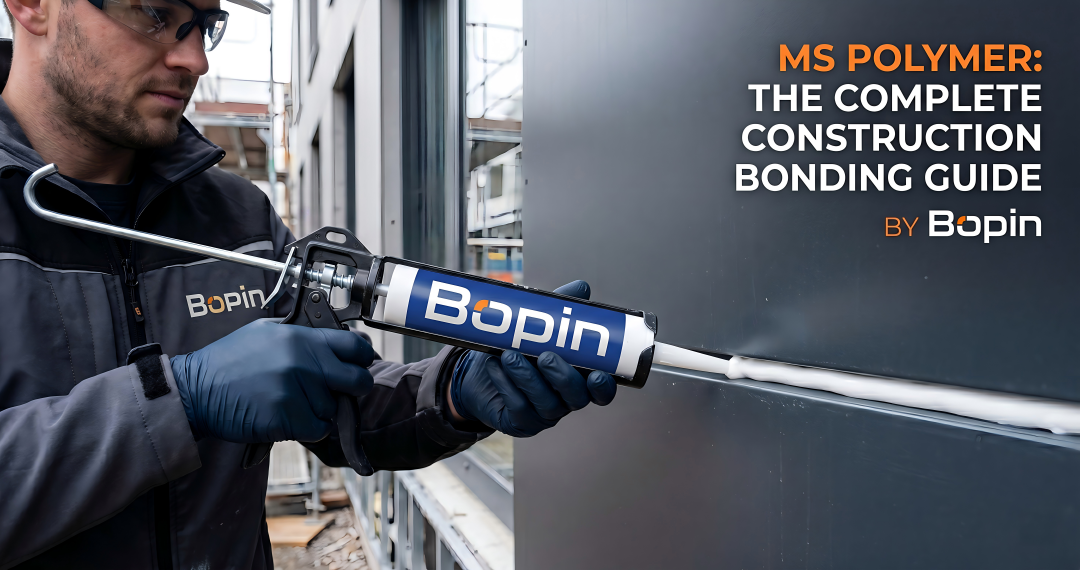
Don’t Let a $5 Tube of Caulk Ruin Your $5,000 Paint Job.
Exterior sealant failure is one of the most common causes of building envelope callbacks in commercial construction. Water infiltration behind cladding, adhesion loss at window perimeters, and UV-degraded facade joints are almost always the result of incorrect material specification — not poor workmanship.
This guide is written for contractors, facade engineers, and procurement managers specifying exterior sealants for commercial and residential construction projects. It covers:
- The fundamental trade-off between silicone and MS polymer for exterior applications
- Substrate compatibility and when primer is required
- Application temperature limits and what they mean for your construction schedule
- Climate-specific specification guidance for Middle East, Southeast Asia, and Central Asia
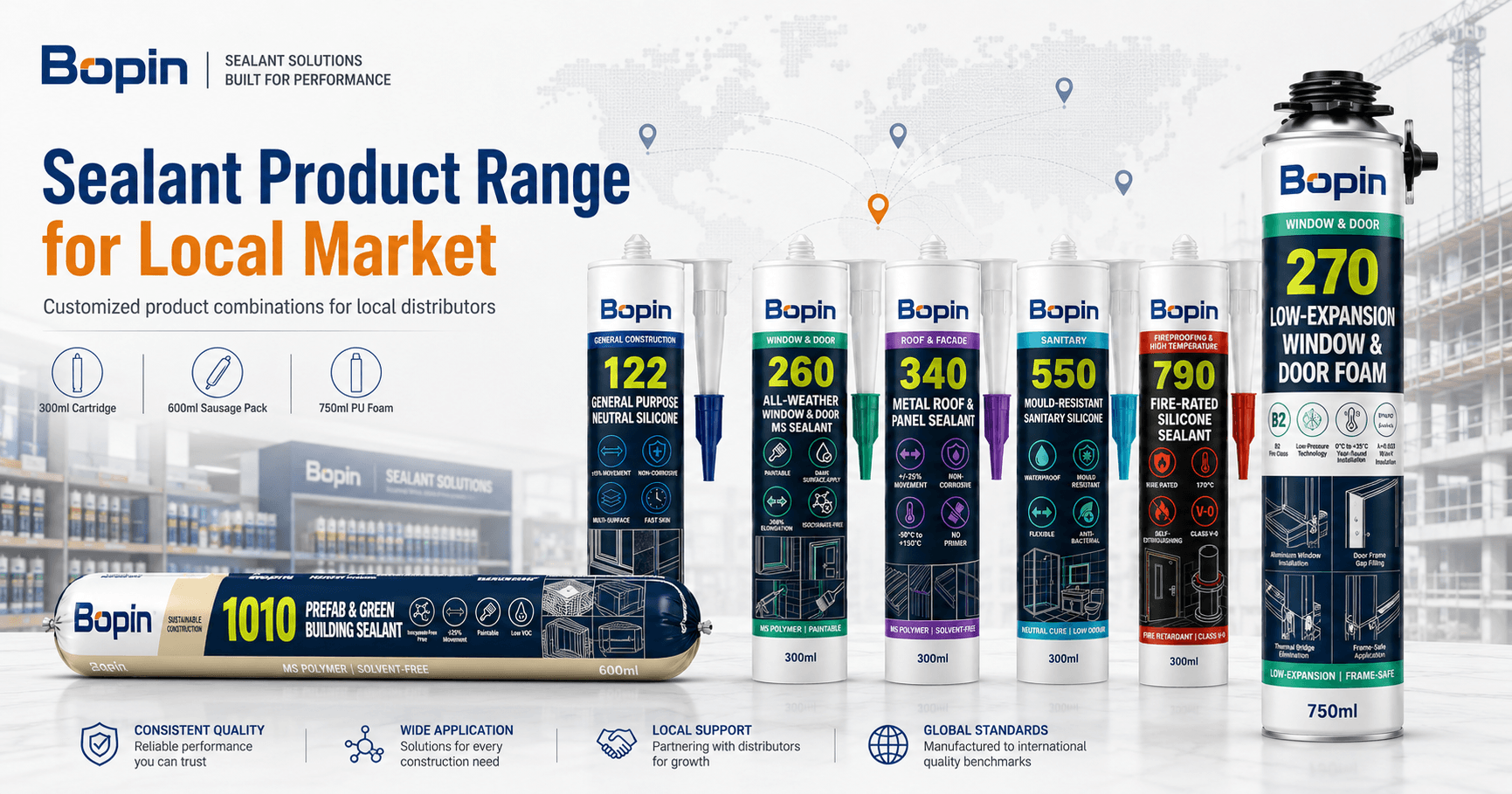
- BoPin product data for your specification package
If you are sourcing exterior sealant for a specific project, jump to the product section or contact us with your substrate and climate details.
The Big Decision: 100% Silicone vs. High-Performance Paintable Sealants
Before you can choose the best exterior caulk, you need to understand the fundamental trade-off that determines success or failure in exterior applications. This single decision affects durability, appearance, maintenance, and long-term performance.
Here’s the truth: there’s no perfect exterior caulk that excels at everything. You must choose between maximum performance and maximum versatility. Understanding this trade-off helps you make the right choice for your specific needs.
| Особенность | Силиконовый герметик 100% | High-Performance Paintable Sealant |
| UV & Weather Resistance | Unbeatable ⭐⭐⭐⭐⭐ | Excellent ⭐⭐⭐⭐ |
| Гибкость | Excellent ⭐⭐⭐⭐⭐ | Very Good ⭐⭐⭐⭐ |
| Paintable? | No ❌ | Yes ✅ (Primary Advantage) |
| Service Life | 20+ years | 15-20 years |
| Best For… | Gutters, flashing, areas not being painted | Siding, windows, trim (where painting is required) |
The key insight: Most homeowners need paintable sealants for the majority of their exterior projects. However, there are specific applications where only 100% silicone delivers adequate protection.
This understanding guides our recommendations and explains why we don’t simply declare one product “the best” for all situations.
Specifying for Your Climate
Desert & Middle East Climates (Kuwait, UAE, Saudi Arabia, Iraq, North Africa)
Surface temperatures on south-facing facades regularly exceed 70°C in summer. Standard silicones maintain performance, but acetoxy-cure products corrode aluminium substrates — specify neutral-cure only. UV stabilisation is mandatory for exposed joints. MS polymer is suitable for shaded or partially protected joints where paintability is required.
Рекомендуется: BoPin 380 Weather-Resistant Facade Silicone (neutral-cure, UV-stabilised, suitable for aluminium and glass substrates)
Tropical & Southeast Asia Climates (Malaysia, Indonesia, Vietnam, Philippines, Thailand)
High humidity accelerates mold growth on sealant surfaces. Monsoon season creates hydrostatic pressure on facade joints. Specify sealants with demonstrated mold resistance and full cure capability in high-humidity conditions.
Рекомендуется: BoPin MS-240 All-Weather Window & Door Sealant (applies from -5°C to +40°C, paintable, suitable for year-round tropical construction schedules)
Central Asia & Cold Climates (Kazakhstan, Uzbekistan, Kyrgyzstan)
Freeze-thaw cycling and temperature differentials of 60°C+ between summer and winter demand minimum ±25% movement capability. Application in winter conditions requires products rated for low – temperature application. Standard silicones can be applied down to +5°C; BoPin MS-240 extends this to -5°C.
Our Top Picks for the Best Exterior Caulk of 2025: The Best Exterior Caulk for Your Needs
Choosing the best exterior caulk is essential for maintaining your home’s integrity and appearance.
When selecting the best exterior caulk, consider factors like durability and flexibility to ensure a perfect seal.
After extensive testing in challenging climates around the world, here are our definitive recommendations for the best exterior caulk products that deliver reliable, long-term protection in demanding exterior conditions.
🏆 Best Overall Exterior Caulk: BoPin MS-240 All-Weather Window & Door Sealant
Winner: The Perfect Balance for Most Applications
For the majority of exterior caulking projects, BoPin MS-240 All-Weather Window & Door Sealant offers the perfect balance: outstanding flexibility and durability that approaches silicone performance, but with the critical advantage of being fully paintable. This makes it the most versatile choice for typical exterior projects.
Why MS-240 Earns Our Top Recommendation:
- All-Season Application Range – Can be applied from -5°C to +40°C, making it usable in nearly all weather conditions when other products fail.
- Превосходная окрашиваемость – Compatible with most paint systems without compromising adhesion or flexibility. You can achieve seamless color matching with your exterior paint scheme.
- Exceptional Adhesion – Bonds reliably to PVC, aluminum, wood, concrete, and masonry without primers. This simplifies application and reduces the risk of adhesion failure.
- ±25% Movement Capability – Handles significant thermal expansion and building movement without cracking or losing seal integrity
- Повышенная устойчивость к ультрафиолетовому излучению – Maintains properties and appearance despite constant sun exposure in demanding climates.
- Environmental Benefits – Isocyanate and solvent-free formula makes it safer for applicators and the environment.
Best Applications: Ideal for window and door perimeters, siding joints, trim work, and any exterior application where subsequent painting is planned. This is your go-to choice when you need reliable performance with design flexibility.
Available in 290ml cartridges and 600ml foil packages with color options including White, Grey, Black, Brown, and Translucent.
🛡️ Best for Ultimate Weatherproofing: BoPin 380 атмосферостойкий фасадный герметик
Winner: Maximum Protection for Critical Applications
When you need absolute maximum protection in high-exposure areas that won’t be painted (like around vents, flashing, or metal roofing), nothing matches the lifelong flexibility and UV resistance of BoPin 380 Weather-Resistant Facade Sealant.
Why BoPin 380 Dominates in Extreme Conditions:
- ±50% Movement Capability – Exceptional accommodation of structural and thermal movement that would destroy lesser products
- Extreme Temperature Range – Performs reliably from -50°C to +150°C in the world’s most challenging climates.
- Устойчивость к ультрафиолетовому излучению – Zero degradation, color change, or property loss even after decades of intense sun exposure
- Несохраняемые технологии – Safe for natural stone, marble, and other sensitive facade materials
- 20+ Year Service Life – Documented performance in properly designed joints with minimal maintenance
- Professional-Grade Formulation – Engineered specifically for demanding commercial and high-end residential applications
Best Applications: Perfect for facade systems, curtain wall assemblies, expansion joints, metal roofing, and any high-movement application where painting isn’t required. This is the choice when failure simply isn’t an option.
Выпускается в картриджах объемом 300 мл и фольгированных упаковках объемом 600 мл. with color options including Clear, White, Black, Grey, Bronze, and Limestone.
Product Selection by Application
Facade joints, curtain wall perimeters, structural glazing:
BoPin 380 Weather-Resistant Facade Silicone
Neutral-cure formula safe for aluminium, anodised metal, and coated glass. UV-stabilised for long-term colour retention. Movement capability ±25%. Not paintable.
Window and door perimeter sealing, exterior joints requiring paint finish:
BoPin MS-240 All-Weather Window & Door Sealant
MS polymer technology — fully paintable with latex and oil-based paints. Application range -5°C to +40°C. ±25% movement capability. Bonds to most substrates without primer.
For projects requiring technical documentation:
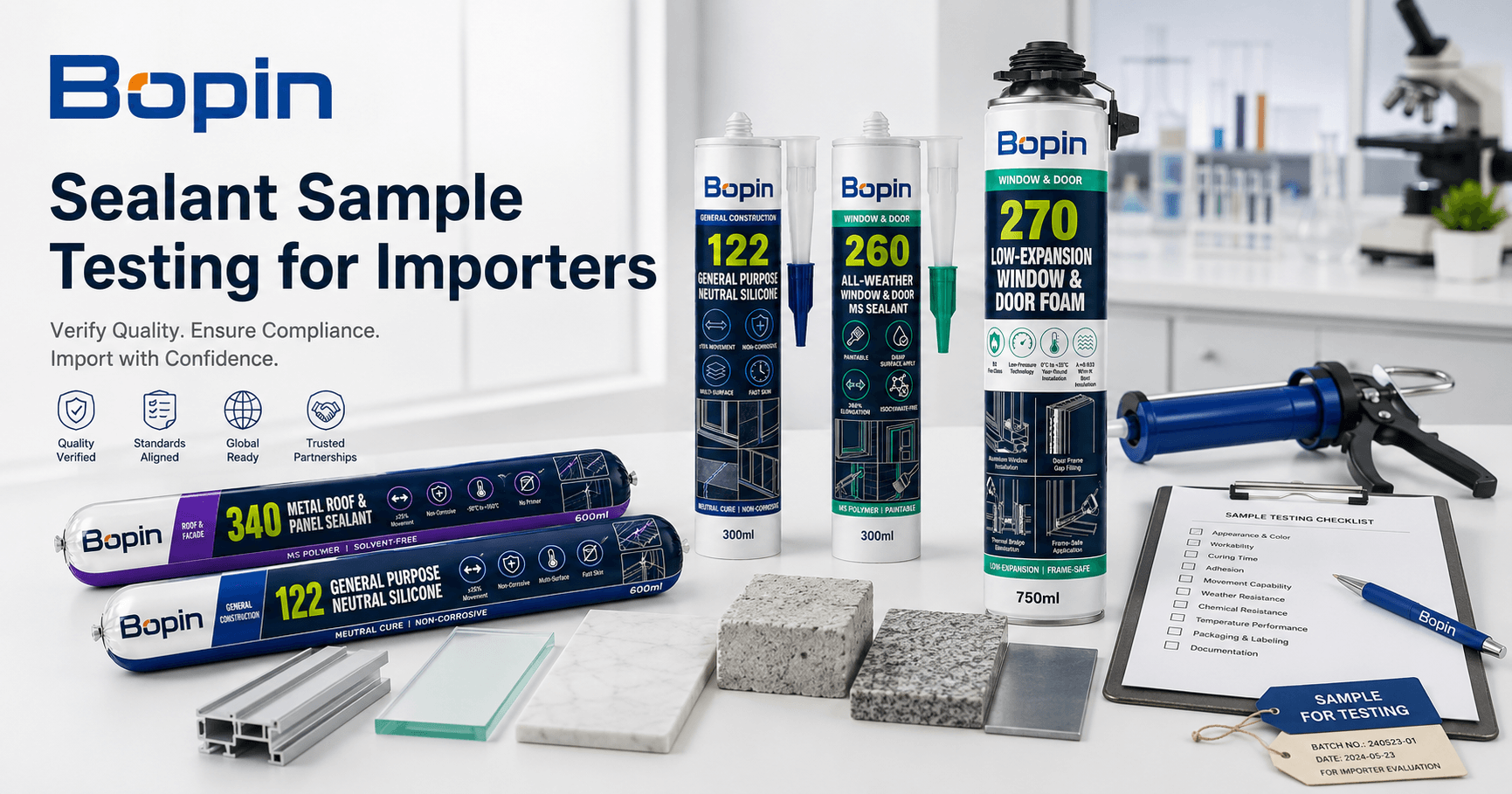
TDS, SDS, and application guides available on request. Samples can be arranged for substrate compatibility testing before order commitment.
[Request Specifications & Samples →]
Professional Application Tips for a Flawless Finish
Even the best caulk will fail if improperly applied. Follow these professional techniques that contractors use to ensure decades of reliable performance.
Step 1: Preparation is Everything
This is where most DIY projects succeed or fail. Proper preparation takes 70% of your project time but determines 90% of the final performance.
Важнейшие этапы подготовки: • Complete removal of old caulk – Any residue will prevent proper adhesion
- Deep cleaning with isopropyl alcohol – Removes oils, dirt, and contaminants
- Дать полностью высохнуть – Even slight moisture can cause adhesion failure
- Check for substrate damage – Repair any cracks or deterioration before sealing
Совет от профессионала: Don’t rush this step. Spending extra time on preparation prevents expensive failure later.
Step 2: Mind the Temperature
Most exterior caulks have specific temperature requirements for optimal performance. Applying outside these ranges can cause immediate or delayed failure.
Рекомендации по температуре:
- Check manufacturer specifications – These aren’t suggestions, they’re requirements
- Consider substrate temperature – Dark surfaces can be much hotter than air temperature
- Avoid application in direct sunlight when possible – This causes rapid skin formation
- Our BoPin MS-240 can be applied down to -5°C – Much wider range than most competitors
Step 3: Cut the Tip Correctly
This small detail makes a huge difference in application quality and final appearance.
Профессиональная техника:
- Срез под углом 45 градусов – Provides optimal bead shape and control
- Начните с меньшего отверстия. – You can always cut more, but you can’t make it smaller
- Make a clean, straight cut – Ragged cuts create uneven bead lines
- Test flow on cardboard first – Ensures consistent delivery before starting your project
Step 4: Tooling for a Pro Seal
Proper tooling creates a professional appearance and ensures optimal adhesion.
Professional tooling process:
- Tool within 10-15 minutes of application – Before skin formation begins
- Use consistent pressure – Maintain the same speed and pressure throughout
- Работа в непрерывных секциях. – Don’t stop and start within joints
- Clean your tooling finger/tool frequently – Prevents dragging and contamination
The key to success: Practice these techniques on scrap material first. Your actual project isn’t the place to learn.
Exterior Caulk FAQ: Your Top Questions Answered
What is the longest-lasting exterior caulk?
High-quality 100% silicone sealants like our BoPin 380 Weather-Resistant Facade Sealant offer the longest service life – typically 20-25 years in properly designed applications. Advanced MS polymer sealants like our BoPin MS-240 provide 15-20 year service life with the added benefit of paintability.
The key factor isn’t just the product chemistry – it’s proper application and appropriate product selection for your specific conditions.
How long does exterior caulk need to dry before it rains?
This varies significantly by product, but our BoPin MS-240 is water-ready in just 2-3 hours under normal conditions. However, full cure and maximum performance develop over 24-48 hours.
For best results: Check weather forecasts and avoid application when rain is expected within 6-12 hours. Even “water-ready” products benefit from initial curing without rain exposure.
Can I apply new caulk over old caulk?
Absolutely not – this is one of the most common mistakes that guarantees premature failure. New caulk cannot bond properly to old sealant, regardless of the condition or type of existing material.
Why this always fails:
- Плохая адгезия – New material can’t penetrate through the old sealant to reach substrates
- Different expansion rates – Create stress points and cracking
- Trapped moisture – Prevents proper curing and creates weak spots
- Cosmetic problems – Uneven thickness and poor appearance
В соответствии с Стандарты ASTM C920 for construction sealants, proper substrate preparation and complete removal of old material are fundamental requirements for achieving specified performance.
Правильный подход: Complete removal of all old material is mandatory. Yes, it’s time-consuming, but it’s the difference between a 20-year solution and a 2-year failure.
Should I prime before applying exterior caulk?
This depends on your substrate and chosen product. Our BoPin MS-240 bonds excellently to most surfaces without primers. However, very porous surfaces like raw concrete may benefit from primer application.
General guidelines:
- Non-porous surfaces (glass, metal, vinyl) – Usually no primer needed with quality products
- Porous surfaces (concrete, masonry, raw wood) – Consider primer for maximum adhesion
- Previously painted surfaces – Ensure paint is well-adhered; primer usually not needed
When in doubt: Contact our technical support team for specific substrate guidance.
How do I choose between silicone and MS polymer sealants?
Choose based on your priorities:
Select 100% silicone (BoPin 380) when:
- Maximum durability is critical (20+ year service life)
- Extreme movement is expected (±50% capability needed)
- The area won’t be painted (flashing, gutters, metal roofing)
- Ultimate weather resistance is required (extreme UV or temperature exposure)
Select MS polymer (BoPin MS-240) when:
- Paintability is required (most siding and trim applications)
- Moderate movement is expected (±25% is sufficient)
- Ease of application matters (wider temperature application range)
- Environmental considerations are important (lower VOC content)
Sourcing Exterior Sealant for Export?
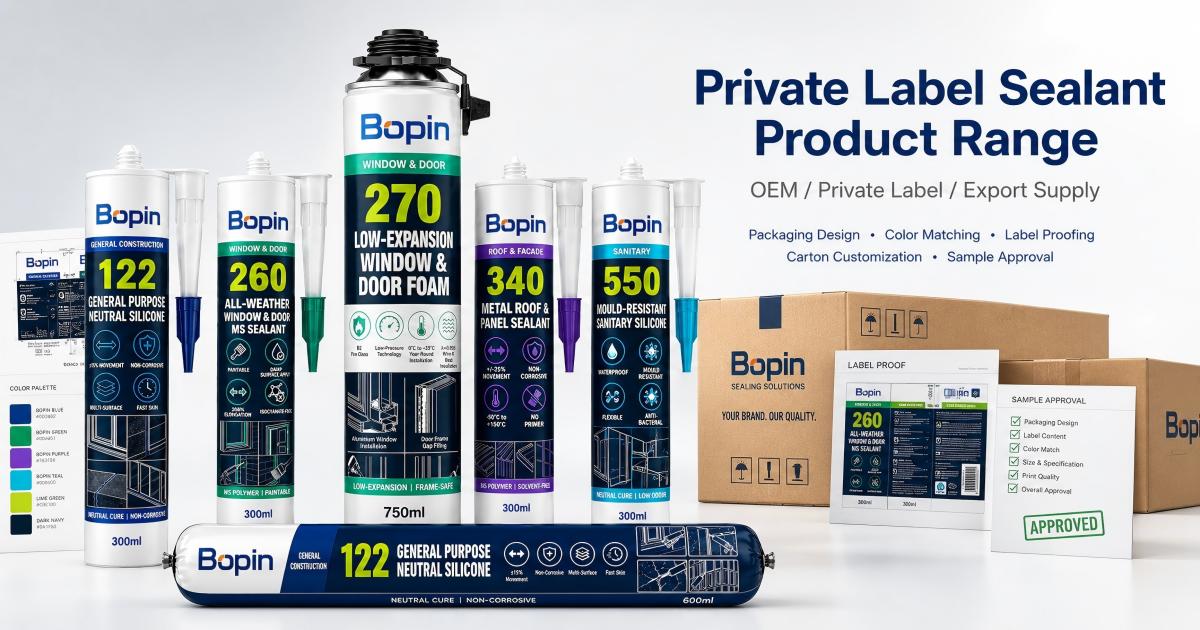
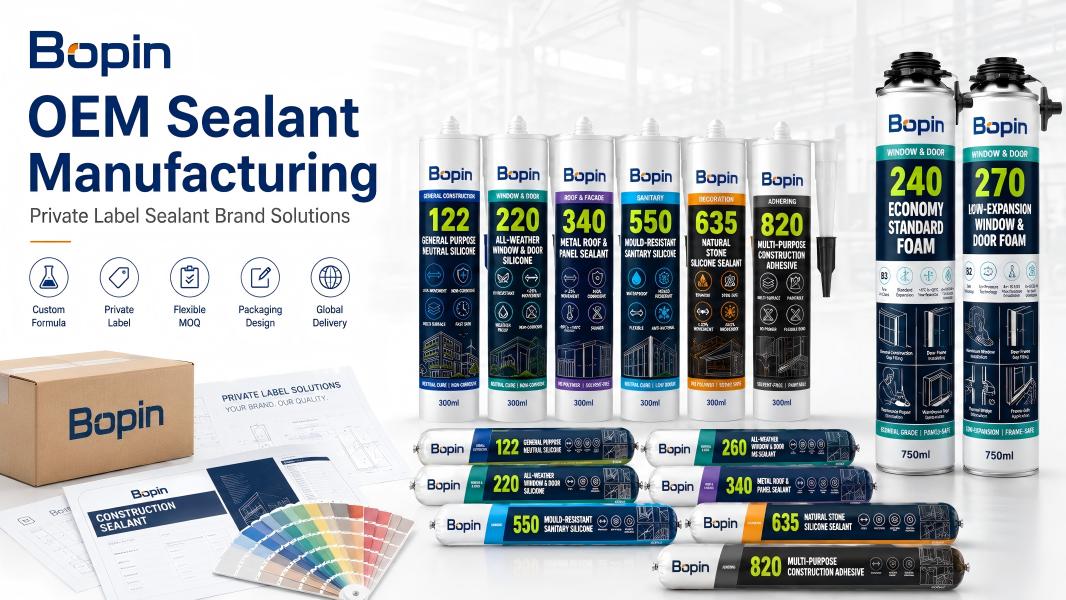
BoPin supplies facade and exterior sealants for projects across the Middle East, Southeast Asia, Central Asia, and Africa. Factory-direct pricing, flexible MOQ, full technical documentation.
To receive a quote, provide:
✓ Application type (facade joint / window perimeter / expansion joint)
✓ Substrate materials
✓ Project location and climate
✓ Approximate quantity (linear metres or number of cartridges)