
Air leakage through building envelopes wastes 25-40% of heating and cooling energy in typical buildings, costing thousands in unnecessary utility bills while compromising occupant comfort and indoor air quality. In extreme climates like the Middle East where air conditioning accounts for 70-80% of building energy consumption, inadequate air sealing creates massive, preventable waste.
Understanding building envelope air sealing principles and implementing comprehensive sealing strategies reduces energy consumption by 15-30%, improves comfort, meets green building certification requirements, and delivers rapid return on investment. Whether you’re constructing LEED-certified developments, retrofitting existing buildings for energy savings, or simply seeking to reduce operational costs, proper air sealing forms the foundation of energy-efficient building performance.
Understanding Building Envelope Air Leakage
Air leakage – uncontrolled air movement through the building envelope – fundamentally undermines energy efficiency regardless of insulation quality or HVAC system performance. Every gap, crack, or penetration allows conditioned air to escape and unconditioned air to infiltrate.
The Physics of Air Leakage
Air moves through building envelopes driven by three primary forces: pressure differences from wind, temperature-induced stack effect, and mechanical system operation. Understanding these driving forces helps identify critical sealing priorities.
Wind pressure creates positive pressure on windward building faces and negative pressure on leeward sides. These pressure differentials force air through any available opening. In tall buildings or exposed locations, wind pressures can reach 50-100 Pa or more, creating substantial air exchange through envelope deficiencies.
Stack effect results from indoor-outdoor temperature differences creating buoyancy-driven air movement. Warm air rises, creating positive pressure at upper building levels and negative pressure at lower levels. In cold climates, this draws cold air in at bottom and pushes warm air out at top. In hot climates with strong air conditioning, reverse stack effect occurs – cool indoor air sinks creating opposite pressure patterns.
For Middle Eastern buildings maintaining 22-24°C indoors against 45-50°C outdoor temperatures, reverse stack effect creates powerful downward air movement. This force constantly works to infiltrate hot outdoor air at upper levels while exfiltrating cool air at lower levels, directly fighting HVAC systems.
Mechanical systems – particularly unbalanced ventilation – create building pressurization or depressurization. Exhaust fans without adequate makeup air depressurize buildings, increasing infiltration. Supply-dominant systems pressurize buildings, increasing exfiltration. Either condition increases energy consumption beyond what balanced systems create.

Quantifying Air Leakage Impact
Air leakage severity is quantified through Air Changes per Hour (ACH) at specified test pressure, typically 50 Pa (ACH50). This metric indicates how many times the building’s entire air volume exchanges hourly under test conditions.
Typical building air leakage ranges:
- Older buildings without air sealing: 10-20 ACH50 (very leaky)
- Standard new construction: 5-10 ACH50 (moderate leakage)
- Good air sealing practices: 2-5 ACH50 (tight)
- Passive House standard: <0.6 ACH50 (extremely tight)
- Green building certifications: typically require 3-5 ACH50 or better
Energy impact increases non-linearly with leakage rates. A building at 10 ACH50 doesn’t waste twice the energy of one at 5 ACH50 – it wastes 2.5-3 times as much due to increased HVAC runtime and reduced system efficiency from constant load.
In extreme climates, air leakage impact intensifies. Middle Eastern buildings maintaining 28°C temperature differential (50°C outside, 22°C inside) lose far more energy per air change than temperate climate buildings with 10-15°C differentials. This makes air sealing particularly cost-effective in hot desert climates.
Beyond Energy: Additional Air Sealing Benefits
While energy savings drive most air sealing investment, additional benefits often exceed energy value alone.
Comfort improvement from reduced drafts and temperature stratification significantly enhances occupant satisfaction. Buildings with good air sealing maintain more uniform temperatures throughout spaces and across seasons.
Indoor air quality benefits from controlled ventilation versus random infiltration. Properly sealed buildings with mechanical ventilation provide fresh air on schedule while filtering and conditioning it. Leaky buildings receive uncontrolled, unfiltered infiltration bringing pollutants, dust, and allergens.
Moisture control improves dramatically with good air sealing. Air movement carries far more moisture than diffusion through materials. Sealing air leaks prevents moisture infiltration that causes condensation, mold, and material degradation.
Noise reduction accompanies air sealing as sound travels through the same gaps air uses. Buildings with excellent air sealing achieve significantly better acoustic performance without specialized sound insulation.
HVAC system sizing and performance benefit from reduced loads. Properly sealed buildings require smaller, less expensive HVAC equipment while existing systems operate more efficiently with reduced runtime and better temperature control.

Critical Air Leakage Points in Building Envelopes
Air leakage concentrates at specific envelope details rather than occurring uniformly. Understanding and addressing these critical points delivers maximum sealing effectiveness for effort invested.

Windows and Doors
Window and door perimeters represent major leakage paths in most buildings. The junction between frames and rough openings creates gaps allowing substantial air movement if not properly sealed.
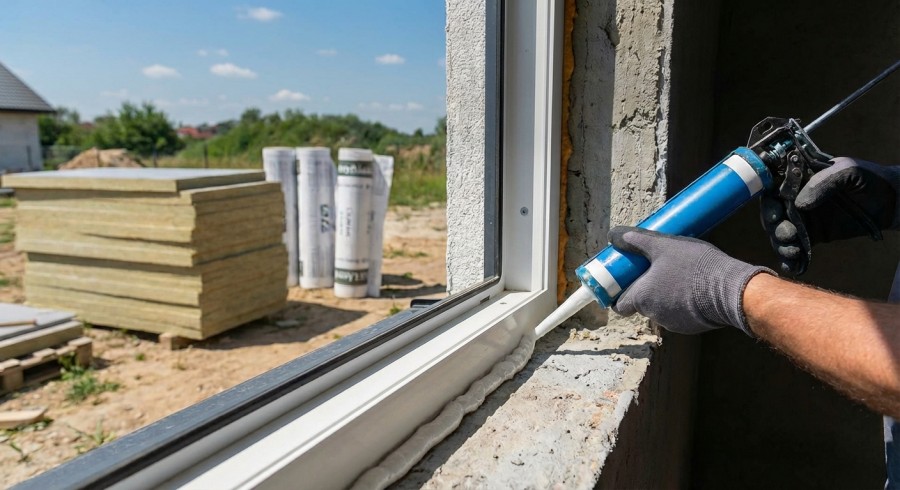
Window installation air sealing requires:
- Polyurethane foam filling gaps between frame and rough opening, products like BoPin PU-270 Low-Expansion Window & Door Foam provide insulation and air barrier
- Sealant at interior and exterior frame perimeters preventing air bypass around foam
- Proper installation sequence – exterior drainage plane, foam insulation/air seal, interior vapor control
- Quality control ensuring complete gap filling without voids
Door thresholds and weatherstripping require regular inspection and maintenance. Worn weatherstripping creates significant leakage despite good perimeter sealing. Automatic door closers and vestibule designs reduce air exchange in high-traffic entries.
Operable windows face additional challenges from operating hardware and locking mechanisms creating potential leakage paths. Multi-point locking systems improve sealing versus single-point locks. Gasket condition determines long-term performance requiring periodic replacement.
Wall-to-Roof and Wall-to-Foundation Transitions
Junctions between major building elements create challenging air sealing details where different materials and construction sequences meet.
Transitions mur-toit must maintain continuous air barrier despite construction complexity. Whether using gaskets, sealants, or spray foam, continuity remains critical. Common failures occur where wall air barrier terminates and roof air barrier begins with inadequate overlap or sealing.
Wall-to-foundation interfaces particularly challenge sealing as they occur at grade where moisture control also matters. Spray foam, sealants, or specialized gaskets create air barriers while accommodating differential movement between foundation and wall structure.
Murs parapets create particularly complex conditions requiring careful detailing. The junction between roof membrane, parapet structure, and exterior wall cladding concentrates multiple envelope transitions demanding thorough air sealing.
Penetrations Through Envelope
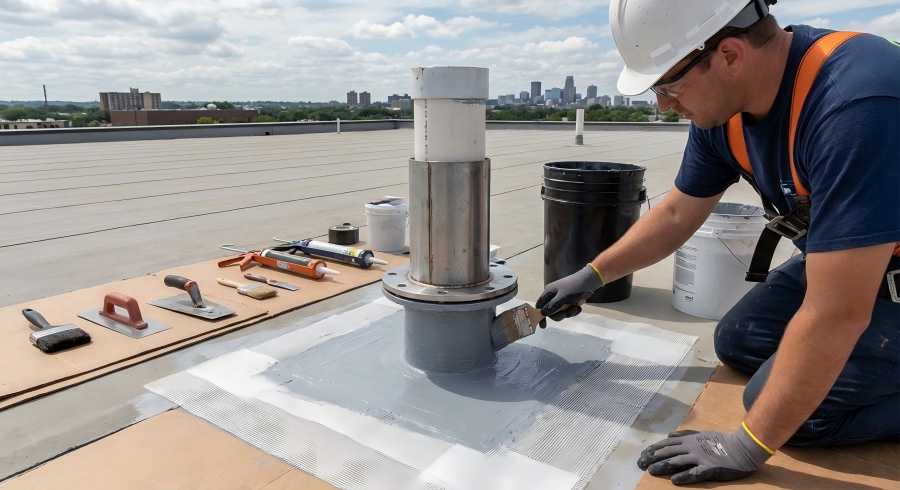
Every pipe, cable, duct, or structural element penetrating the envelope creates potential air leakage. Collectively, penetrations often account for 20-30% of total building air leakage.
Electrical and plumbing penetrations through exterior walls require sealing around each service. Fire-rated assemblies add complexity requiring products maintaining both air seal and fire rating. Grouped penetrations benefit from sleeves allowing single large seal versus many small ones.
HVAC penetrations for supply/return ducts, refrigerant lines, and condensate drainage create substantial openings. Oversized penetrations allowing installation flexibility become major leakage paths if remaining gaps aren’t completely sealed.
Structural penetrations – columns, beams, or other elements passing through envelope – require special attention. Movement between structure and envelope must be accommodated while maintaining air seal, typically using flexible sealants rather than rigid materials.
Attic access points and hatches represent often-overlooked envelope penetrations. Unsealed or poorly sealed hatches create direct paths between conditioned space and unconditioned attics, causing substantial energy loss and moisture migration.
Floor-to-Exterior Wall Connections
Multi-story buildings must seal floor-to-wall connections preventing vertical air movement through interior cavities.
The gap between floor slabs and exterior walls allows air to move between floors through wall cavities if not sealed. This vertical air movement can account for significant whole-building leakage despite appearing as small gaps at individual floors.
Spray foam, sealant, or prefabricated gaskets applied at each floor level create barriers. In cold climates, this detail prevents warm air rising through walls. In hot climates with strong air conditioning, it prevents cool air sinking through walls and hot air infiltrating at upper levels.
Curtain Wall Systems
Modern curtain wall facades create unique air sealing challenges through numerous panel joints and complex geometries.
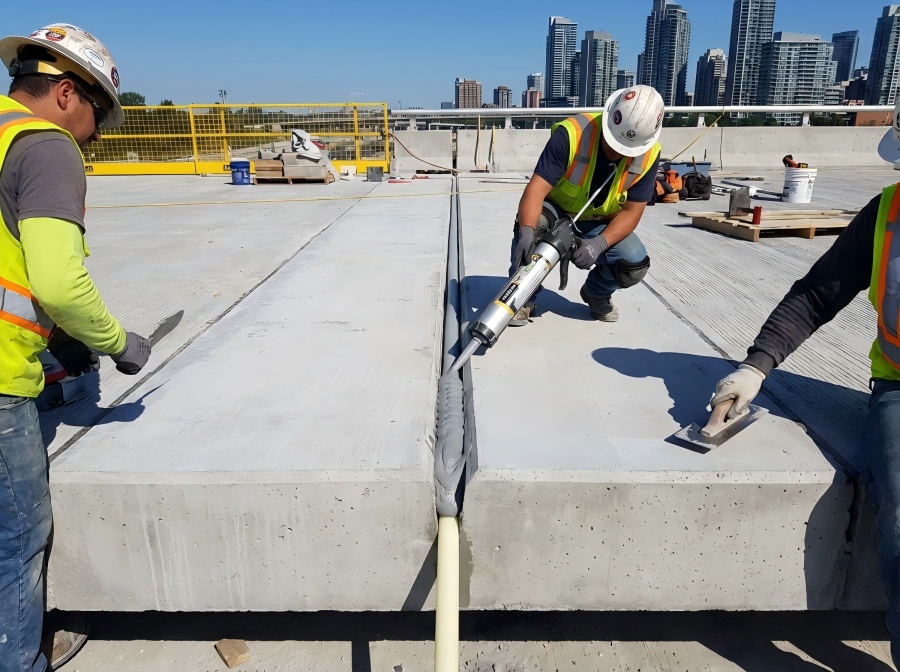
Inter-panel joints between curtain wall units must seal against air passage while accommodating thermal movement and building deflection. Quality weatherproofing sealants like BoPin 770 Weatherproof Neutral Silicone provide necessary movement capability and durability.
Spandrel panels and vision glass transitions create material changes requiring careful joint design. Differential thermal expansion between glass and metal panels stresses seals unless proper joint width and sealant selection accommodate movement.
Curtain wall-to-floor connections must maintain air barrier continuity where facade systems attach to building structure. This detail often receives inadequate attention during design and construction despite its significance to overall building air tightness.
Materials and Systems for Air Sealing
Effective air sealing requires selecting appropriate materials matching specific detail conditions. No single product handles all situations – comprehensive strategies use multiple materials systematically.
Polyurethane Foam Air Sealing
Polyurethane foam products provide excellent air sealing while simultaneously insulating, making them particularly effective for gap filling around windows, doors, and penetrations.
One-component foam applications:
Low-expansion foams like BoPin PU-270 Window & Door Foam suit sensitive applications around window and door frames where high expansion might distort frames. These products provide both air barrier and insulation in single application.
Standard expansion foams handle larger gaps and general penetration sealing where distortion isn’t a concern. Higher expansion provides more insulation value but requires more careful application preventing overfilling.
Fire-rated foams address penetrations through fire-rated assemblies maintaining both air seal and fire barrier. These specialized products cost more but prove necessary for code compliance in rated assemblies.
Foam application best practices:
- Clean, dry substrates ensure proper adhesion
- Controlled filling prevents over-expansion and waste
- Trimming excess foam after cure rather than attempting perfect initial application
- Protection from UV exposure on exterior applications
- Coating trimmed foam with sealants or coatings improving durability
Sealants for Air Barrier Continuity
Flexible sealants create air-tight seals in joints experiencing movement or requiring smooth finish. Sealant selection should match movement requirements and exposure conditions.
Silicone sealants provide excellent durability and movement capability for exterior joints. Neutral-cure formulations like BoPin 770 Weatherproof Silicone handle extreme temperature ranges and UV exposure while maintaining flexibility.
MS polymer sealants offer paintability and good performance in moderate conditions. Products like BoPin MS-220 Multi-Purpose MS Polymer work well for interior applications or where color matching requires painting.
Acoustic sealants specifically formulated for sound control also provide excellent air sealing. These non-hardening products maintain flexibility indefinitely while damping vibration and sealing effectively.
Application considerations:
- Joint sizing accommodating expected movement
- Backer rod preventing three-sided adhesion
- Surface preparation ensuring clean, dry bonding surfaces
- Proper tooling creating optimal geometry and surface contact
Air Barrier Membranes and Tapes
Sheet materials – membranes, tapes, and gaskets – provide continuous air barriers over large areas or seal specific details.
Fluid-applied air barriers coat surfaces creating seamless barriers conforming to complex geometries. These products excel at irregular surfaces, numerous penetrations, or areas where sheet materials prove difficult.
Self-adhered membranes provide durable air barriers with faster installation than fluid-applied products. Proper surface preparation remains critical for reliable long-term adhesion.
Specialized tapes seal specific details like window flanges, membrane laps, or penetration boots. High-performance tapes with acrylic adhesives provide superior durability versus rubber-based alternatives, particularly in hot climates where heat degrades inferior products.
Climate-Specific Air Sealing Strategies
Climate dramatically affects air sealing priorities, product selection, and expected performance. Strategies optimized for temperate climates may prove inadequate or even counterproductive in extreme conditions.
Desert Climate Air Sealing (Middle East Focus)
Middle Eastern buildings face unique air sealing challenges from extreme heat, intense UV, large indoor-outdoor temperature differentials, and reverse stack effect.
Temperature differential impact:
Buildings maintaining 22-24°C indoors against 45-50°C outdoor temperatures create 28°C temperature differentials – among the largest globally. This differential drives powerful air exchange through any envelope deficiency.
Air conditioning represents 70-80% of building energy consumption in Gulf region buildings. Every cubic meter of air infiltrating requires cooling from 50°C to 22°C – an enormous energy penalty. Air sealing directly reduces this massive cooling load.
Reverse stack effect considerations:
Unlike cold climates where warm air rises creating positive pressure at building tops, air-conditioned buildings in extreme heat experience reverse stack effect. Cool dense air sinks, creating positive pressure at lower levels and negative pressure at upper levels.
This reversal means:
- Hot air infiltrates at upper building levels where negative pressure draws it in
- Cool air exfiltrates at lower levels where positive pressure pushes it out
- Pressure patterns change with HVAC operation versus naturally ventilated periods
- Elevator shafts and stairwells become significant vertical air movement paths
Material selection for desert conditions:
UV resistance becomes paramount for exterior sealants and tapes. Intense year-round sun rapidly degrades products without adequate UV stabilization. Premium silicones rated for extreme UV exposure prove essential for long-term performance.
Heat resistance matters for products exposed to direct sun. Surface temperatures on dark materials can exceed 70-80°C in peak summer. Sealants and tapes must maintain properties through these temperature extremes.
Thermal movement from large daily temperature swings stresses sealant joints. Building surfaces experiencing 40-50°C daily cycling create substantial movement requiring sealants with maximum movement capability (±50%).
Tropical and Humid Climate Sealing
High humidity regions create different air sealing priorities focused on moisture control and biological growth prevention.
Moisture management becomes critical as air leakage carries far more moisture than vapor diffusion. Humid outdoor air infiltrating into air-conditioned spaces brings moisture that condenses on cool surfaces, potentially causing mold and material deterioration.
Vapor drive direction in tropical climates typically flows inward (hot, humid outside toward cool, dry inside) – opposite to cold climate vapor drive. This affects air barrier/vapor barrier coordination requiring different strategies than cold climate construction.
Anti-fungal protection in sealants and foams prevents biological growth on products exposed to high humidity. Products with mold resistance maintain appearance and performance in challenging moisture conditions.
Cold Climate Air Sealing
Cold climates prioritize preventing warm, moist indoor air from escaping through envelope where it can condense within wall or roof assemblies causing moisture damage.
Outward vapor drive dominates heating season as warm, humid indoor air tries to escape through envelope. Air leakage carries moisture to cold surfaces where it condenses, potentially causing rot, mold, or insulation degradation.
Stack effect reaches maximum intensity in cold climates with large indoor-outdoor temperature differentials. Tall buildings experience extreme stack pressures requiring particularly thorough upper level air sealing.
Energy Savings Calculations and ROI
Quantifying energy savings from air sealing justifies investment and guides decision-making. Understanding calculation methods helps predict returns and optimize sealing strategies.
Estimating Current Air Leakage
Blower door testing provides accurate air leakage measurement. This diagnostic test pressurizes or depressurizes buildings to 50 Pa while measuring airflow required to maintain that pressure. Results expressed as ACH50 indicate leakage severity.
Without testing, rough estimates use building age, construction quality, and visual indicators:
- Pre-1980 construction without air sealing: assume 10-15 ACH50
- 1980-2000 standard construction: assume 7-10 ACH50
- 2000+ moderate attention to sealing: assume 5-7 ACH50
- Recent construction with good practices: assume 3-5 ACH50
These estimates allow preliminary energy savings calculations before investing in comprehensive testing.
Calculating Energy Savings
Air leakage energy impact depends on climate, indoor-outdoor temperature differential, HVAC efficiency, and fuel costs.
Simplified calculation approach:
- Determine building volume (floor area × ceiling height)
- Estimate air changes per hour (ACH50 from testing or estimates)
- Calculate infiltration volume (building volume × ACH50 / 20) – dividing by 20 converts 50 Pa test to natural conditions
- Compute heat loss/gain (infiltration volume × air density × specific heat × temperature differential)
- Convert to annual energy accounting for climate degree-days
- Calculate cost based on utility rates and HVAC efficiency
For Middle Eastern example:
A 2,000 m² office building (6,000 m³ volume) at 8 ACH50:
- Natural infiltration: 6,000 × 8 / 20 = 2,400 m³/hr
- Temperature differential: 28°C (50°C outside, 22°C inside)
- Heat gain: 2,400 m³/hr × 1.2 kg/m³ × 1.0 kJ/kg·°C × 28°C = 80,640 kJ/hr = 22.4 kW
- Annual cost (assuming $0.10/kWh, 3,000 cooling hours, COP 3): $22,400
Improving to 4 ACH50 reduces infiltration by 50%:
- Annual savings: $11,200
- With typical air sealing cost $5,000-8,000
- Payback: 5-9 months
This simple example demonstrates why air sealing delivers exceptional ROI in extreme climates.

Green Building Certification Value
LEED, BREEAM, and regional certifications (like UAE’s Estidama) require air tightness testing and often credit enhanced performance.
Certification value includes:
- Marketing premium – certified buildings command higher rents/sales prices
- Lower operating costs – reduced energy consumption benefits tenants
- Regulatory advantages – some jurisdictions require certifications for permits
- Corporate sustainability goals – meeting ESG targets
- Government incentives – rebates or expedited approvals for certified buildings
Air sealing represents relatively low-cost contribution to certification points compared to expensive systems like renewables or advanced HVAC, making it particularly cost-effective for achieving certification.
Testing and Quality Assurance
Verification through testing ensures air sealing achieves intended performance. Quality assurance during construction catches problems while correction remains feasible.
Blower Door Testing
Blower door testing provides quantitative air leakage measurement allowing comparison to targets and identification of major leaks.
Test procedure:
- Seal all intentional openings (close doors/windows, seal exhaust fans, etc.)
- Install calibrated fan in exterior door or window
- Pressurize or depressurize building to 50 Pa
- Measure airflow required to maintain pressure
- Calculate ACH50 from airflow and building volume
- Identify leakage locations using smoke or infrared cameras during test
Testing timing options:
Rough-in testing before drywall or finishes allows finding and correcting major problems. This early intervention proves far less expensive than fixing issues after finish installation.
Final testing after construction completion verifies overall performance and identifies any problems requiring correction before occupancy.
Post-retrofit testing documents improvement after air sealing upgrades, validating investment and guiding additional work if needed.

Infrared Thermography
Infrared cameras visualize temperature differences revealing air leakage locations. Combined with blower door testing, thermography identifies specific leaks for targeted sealing.
Inspection procedure:
- Create pressure differential using blower door
- Scan building envelope with infrared camera
- Identify temperature anomalies indicating air leakage
- Document locations for repair
- Verify corrections with follow-up imaging
Thermography works best with substantial indoor-outdoor temperature differential – at least 10°C. In mild weather, artificial heating or cooling may be needed for effective inspection.
Smoke Testing
Theatrical smoke released near suspected leaks visibly shows air movement patterns. This low-tech method effectively locates leaks during pressurization testing without expensive equipment.
Smoke testing limitations:
- Only identifies accessible leaks on interior surfaces
- Difficult to quantify leakage severity
- May set off smoke detectors requiring temporary disabling
- Best used supplementing other methods rather than as sole diagnostic
Implementation Strategies for Different Building Types
Air sealing approaches vary by building type, age, and construction method. Tailoring strategies to specific conditions optimizes effectiveness and cost.
New Construction
New construction offers best opportunity for cost-effective air sealing by incorporating proper details during initial construction rather than retrofitting.
Design phase integration:
- Specify continuous air barrier throughout envelope
- Detail critical transitions at windows, penetrations, envelope transitions
- Select appropriate materials for climate and exposure
- Coordinate trades ensuring each understands their air sealing responsibilities
Construction phase quality control:
- Train installation crews on air sealing importance and techniques
- Inspect work progressively catching problems before subsequent work conceals them
- Conduct rough-in blower door testing allowing correction before finishes
- Document installation with photos verifying proper execution
Final verification:
- Complete blower door testing verifying target performance
- Identify and correct any deficiencies
- Provide documentation for certification or owner records
Existing Building Retrofits
Existing buildings require diagnostic testing identifying major leaks before developing cost-effective sealing strategies.
Assessment approach:
- Blower door testing quantifying current performance
- Infrared thermography locating major leakage paths
- inspection visuelle identifying obvious problems
- Prioritize improvements based on cost-effectiveness
Common retrofit opportunities:
- Attic access and penetrations often overlooked yet easily sealed
- Basement rim joists and foundations accessible and high-impact
- Window and door perimeters if replacement isn’t planned
- Mechanical penetrations for HVAC, plumbing, electrical
- Dropped ceilings and partition walls in commercial buildings creating hidden leakage paths
Retrofit challenges:
- Limited access to some envelope areas
- Concealed conditions requiring investigation
- Occupied building coordination minimizing disruption
- Unknown existing materials requiring compatibility verification
Questions fréquemment posées
How much can air sealing reduce my energy bills?
Air sealing typically reduces heating and cooling energy consumption by 15-30% depending on current leakage severity and climate conditions. In extreme climates like the Middle East where cooling dominates, savings can reach 25-35% of cooling costs – often translating to 18-25% of total energy bills. Payback periods typically range from 6 months to 3 years depending on improvement extent and energy costs. A blower door test provides accurate current leakage assessment allowing precise savings prediction for your specific building.
What air tightness target should I aim for?
Target air tightness depends on building type, climate, and green building certification goals. Residential buildings should target 3-5 ACH50 for good energy performance, alors que commercial buildings typically aim for 5-8 ACH50. Green building certifications often require specific targets – LEED requires testing and may credit <3 ACH50, while Passive House demands <0.6 ACH50. In extreme climates like hot deserts, tighter targets (3-4 ACH50) prove more cost-effective due to higher per-air-change energy costs. Balance air tightness with proper mechanical ventilation ensuring adequate fresh air supply.
Will air sealing cause indoor air quality problems?
Proper air sealing improves indoor air quality by enabling controlled mechanical ventilation rather than random infiltration. Leaky buildings receive uncontrolled, unfiltered outdoor air bringing pollutants, allergens, and dust, while sealed buildings with mechanical ventilation provide filtered, scheduled fresh air exactly where and when needed. The concern about “buildings being too tight” stems from older construction where infiltration provided ventilation – modern practice combines air sealing with proper ventilation systems delivering far better air quality than leaky construction.
Can I DIY air sealing or do I need professionals?
Homeowners and facility managers can successfully seal many common air leaks themselves including attic penetrations, window/door weatherstripping, and accessible gaps around pipes and wires. However, professional air sealing delivers better results for whole-building improvements through expertise in diagnostics (blower door testing), hard-to-reach areas, and proper material selection/application. For new construction or major renovations, professional involvement from design phase ensures comprehensive approach rather than patchwork fixes. Consider professional diagnostic testing even if doing DIY sealing – knowing where major leaks exist targets effort effectively.
How does air sealing interact with insulation?
Air sealing and insulation work together but serve different functions – insulation reduces heat transfer while air sealing prevents air movement. Without air sealing, insulation performs poorly as air moving through it carries far more heat than conduction. Think of insulation as a sweater – it keeps you warm only if wind (air movement) doesn’t blow through it. Air sealing should precede or accompany insulation installation rather than being afterthought. In many cases, improving air sealing delivers more cost-effective energy savings than adding insulation to already-insulated assemblies.
Conclusion
Building envelope air sealing represents the most cost-effective energy efficiency improvement in most buildings, particularly in extreme climates where heating or cooling dominates energy consumption. The combination of direct energy savings, improved comfort, better indoor air quality, and enhanced building durability makes comprehensive air sealing a high-priority investment.
Understanding air leakage mechanisms – pressure differentials from wind, stack effect, and mechanical systems – guides effective sealing strategies. In Middle Eastern climates, reverse stack effect from strong air conditioning creates unique challenges requiring particular attention to upper-level air sealing preventing hot air infiltration.
Critical leakage points – windows and doors, major element transitions, penetrations, and vertical cavity connections – account for majority of air leakage despite representing small fractions of envelope area. Targeting these high-impact details delivers maximum improvement for effort invested.
Material selection should match specific detail conditions and exposure. Polyurethane foams excel at gap-filling around penetrations and openings, flexible sealants handle moving joints, and membranes/tapes create continuous barriers over large areas. Climate considerations guide product selection – desert conditions demand extreme UV resistance and thermal stability, while humid climates prioritize moisture control and mold resistance.
Quantifiable energy savings and rapid payback justify air sealing investment, particularly in extreme climates. Middle Eastern buildings can save 20-30% of cooling costs through comprehensive air sealing, often achieving payback in under two years. Green building certification value adds marketing and operational benefits beyond direct energy savings.
Testing and quality assurance through blower door testing, infrared thermography, and progressive inspection ensures sealing achieves intended performance. New construction should incorporate air sealing from design phase, while existing buildings benefit from diagnostic testing identifying cost-effective improvement opportunities.
Whether constructing energy-efficient new buildings, retrofitting existing facilities for reduced operational costs, or pursuing green building certification, comprehensive air sealing forms the foundation of building energy performance. The investment delivers immediate operational savings, improved occupant comfort, and long-term building durability – benefits that compound throughout building life.
Planning energy-efficient construction or building retrofits and need expert guidance on air sealing strategies? Contact our technical team for professional support on material selection, testing requirements, and comprehensive sealing specifications suited to your climate and building type.
Related Articles:



 English
  العربية
  Español de México
  Português
  Français
  Русский
  Türkçe
  Tiếng Việt