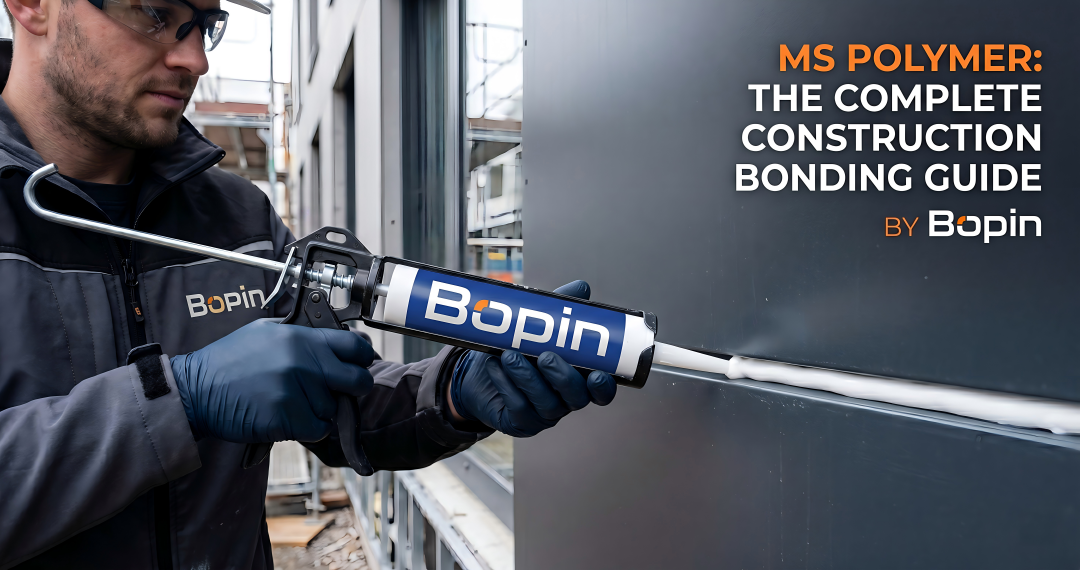
Protecting Your Concrete Investment Starts at the Joints
Unsealed or improperly sealed concrete joints are the number one entry point for water infiltration. This leads to freeze-thaw damage, sub-base erosion, and eventual structural failure. The consequences cascade rapidly once water penetrates the concrete system – from minor surface cracks to complete pavement replacement within just a few years.
Choosing the right sealant isn’t just about filling a gap. It’s about preserving the integrity of the entire concrete structure and protecting the substantial investment represented by your project. A $50 tube of the wrong sealant can compromise a $50,000 concrete installation.
The challenge lies in understanding the fundamental differences between joint types and matching the appropriate sealant technology to each specific application. Different joints serve different functions and require different performance characteristics from their sealants.
This comprehensive guide will demystify the world of concrete joint sealing. We will explain the critical differences between expansion and control joints and provide a clear framework for selecting the high-performance sealant your project demands. By the end, you’ll have the technical knowledge to specify sealants with confidence and ensure long-term structural protection.
Let’s start with the foundation of all concrete joint sealing decisions – understanding what type of joint you’re working with.
1. First, Understand the Joint: Expansion vs. Control Joints
Before selecting any sealant, you must understand the fundamental purpose of the joint you’re sealing. This determines the performance requirements that your sealant must meet for successful long-term service.
Expansion (Isolation) Joints
Expansion joints are designed to absorb the thermal expansion and contraction of concrete slabs as temperatures change throughout the day and seasons. Think of them like the gaps on a bridge – they provide space for materials to grow and shrink without creating destructive stresses.
Key characteristics of expansion joints:
- Deliberate separation between concrete elements
- Wide movement range – typically 10-50mm of movement expected
- Complete isolation – no structural connection between elements
- Full-depth separation through the entire concrete thickness
- High stress concentrations during movement cycles
Why this matters for sealant selection: Expansion joints demand sealants with maximum movement capability (±50% or higher) and excellent recovery properties to handle repeated cycling without failure.
Control (Contraction) Joints
Control joints are intentionally weakened planes designed to control where concrete cracks as it cures and naturally shrinks. They’re predetermined crack locations that prevent random cracking throughout the slab.
Key characteristics of control joints:
- Partial depth cuts – typically 1/4 to 1/3 of slab thickness
- Limited movement – primarily accommodates shrinkage and minor thermal effects
- Structural continuity is maintained through aggregate interlock below the joint
- Narrower gaps – typically 3-12mm wide
- Lower stress levels compared to expansion joints
Sealant implications: Control joints require sealants optimized for narrow gaps with good adhesion and durability rather than extreme movement capability.
Understanding this fundamental difference is critical because specifying an expansion joint sealant for a control joint (or vice versa) leads to premature failure and costly remediation. The wrong choice compromises protection regardless of installation quality.
2. The Technology: Choosing the Right Sealant Chemistry
Different concrete applications demand different sealant chemistries to deliver optimal performance. Understanding the core technologies helps you match the right solution to your specific requirements.
| Type de produit d'étanchéité | Primary Advantage | Idéal pour… | Capacité de mouvement |
| Polyuréthane | Durability & Abrasion Resistance | High-traffic areas (driveways, warehouses) | Good (±25%) |
| Silicone | Flexibility & UV Resistance | High-movement joints, outdoor exposure | Excellent (±50% or more) |
| Hybride (MS Polymère) | Balanced Performance & Paintability | All-purpose applications, paintable surfaces | Very Good (±35%) |
When to Choose Polyurethane
Polyurethane sealants excel in applications requiring durability and abrasion resistance. Their chemistry creates tough, resilient seals that withstand mechanical stress and chemical exposure.
Avantages du polyuréthane :
- résistance supérieure à l'abrasion – handles foot traffic, vehicle loads, and mechanical stress
- Excellente résistance chimique – unaffected by oils, fuels, cleaning agents, and de-icing salts
- Self-leveling properties available for horizontal applications
- Forte adhérence to concrete and masonry substrates
- Cost-effective performance for demanding applications
Meilleures applications : Industrial floors, parking structures, loading docks, fuel stations, and high-traffic pedestrian areas.
When to Choose Silicone
Silicone sealants provide maximum movement capability and weather resistance for joints subject to significant thermal movement or harsh environmental exposure.
Silicone advantages:
- Exceptional movement capability – accommodates ±50% joint movement or higher
- résistance supérieure aux UV – maintains properties under intense sun exposure
- Stabilité de la température – performs from -50°C to +150°C
- inertie chimique – unaffected by most environmental contaminants
- Longue durée de vie – 20+ year performance in properly designed applications
Meilleures applications : Expansion joints, facade panels, precast concrete connections, and exterior applications with high movement requirements.
Selon Normes ASTM C920 for elastomeric joint sealants, proper sealant selection based on movement capability and application requirements is fundamental to achieving specified performance in concrete construction.
When to Choose Hybrid (MS Polymer)
MS polymer sealants offer balanced performance, combining many advantages of both polyurethane and silicone technologies with the added benefit of paintability.
Hybrid advantages:
- Bonne mobilité – typically ±25-35% accommodation
- Peut être peint après séchage. – accepts most paint systems for aesthetic integration
- Environmental safety – typically lower VOC content and safer application
- Broad substrate compatibility – adheres well to various concrete substrates
- résistance aux intempéries – good performance in exterior applications
Meilleures applications : Architectural concrete, decorative applications requiring paint, and general-purpose sealing where moderate movement is expected.
3. Application-Specific Sealant Recommendations
Different concrete applications create unique performance demands that require specific sealant characteristics for optimal results. Understanding these application-specific requirements ensures successful long-term performance.
For Horizontal Joints (Driveways, Garage Floors, Sidewalks)
Horizontal joints face unique challenges, including traffic loads, ponding water, and debris accumulation. Self-leveling sealants provide optimal performance by creating smooth, even surfaces that resist damage and facilitate drainage.
Recommended solution: Self-leveling polyurethane sealants that cure to create traffic-ready surfaces.
Why self-leveling products excel:
- Perfect horizontal finish without tooling marks or irregularities
- résistance supérieure à l'abrasion for vehicular and pedestrian traffic
- résistance chimique to automotive fluids and de-icing chemicals
- Application facile with minimal skill requirements
- Apparence professionnelle that enhances overall project quality
For Vertical Joints (Tilt-Up Walls, Facades)
Vertical applications require non-sag formulations that maintain position during application and curing without slumping or running out of the joint.
Recommended solution: Non-sag polyurethane or silicone sealants, depending on movement requirements.
Critical performance characteristics:
- Thixotropic behavior – flows under gun pressure but maintains shape at rest
- No slumping during the cure cycle, even in hot weather
- Forte adhérence to vertical surfaces without primer requirements
- résistance aux intempéries for long-term exterior exposure
For High-Movement/Expansion Joints
Expansion joints represent the most demanding sealing application, requiring maximum movement capability and excellent recovery properties.
Recommended solution: Low-modulus silicone sealants with ±50% movement capability as the premium choice for critical applications.
Why high-movement capability matters:
- Accommodates thermal cycling without stress concentrations
- Prevents adhesion failure under repeated movement
- Maintains seal integrity through decades of service
- Reduces maintenance requirements and lifecycle costs
Now that you understand the basics of product selection, let’s examine a critical application detail that separates professional installations from amateur attempts.
4. The Critical Role of the Backer Rod
Proper backer rod installation is essential for sealant success but often overlooked by inexperienced applicators. Understanding the “hourglass shape” principle is crucial for achieving optimal sealant performance.
The Hourglass Shape Principle
A properly installed backer rod creates an optimal “hourglass” joint profile where the sealant is thicker at the adhesion surfaces and thinner in the center. This configuration maximizes flexibility while ensuring strong adhesion at critical bond lines.
Why the hourglass shape works:
- Prevents three-sided adhesion – the primary cause of sealant failure
- Optimizes stress distribution during joint movement
- Controls sealant depth for consistent performance
- Reduces material usage while improving results
- Ensures proper cure geometry for maximum durability
Backer Rod Selection Guidelines
Choose backer rod diameter 25% larger than joint width to ensure proper compression and positioning. Closed-cell foam prevents water absorption and maintains consistent performance over time.
Installation best practices:
- Install at proper depth – typically 50% of joint width below the surface
- Avoid puncturing the rod during installation
- Ensure continuous installation without gaps or overlaps
- Use appropriate tools to prevent damage during placement
Professional insight: The cost of backer rod is minimal compared to its impact on sealant performance. Skipping this step to save money typically results in premature failure and complete re-sealing costs within 2-5 years.
5. Our Professional-Grade Solutions
Based on the demanding requirements of concrete applications, we recommend our proven professional solutions that deliver superior performance in the most challenging conditions.
BoPin PU-440 Floor Joint Sealant
The Durable Choice for High-Traffic Horizontal Applications
For industrial floors, parking structures, and high-traffic areas requiring maximum durability and chemical resistance, BoPin PU-440 represents the professional standard for horizontal concrete joint sealing.
Why BoPin PU-440 Excels:
- Formule d'auto-nivellement – Creates a perfect horizontal joint finish without tooling, eliminating application skill variables and ensuring consistent results.
- Résistance supérieure à l'abrasion – Withstands forklift traffic, vehicle loads, and heavy pedestrian use without wear or degradation
- Résistance chimique exceptionnelle – Resistant to oils, fuels, cleaning agents, and diluted acids commonly found in industrial environments
- Capacité de mouvement ±25% – Accommodates structural movement and thermal cycling without bond failure
- Temperature Performance – Maintains flexibility from -30°C to +80°C for reliable year-round performance
- Professional Application – Flows smoothly for easy installation while self-leveling to eliminate surface irregularities.
Spécifications techniques :
- Base Material: Single-component polyurethane
- Density: 1,35 g/cm³
- Shore A Hardness: 35±5
- Elongation at Break: >450%
Available in 310ml cartridges and 600ml foil packages with color options including Grey, Black, and Beige.
BoPin 380, mastic de façade résistant aux intempéries
Ultimate Flexibility for Demanding Expansion Joints
For expansion joints, facade applications, and high-movement connections requiring maximum performance, BoPin 380 delivers the exceptional movement capability and weather resistance that demanding projects require.
Why BoPin 380 Delivers Superior Results:
- Capacité de mouvement ±50% – Capacité exceptionnelle à absorber les mouvements structurels et thermiques qui détruiraient des produits de moindre qualité
- Stabilité avancée aux UV – No degradation, color change, or mechanical property loss despite decades of intense sun exposure
- Résistance aux intempéries extrêmes – Performs reliably in temperatures from -50°C to +150°C through the world’s most challenging climates.
- Technologie de non-maintien – Safe for use on natural stone and sensitive facade materials without discoloration concerns
- Durée de vie prolongée – 20+ year durability in properly designed joints with minimal maintenance requirements
- Application tous temps – Can be applied in temperatures as low as -20°C for year-round construction flexibility
Spécifications techniques :
- Base Material: 100% Silicone - Polymérisation neutre
- Density: 1,40 g/cm³
- Shore A Hardness: 30±5
- Elongation at Break: >600%
- Tensile Strength: 1,5 MPa
Disponible en cartouches de 300 ml et en emballages aluminium de 600 ml with multiple color options, including Clear, White, Black, Grey, Bronze, and Limestone.
6. Technical FAQ
How long does concrete joint sealant last?
Service life depends on sealant quality, application conditions, and maintenance practices. Professional-grade polyurethane sealants like BoPin PU-440 typically provide 10-15 years of reliable service in high-traffic applications with proper installation.
High-performance silicone sealants like BoPin 380 can deliver 20+ years of service in expansion joint applications when properly designed and installed.
Factors affecting service life:
- Joint design and movement calculations – Properly sized joints last longer
- Surface preparation quality – Clean, sound substrates ensure maximum adhesion
- installation de la tige de fond de panier – Proper geometry prevents premature failure
- Environmental exposure – UV, chemicals, and temperature extremes affect longevity
Do I need a primer before applying the sealant?
Primer requirements depend on substrate conditions and sealant formulation. Always consult the Technical Data Sheet (TDS) for specific primer recommendations based on your substrate and environmental conditions.
Directives générales :
- Porous concrete – Primer typically recommended for optimal adhesion
- Dense, smooth concrete – May not require primer with quality sealants
- Contaminated surfaces – Primer is often essential after thorough cleaning
- Applications critiques – Primer provides insurance against adhesion failure
Professional practice: When in doubt, use primer. The modest cost provides significant insurance against costly adhesion failures.
How wide can a joint be for sealant application?
Joint width limits depend on sealant type and application method:
Polyurethane sealants: Maximum 40mm width for reliable performance without internal reinforcement or specialized application techniques.
Silicone sealants: Can handle wider joints up to 50mm due to superior elongation properties and flexibility.
Beyond these limits: Envisager des solutions alternatives such as preformed seals, multiple-stage sealing systems, or structural modifications to reduce joint width.
Critical consideration: Wider joints require proportionally deeper sealant installation and careful attention to backer rod placement for optimal performance.
What safety considerations apply to concrete joint sealing?
Professional sealant application requires appropriate safety measures to protect workers and ensure quality results.
Key safety guidelines:
- Ventilation adéquate during application and curing periods
- Personal protective equipment, including gloves, eye protection, and respiratory protection, as specified
- Proper handling procedures for chemical products and application equipment
- Surface preparation safety, including dust control and proper tool usage
Following established construction safety protocols ensures safe application procedures that protect workers while delivering professional-quality results.
Conclusion: Seal it Right, Seal it Once
The long-term performance of any concrete structure depends fundamentally on correctly identifying joint types and selecting sealants with the appropriate chemistry and performance characteristics for each specific application.
Remember these critical principles for concrete joint sealing success:
1) Joint type determines sealant requirements. Expansion joints need maximum movement capability, while control joints prioritize durability and adhesion.
2) Sealant chemistry must match application demands. Polyurethane for traffic areas, silicone for high movement, and hybrids for balanced performance.
3) Proper installation details matter. Backer rod placement, surface preparation, and joint geometry determine whether quality sealants deliver their full performance potential.
4) Professional-grade products justify their cost. The difference between success and failure often lies in material quality rather than application technique.
Concrete structures represent substantial investments that deserve protection with appropriately specified, professionally applied joint sealants. The cost of proper sealing is minimal compared to the expense of premature concrete replacement due to water infiltration and structural damage.
Don’t leave the integrity of your concrete investment to chance. Understanding joint functions and matching appropriate sealant technologies ensures long-term structural protection and minimizes lifecycle maintenance costs.
BoPin Chemical – Professional Construction Chemicals for Global Markets. Trusted by engineers and contractors across Central Asia, the Middle East, Southeast Asia, and Africa for concrete sealing solutions that deliver long-term structural protection in the world’s most demanding environments.