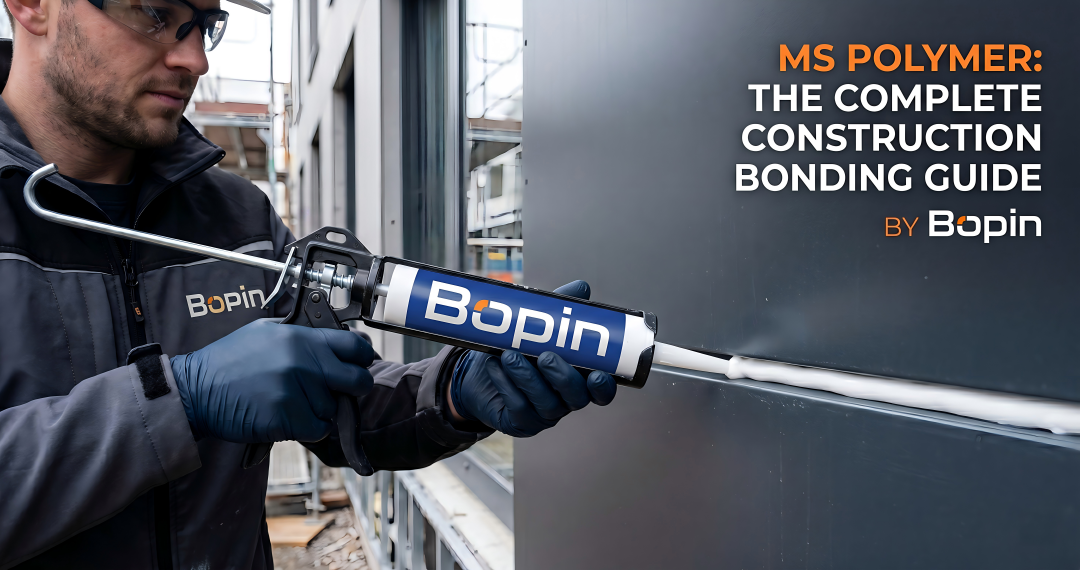
More Than a Sealant, Stronger Than a Glue
Some projects need more than just a waterproof seal. They need a powerful, permanent bond that can also withstand the elements. What do you do when you need to both glue and seal at the same time?
Traditional glues create strong bonds but fail when exposed to moisture. Standard sealants provide waterproofing but lack the structural strength for bonding applications. This creates a frustrating dilemma for projects that require both capabilities.
Enter clear silicone adhesive sealants – the ultimate 2-in-1 solution that bridges the gap between traditional adhesives and sealants. These innovative products deliver both the bonding strength you need and the waterproof protection your project demands.
This comprehensive guide will introduce you to the power of clear silicone adhesive sealants. We’ll show you what they are, how to use them on different materials, and how to choose the right product for bonds that will never fail. By the end, you’ll understand exactly when and how to use these versatile products for professional-quality results that last for decades.
Let’s start by understanding what makes these products so unique and powerful.
1. The 2-in-1 Advantage: What is an Adhesive Sealant?
Clear silicone adhesive sealants represent a breakthrough in construction chemistry. They combine the best properties of both adhesives and sealants in a single, versatile product that outperforms either category alone in specific applications.
The Power of an Elastomeric Bond
Unlike traditional hard-setting glues that become rigid and brittle, silicone adhesive sealants create flexible, rubber-like bonds that can absorb impact, vibration, and thermal movement without failing. This elastomeric behavior is crucial for applications where bonded materials expand and contract at different rates.
Think of the difference this way: Traditional adhesives are like concrete – very strong but crack under stress. Silicone adhesive sealants are like steel cables – strong and flexible enough to handle dynamic forces without losing their grip.
This flexibility prevents the bond failure that destroys rigid adhesives when materials move due to temperature changes, building settlement, or mechanical stress. The result is bonds that actually get stronger over time rather than weaker.
100% Waterproof & Weatherproof Performance
Clear silicone adhesive sealants form permanent waterproof seals that make them ideal for both indoor and outdoor applications where moisture exposure is a concern. This waterproofing capability is not just surface protection – it’s built into the molecular structure of the cured material.
Key waterproofing advantages:
- Complete moisture barrier – Water cannot penetrate the bond line
- résistance chimique – Unaffected by cleaning products, oils, and environmental pollutants
- stabilité aux UV – Won’t degrade or lose properties under sun exposure • Stabilité de la température – Maintains waterproofing from -40°C to +90°C
Selon RTV (Room-Temperature Vulcanizing) technology principles, these silicone systems cure by exposure to atmospheric moisture, creating cross-linked polymer networks that provide both adhesion and sealing properties simultaneously.
This dual functionality eliminates the need for separate bonding and sealing steps in many applications, saving time and ensuring compatibility between materials.
2. Application Guide: Bonding and Sealing Different Materials
Success with clear silicone adhesive sealants depends on matching the right product to your specific materials and application requirements. Different substrates present unique challenges that require specific approaches for optimal results.
For Plastic Applications
Bonding plastics presents unique challenges because many plastic surfaces have low surface energy that resists adhesion. However, the right approach can create incredibly strong, permanent bonds.
Best practices for plastic bonding:
- La préparation de la surface est essentielle – Clean with isopropyl alcohol to remove oils and mold release agents
- Light abrasion helps – Scuff smooth surfaces with fine sandpaper to improve mechanical adhesion
- Check compatibility – Test on a small area first to ensure chemical compatibility
- Laisser sécher correctement. – Plastic surfaces may slow curing, so allow extra time for full strength development
Applications recommandées : Automotive trim, outdoor furniture repair, marine applications, and recreational vehicle maintenance.
For Metal Bonding
Metal bonding requires non-corrosive formulations that won’t damage sensitive metal surfaces while providing strong, lasting adhesion.
Critical considerations for metal applications:
- Use neutral-cure formulations only – Avoid acetoxy-cure products that can corrode metals
- Remove oxidation – Clean away rust, corrosion, or oxidation before application
- Consider galvanic compatibility – Ensure the sealant won’t create electrochemical problems between dissimilar metals
- Plan for thermal expansion – Metals expand significantly with temperature changes
Perfect applications: Gutter repairs, metal roofing seams, automotive body panel bonding, and HVAC ductwork connections.
For Glass Bonding
Glass applications showcase the aesthetic advantages of clear adhesive sealants because the bond line becomes virtually invisible when properly applied.
Glass bonding advantages:
- Crystal-clear appearance – Bonds disappear into the glass substrate
- Excellente adhérence – Silicone naturally bonds well to glass surfaces
- UV transmission – Doesn’t block or filter light transmission
- Nettoyage facile – Mistakes can be removed cleanly during application
Applications idéales : Aquarium assembly and repair, glass door installations, window glazing repairs, and decorative glass projects.
For Outdoor Applications
Outdoor use demands products that can withstand extreme environmental conditions while maintaining both bonding strength and sealing integrity over decades of exposure.
Essential outdoor performance features:
- UV resistance prevents degradation and yellowing that would compromise both appearance and performance
- résistance aux cycles thermiques handles daily expansion and contraction without bond failure
- résistance aux intempéries to rain, snow, ice, and humidity extremes
- résistance chimique to acid rain, salt spray, and environmental pollutants
Recommended outdoor applications: Exterior glazing, roofing repairs, outdoor lighting fixtures, and landscape feature installation.
Understanding these material-specific requirements helps you choose the right product and application technique. Now let’s look at what separates high-performance products from basic alternatives.
3. Buyer’s Checklist: What Makes a High-Performance Formula?
Not all adhesive sealants deliver the same performance. Understanding the key specifications helps you identify products that will deliver professional-quality results rather than disappointing failures.
Bond Strength (Tensile Strength)
Look for products with tensile strength ratings of 1.5-3.0 MPa or higher for demanding structural applications. This measurement indicates how much pulling force the bond can withstand before failure occurs.
To put this in perspective: 3.0 MPa equals approximately 435 PSI – enough to support substantial loads in properly designed applications. Products below 1.0 MPa should only be used for light-duty applications.
Flexibility (Elongation at Break)
High-quality products should offer >300% elongation at break for superior flexibility and movement accommodation. This means the material can stretch to three times its original length before breaking – essential for handling thermal movement and mechanical stress.
Pourquoi c'est important : Buildings and materials constantly move due to temperature changes, wind loads, and settling. Rigid bonds crack and fail under these stresses, while flexible bonds accommodate movement without losing adhesion.
UV Resistance and Non-Yellowing
Premium formulations use UV-stable polymer systems that maintain clarity and performance even under intense sunlight exposure. Look for explicit “non-yellowing” claims backed by accelerated aging test data.
UV degradation indicators to avoid:
- Yellowing or discoloration after outdoor exposure
- Surface chalking or powder formation.
- Loss of flexibility leading to cracking
- Échec d'adhérence at the bond line
Temperature Performance Range
Professional-grade products should perform from -40°C to +90°C, minimum to handle extreme climate conditions without failure. Some specialized formulations extend this range even further for demanding applications.
Waterproof vs. Water-Resistant
Ensure products are rated for permanent water immersion, not just “water-resistant.” True waterproof products can be submerged indefinitely without degradation, while water-resistant products may only handle occasional moisture exposure.
This distinction is crucial for applications like aquariums, marine use, or exterior glazing, where continuous water contact is expected.
4. Our Recommended Solution: BoPin MS-120 Multi-Purpose MS Polymer Sealant & Adhesive
The Professional’s Choice for Dual-Function Performance
After extensive testing in demanding applications worldwide, we confidently recommend BoPin MS-120 Multi-Purpose MS Polymer Sealant & Adhesive as the superior choice for projects requiring both strong bonding and reliable sealing in a single product.
Why BoPin MS-120 Excels in Dual-Function Applications:
- Industrial-Grade Bond Strength – Advanced MS polymer technology creates permanent, tenacious bonds on a wide variety of substrates with superior adhesion properties that outperform traditional silicones.
- Extreme Flexibility (>600% Elongation) – Exceptional movement capability maintains bond integrity even after years of exposure to thermal cycling, vibration, and mechanical stress
- Guaranteed UV Stability – Advanced polymer formulation stays crystal clear and maintains performance properties even under intense UV exposure and extreme weather conditions.
- Capacité de mouvement ±25% – Accommodates significant building movement and thermal expansion without bond failure or loss of sealing integrity
- Application tous temps – Can be applied in temperatures from -5°C to +40°C, providing flexibility for year-round installation.
- Paintable After Curing – Unlike pure silicones, this product accepts paint for color matching and aesthetic integration
- Environmental Safety – Isocyanate and solvent-free formulation ensures safe application in occupied spaces.
Technical Performance Advantages:
- Superior adhesion to both porous and non-porous surfaces, including concrete, metals, plastics, and glass
- Excellente résistance chimique to cleaning products, fuels, and environmental pollutants
- Rapid skin formation (15-30 minutes) for faster project completion
- Can be applied to slightly damp surfaces – unique advantage over traditional silicones
Disponible en cartouches de 290 ml et en sachets aluminium de 600 ml with professional-grade specifications that meet the most demanding application requirements.
Professional contractors choose BoPin MS-120 because it delivers the reliability and performance their reputations depend on. Vous pouvez désormais obtenir les mêmes résultats de qualité professionnelle. in your most demanding bonding and sealing applications.
5. Professional Application FAQ: Your Technical Questions Answered
How long does it take for silicone adhesive to cure fully?
BoPin MS-120 forms a skin in 15-30 minutes under normal conditions (23°C, 50% RH). Complete cure occurs at approximately 3mm depth per 24 hours. However, initial bond strength develops much faster – typically within 2-4 hours for handling strength.
Full cure timeline for typical applications:
- Surface tack-free: 15-30 minutes
- Light handling strength: 2 à 4 heures
- Structural strength: 24-48 hours for most bead sizes
- Maximum strength: 7 days for complete polymer cross-linking
Factors affecting cure rate:
- Température – Warmer conditions accelerate curing
- Humidité – Higher humidity speeds the moisture-cure process
- Material thickness – Thicker applications cure from outside in
- Substrate porosity – Porous materials may slow surface curing
Can I use silicone adhesive to glue two non-porous surfaces together?
Yes, but with important considerations for atmospheric moisture access. MS polymer adhesives like BoPin MS-120 cure by exposure to atmospheric moisture. When bonding two non-porous surfaces, ensure at least one edge is exposed to air pour un séchage optimal.
Best practices for non-porous bonding:
- Apply in beads rather than continuous films – This allows moisture penetration
- Leave small air gaps if possible for moisture access during curing
- Use thinner application layers – Maximum 12mm thickness for reliable cure
- Allow extra cure time – Non-porous assemblies may take 2-3 times longer to fully cure
What is RTV silicone, and how does it differ from MS polymers?
RTV signifie Vulcanisation à température ambiante – a process where silicone polymers cure at ambient temperatures through exposure to atmospheric moisture. Traditional RTV silicones create elastic, waterproof seals but have limited adhesive strength.
MS (Modified Silane) polymers represent an advanced evolution that combines the flexibility and weather resistance of silicones with significantly enhanced adhesive properties. Key differences include:
- Higher bond strength – MS polymers typically achieve 2-3x the adhesive strength of RTV silicones
- Possibilité de peinture – MS polymers accept paint after curing, while RTV silicones do not
- Broader material compatibility – Better adhesion to difficult substrates
- Environmental safety – Often formulated without isocyanates or solvents
For applications requiring both sealing and bonding, MS polymers like BoPin MS-120 typically provide superior overall performance compared to traditional RTV silicones.
How do I ensure optimal bond strength?
Surface preparation determines 80% of your final bond strength. Follow these professional techniques for maximum performance:
Étapes préparatoires essentielles :
- Clean all surfaces with isopropyl alcohol to remove oils, dust, and contaminants
- Remove any loose or flaking material that could create weak points
- Light abrasion on smooth surfaces improves mechanical adhesion
- Ensure surfaces are dry – Even slight moisture can affect bond development
Technique d'application :
- Apply uniform pressure during initial bonding to ensure good contact
- Avoid air entrapment, which creates weak spots in the bond line
- Respect cure time requirements – Don’t load bonds before adequate strength development
What safety considerations should I follow?
MS polymer adhesive sealants are generally safer than many traditional construction adhesives. However, proper safety practices ensure successful application and protect your health.
Basic safety guidelines:
- Assurer une ventilation adéquate during application and curing
- Portez un équipement de protection approprié, including gloves and eye protection
- Avoid skin contact with uncured material
- Store in cool, dry conditions away from ignition sources
Following established construction safety protocols ensures safe handling and application of these professional-grade materials.
Conclusion: Bond and Seal with Confidence
For projects that demand both strong bonding and permanent waterproof sealing, high-quality clear silicone adhesive sealants represent the only professional choice. These innovative products eliminate the compromises inherent in choosing between traditional adhesives and sealants.
Remember these key points for successful applications:
1) Material compatibility drives product selection. Choose products specifically formulated for your substrate combinations rather than generic “universal” products.
2) Surface preparation determines long-term success. Invest time in proper cleaning and preparation for maximum bond strength and longevity.
3) Cure conditions affect performance. Understand how temperature, humidity, and material thickness influence curing for optimal results.
4) Quality products justify their cost. Professional-grade formulations like BoPin MS-120 deliver superior performance that makes them economical over the project lifetime.
The dual functionality of adhesive sealants makes them ideal for applications ranging from simple repairs to complex construction projects. When you need reliability, durability, and versatility in a single product, these advanced materials deliver results that traditional adhesives and sealants simply cannot match.
Don’t compromise with a standard glue that fails when wet or a simple caulk that can’t handle structural loads. Get the dual-function power you need for demanding applications. Explore the capabilities of BoPin MS-120 Multi-Purpose MS Polymer Sealant & Adhesive and experience the confidence that comes with professional-grade performance.
BoPin Chemical – Professional Construction Chemicals for Global Markets. Trusted by contractors and engineers across Central Asia, the Middle East, Southeast Asia, and Africa for adhesive sealing solutions that deliver both bonding strength and waterproof protection in the world’s most demanding environments.